Analysis of Early Childhood Learning Through Media

In the modern landscape of child development, the intersection of digital media, visual storytelling, and fundamental educational concepts has established a high-impact standard for early childhood engagement. This "edutainment" ecosystem relies on high-contrast visuals, expressive character archetypes, and relatable social scenarios to build cognitive and emotional foundations. By analysing themes ranging from the frantic energy of a morning routine to the serene curiosity of animal interactions and logic puzzles, we can see how these narratives provide a holistic framework for a child's understanding of the world.

The Visual Language of Logic and Categorisation

Visual stimuli are the primary drivers of learning in early childhood. Before a child can decode written language, they are proficient in decoding colour, shape, and pattern.

Chromatic Education and Matching

The strategic use of a bold, saturated colour palette is designed to capture attention and facilitate cognitive categorisation.

  • Vibrant Primaries: Bright red, sunny yellow, and deep blue serve as visual anchors in many instructional scenes.
  • Attribute Alignment: Scenarios involving matching brightly colored animals—such as a red tiger, a green lion, or a blue gorilla—to soccer balls of the identical hue teach the fundamental scientific skill of attribute matching.
  • Sequential Logic: Arranging objects like trucks and large-eyed eggs in a rainbow spectrum (red, yellow, green, blue, purple) reinforces the idea of order and linear sequences, which is a precursor to mathematical thinking.

Sensory Visualization

High-fidelity digital rendering allows children to "experience" textures visually, bridging the gap between screen time and real-world sensory play.

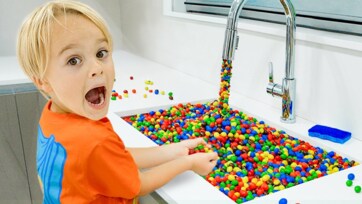
  • Tactile Representation: The depiction of multi-colored candies or purple "slime" flowing from a faucet engages a child's imagination regarding different states of matter and fluid dynamics.
  • Physical Cause and Effect: Scenes depicting toy trucks stuck in thick, viscous mud provide a visual bridge to tactile outdoor experiences. The imagery of a blue tow truck pulling a yellow school bus out of a mud pit teaches children about mechanical advantage and problem-solving in a physical environment.

Social-Emotional Learning (SEL) and Expression

Modern media for children places a heavy emphasis on SEL, using character expressions to teach empathy, conflict resolution, and self-regulation.

Identifying Internal States

Exaggerated facial features help children name and validate their own feelings.

  • Wonder and Awe: Wide-eyed, open-mouthed expressions—seen in characters discovering a sink full of candy or a monkey taking a shower—provide a mirror for a child’s own reactions to the unexpected.
  • Normalising Fear: Depicting a child's startled reaction to a "ghost" figure in a bathroom setting helps normalise common childhood anxieties and provides a safe framework for discussion.
  • Social Mediation: Characters representing community helpers, such as police-dog archetypes, intervene in disputes between peers to demonstrate the value of mediation and social harmony.

The Biology of Kindness

Narratives often focus on supportive, interspecific interactions to model empathy.

  • Tender Connections: A squirrel showing concern for a small duckling, or a young boy gently interacting with a chick and its mother hen, models how to respond to others with tenderness.
  • Shared Experiences: Scenes of friends on a road trip or characters sharing gelato at a colourful stand reinforce the idea that life’s milestones are most rewarding when shared with others.

Community Systems, Hygiene, and Life Skills

As a child’s world expands beyond the home, the media introduces the systems, responsibilities, and hygiene routines that govern society.

Mastering Daily Routines

Transitions from home to school or the bathroom are turned into playful adventures.

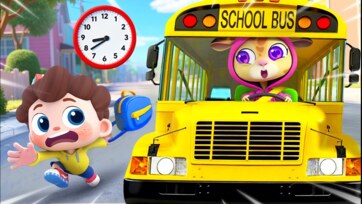
  • Temporal Awareness: The inclusion of a large, prominent analogue clock (showing 7:40 AM) in a scene where a child rushes for the school bus helps children visualise the passage of time and the importance of punctuality.
  • Independence and Autonomy: Carrying a backpack toward a vehicle driven by a trusted community member (a giraffe-themed driver) symbolises the child's growing independence.
  • Hygiene Education: Playful graphics with characters like a "toothbrush" and a "tooth" accompanied by the text "Brush me" turn essential tasks into engaging activities, reducing resistance to daily hygiene.

Agricultural and Work Ecosystems

Farm and construction themes introduce the concepts of labour and the origins of resources.

  • Roles and Responsibilities: Monkeys driving tractors to transport livestock or collecting milk show that every member of a community has a specific task that contributes to the whole.
  • Cooperation in Crisis: Seeing various service vehicles—including ambulances, fire trucks, and tow trucks—work together in a mud pit teaches children about community cooperation and the "safety net" of helpers in their neighbourhoods.

Nature as an Interactive Classroom

Vibrant depictions of natural habitats and animal biology encourage a transition from digital screens to the actual outdoors.

Biodiversity and Stewardship

By showing characters in diverse settings, children learn to identify different ecosystems and species.

  • Observation Skills: Seeing birds in their natural environment or children observing hens and chicks encourages a closer look at the wildlife in the child's own world.
  • Gentle Stewardship: Interactions such as feeding goats in a meadow or sitting calmly among chickens teach children to be gentle and respectful of other living beings.

The Value of Experiential Play

Content that features characters playing in the mud or running through grass validates active, tactile learning.

  • The Joy of "Messy" Play: Framing sitting in a mud puddle as a moment of pure happiness with animal friends helps parents and children see nature as a playground for discovery rather than a chore.
  • Environmental Empathy: The close-up interaction between a child and a rooster or a goat fosters an early sense of wonder and a desire to protect the natural world.

Conclusion: Synthesising the Digital Experience

The digital frontier of early learning is a carefully architected tapestry designed to nurture the whole child. It uses the magnetic pull of bright colours and charming characters to deliver essential lessons in logic, empathy, and community responsibility.

Whether through a frantic race for the school bus, a lesson in matching colourful animals to balls, or the cooperative effort of trucks in a mud pit, these narratives help children navigate the transitions of their own lives with confidence. As they watch a monkey drive a tractor or a child gently feed a goat, they are building the mental map that will guide them as they step out of their homes and into the wide, wonderful world.

Advertisement
The Power of Kindness
A Tiny Squirrel and a Little Duckling Welcome to the heart of the forest, little friends! Today, we are looking at a very touching picture that tells a story without saying a single word. It features two of the cutest animals you will ever see: a fluffy baby squirrel and a soft yellow duckling. They are standing together in a quiet part of the woods, and something very special is happening between them. This is a story about big feelings, being a good friend, and how even the smallest animals can show the greatest kindness. Meet Our New Forest Friends In the center of our picture, we have two very different animals who have become the best of friends. Let's get to know them! The Brave Little Squirrel On the left is a small, brown squirrel with a big, bushy tail. If you look closely at his face, you might see something sad—there is a tiny tear in his eye. Maybe he lost his favorite nut, or perhaps he got a little lost in the big woods. Even though he feels a bit sad, he is looking at his friend with a hopeful smile. The Comforting Yellow Duckling On the right is a bright yellow duckling. Ducklings are usually found swimming in ponds, but this one has waddled onto the land to be with his friend. He has a very kind look in his eyes. He is standing very close to the squirrel, showing that he is there to listen and help. A Lesson in Empathy and Comfort This picture is a perfect example of something called empathy. Empathy is a big word that means understanding how someone else feels. Why is the Squirrel Sad? In the forest, things can sometimes be scary for small animals. The Big Trees: To a tiny squirrel, the tree stumps in the background look like giant mountains. Being Alone: Maybe the squirrel couldn't find his family for a moment. Sharing Feelings: The squirrel isn't trying to hide his tear. He is showing his friend that he is sad, which is a very brave thing to do! How the Duckling Helps The duckling doesn't have a tissue to wipe the tear away, and he can't speak "squirrel language," but he is doing the most important thing: he is staying. * Standing Close: By standing right next to the squirrel, the duckling is saying, "You are not alone." Listening with Eyes: Sometimes, you don't need to talk to make someone feel better. Just looking at them with love is enough. Exploring the Quiet Forest Floor The world around our two friends is very calm. It looks like the "nursery" part of the forest where the youngest animals play. The Giant Tree Stumps Behind the squirrel and the duckling are large tree stumps. These used to be tall trees that reached for the clouds. Now, they provide a safe place for little animals to hide or sit. To us, they are just wood, but to a squirrel, a stump is a castle or a dinner table! The Soft Earth and Fallen Leaves The ground is covered in soft dirt and a few fallen leaves. It isn't a busy playground with swings or slides; it’s a natural place where the only sounds are the rustle of the wind and the "quack" of a duck. This quiet setting helps the two friends focus on each other. Different but the Same One of the most beautiful things about this picture is that a squirrel and a duck are very different, yet they are the best of friends. Different Homes The Squirrel: Lives high up in the "drays" (nests) built in the branches of trees. He loves to climb and jump. The Duckling: Lives near the water and loves to paddle with his webbed feet. Different Skills The squirrel is great at gathering acorns and balancing on thin twigs. The duckling is great at swimming and finding snacks in the mud. Even though they do different things, they found a way to connect. This teaches us that you don't have to be exactly like someone to be their friend! How to Be a "Duckling Friend" We can all learn a lot from the yellow duckling in the picture. If you see a friend at school or a sibling at home who looks like they might have a tear in their eye, here is how you can be a hero: Walk Over: Just like the duckling waddled over, go to your friend. Ask "Are you okay?": Sometimes people just want to be asked. Stay with Them: You don't have to solve the problem right away. Just sitting with them while they feel sad helps the sadness go away faster. Offer a Hug: If they want one, a hug is like a warm blanket for the heart. The Colors of Friendship The artist used very soft, warm colors for this scene to make us feel peaceful. Warm Brown: The squirrel’s fur is a cozy brown, like a cup of hot cocoa. It makes him look very huggable. Sunny Yellow: The duckling is a bright yellow, which usually represents happiness. By bringing his yellow color near the brown squirrel, it’s like he is bringing a little bit of sunshine into a sad moment. Soft Grey and Tan: The background colors are muted so that our eyes stay focused on the two friends. What Happens Next? If we were to turn the page of this story, what do you think would happen? Perhaps the duckling invites the squirrel to the edge of the pond to see the dragonflies. Or maybe the squirrel shows the duckling where the sweetest berries grow. Once the tear is gone, the adventure begins! When friends support each other through the sad times, the happy times become even more fun. The bond between this squirrel and duckling is strong because it started with a moment of kindness. Conclusion: Kindness is a Language Everyone Speaks The picture of the squirrel and the duckling reminds us that no matter how small you are, you have the power to change someone's day. A simple look, a quiet moment, and a little bit of patience can turn a sad face into a smiling one. So, the next time you see someone who looks a bit down, remember our forest friends. Be the "sunshine yellow" in someone else's "brown" day. Kindness is the best nut a squirrel can find, and the best pond a duck can swim in!
Advertisement
: Building Cognitive, Emotional, and Social Foundations
Modern educational media for young children has transformed into a sophisticated, visually immersive ecosystem that leverages bold imagery, anthropomorphic characters, and strategic social modeling. This approach doesn’t just entertain; it scaffolds cognitive development, social understanding, and emotional regulation, giving children concrete tools to navigate both their physical environment and complex social dynamics. Abstract concepts—like physics, economic disparity, and internal emotional states—are rendered tangible through playful, vibrant visuals, allowing children to learn through observation and interaction before they can articulate these ideas verbally. The following analysis explores the pedagogical themes in contemporary visual narratives, highlighting their impact on cognition, emotion, life skills, and environmental understanding. Cognitive Logic: Categorization, Sequencing, and Mechanics Visual stimuli are the engines of early logical development, helping children decode order, identify patterns, and understand physical interactions without relying on verbal instruction. By making abstract relationships visible, these media experiences build the foundation for reasoning, problem-solving, and critical thinking. Chromatic Reasoning and Sequential Understanding Color is more than decoration; it is a cognitive tool. Bold primary palettes guide children in categorization, attribute recognition, and sequential thinking. Sequential Sorting: For example, a child navigating a pink tractor pulling a train of multicolored ice cream trailers—red, yellow, green, and blue—learns to track order, group like items, and understand progression. Anatomical Exploration: Glowing skeletons in bright hues introduce anatomy in a non-threatening way, helping children recognize structure, symmetry, and individual differences within a category. Identity Mapping: Characters holding objects shaped like themselves—a white creature clutching an orange popsicle in its silhouette—teach children to connect identity with representation and temporal awareness, especially when paired with “1 HOUR” or “2 HOURS” timestamps. This approach encourages children to actively search for patterns and make connections, creating mental frameworks for later math, science, and literacy skills. Mechanical Concepts and Collaborative Problem-Solving Interactive mechanical scenarios illustrate the principles of physics and teamwork in tangible ways. Complex Recovery Operations: Visuals of a crane, tractor, and excavator working together to free two mud-stuck trucks teach concepts like leverage, tension, and coordination. Children understand that multi-part problems often require collaborative effort. Interdependent Systems: A baby suspended amid interlocking gears demonstrates how elements in a system rely on one another, providing an intuitive grasp of mechanics and cause-effect relationships. Forces and Opposition: Tug-of-war scenes, with characters pulling on ropes attached to oversized scissors, illustrate opposing forces, resistance, and the balance of effort in a memorable, playful format. Rules and Authority: Depictions of “police babies” or law-enforcing animals managing scenarios—like guiding a mermaid on a beach—introduce children to social roles and communal responsibility in a vivid, approachable way. Through these visuals, children gain an early appreciation for structure, interdependence, and the practical applications of physics in everyday life. Social-Emotional Learning (SEL): Reflection, Empathy, and Resilience Visual media provides a vocabulary for internal states, helping children recognize, process, and communicate emotions. By presenting exaggerated expressions and fantastical scenarios, these narratives allow children to safely explore fear, excitement, and moral choices. Mirroring Complex Emotions Children often lack the language to articulate feelings, so visuals serve as emotional translators. Shock and Surprise: Wide-eyed, gasping characters reacting to a T-Rex in a living room or a strawberry with a missing chunk signal alarm and teach children that such responses are universal. Environmental Awareness: The contrast between a startled character and a calm large bee models that individuals react differently to the same stimulus, introducing perspective-taking. Social Horror and Transformation: Watching a peer’s cup-headed transformation or a drastic physical change sparks discussion about exclusion, fear of the unknown, and social adaptation. Identity Boundaries: Characters with glowing eyes or fangs allow exploration of “otherness” and the act of masking emotions, offering a framework for understanding differences among peers. By normalizing a wide range of responses, children develop coping strategies and resilience when facing unexpected situations. Modeling Empathy and Care Beyond self-awareness, these narratives provide visual templates for nurturing and cooperation. Caring for Others: Scenes of one child bringing lemon water and a thermometer to a sick peer teach empathy, attention to needs, and practical care routines. Environmental Stewardship: A child shielding a lamb from rain demonstrates responsibility for protecting weaker or vulnerable beings. Cross-Species Interaction: Animals playing sports or sharing toys illustrate collaboration, patience, and empathy beyond human interactions, expanding social understanding and reinforcing ethical behavior. These visual lessons create a feedback loop where children see compassionate behavior, practice it in play, and internalize social norms. Life Skills: Hygiene, Responsibility, and Community Transforming routine tasks into imaginative adventures reduces resistance to societal expectations and health habits. Hygiene as Play Invisible threats like germs are brought to life as fun, tangible villains, turning health routines into empowerment exercises. Automated Cleaning: A police dog navigating a car wash with giant brushes reinforces the habit of systematic cleaning, linking maintenance with playfulness. Joyful Hygiene: Bathing scenes with colorful bubbles and smiling creatures associate personal care with sensory enjoyment, reducing aversion and building positive habits. Financial Literacy and Social Roles Introducing social and economic structures visually helps children grasp inequality, labor, and responsibility. Economic Symbolism: Contrasting characters with stacks of money and “money houses” against peers with brooms and cardboard homes provides early exposure to wealth disparity and aspiration. Authority and Fairness: Recurrent imagery of “police babies” and animal officers distributing resources like heart-shaped pizzas underscores fairness, rule-following, and communal cooperation. Through playful scenarios, children begin to understand responsibility, social participation, and the consequences of action in structured environments. Environmental Literacy and Resource Awareness Visual narratives foster respect for nature and the origins of resources while promoting curiosity and ecological thinking. Agricultural Systems: A monkey transporting a banana harvest introduces the labor chain behind food production, highlighting cause-effect relationships and resource management. Communal Rewards: Sharing heart-shaped pizzas among characters illustrates the social value of generosity, cooperation, and collective joy. Biodiversity and Wonder: Feeding giraffes, encountering calves, or observing prehistoric creatures nurtures curiosity, empathy for living beings, and a sense of interconnectedness with the natural world. By integrating human, animal, and ecological perspectives, children develop early environmental literacy, laying the foundation for future stewardship. Conclusion: Bridging Screens and Reality The visual landscape of modern early childhood media is a carefully curated tapestry, supporting holistic development. Saturated colors teach logic, expressive faces validate emotions, and cooperative challenges model teamwork. Beyond entertainment, these narratives act as bridges between digital screens and real-world experiences, equipping children with cognitive, social, and emotional skills in a layered, interactive format. Whether navigating colorful ice cream trailers, rescuing stuck vehicles, or caring for peers and animals, children develop a robust foundation—one visual frame at a time—preparing them to approach life with curiosity, empathy, and confidence.  
The Power of Visual-First Learning in Early Childhood Development
In contemporary early childhood pedagogy, the "visual-first" approach has become a leading method for fostering cognitive, social, and emotional growth. By combining high-contrast digital art, anthropomorphic characters, and carefully crafted social scenarios, modern educational media creates a multi-layered learning environment. This environment not only engages children but also serves as cognitive scaffolding, providing mental templates that help them understand physical mechanics, navigate social interactions, and regulate intense emotions. The following analysis breaks down the pedagogical themes of visual-first learning, organized according to developmental impact, and emphasizes practical examples that illustrate their effectiveness. Cognitive Logic: Categorization, Attributes, and Physics Visual stimuli are central to early cognitive development, enabling children to decode patterns, relationships, and cause-and-effect dynamics before they develop verbal or numerical literacy. Chromatic Logic and Attribute Isolation Bold, saturated colors are deliberately used to support categorization, sequencing, and set recognition. Sequential Sorting: Visuals such as a child driving a pink tractor pulling trailers filled with red, yellow, green, and blue ice cream cones reinforce linear order, color recognition, and early mathematical concepts. Anatomical Visualization: Stylized, glowing skeletons in bright primary colors provide a playful introduction to human anatomy, helping children identify and differentiate body parts while making science approachable. Temporal and Identity Association: Graphics showing a white creature holding an orange popsicle that mirrors its own shape teach children to associate objects with identity markers and understand basic temporal concepts, such as the passage of "1 HOUR." Pattern Recognition: Repeated visual motifs, like a bouncing ball over alternating colored platforms, support predictive thinking and early problem-solving skills. Mechanical Principles and Collaborative Problem-Solving Play-based mechanical scenarios teach foundational physics, teamwork, and systems thinking. Complex Recovery Operations: Scenes of two large trucks stuck in a mud pit, being rescued by cranes, tractors, and excavators, illustrate leverage, tension, and the benefits of teamwork in overcoming challenges. Interconnected Systems: A baby suspended among interlocking gears demonstrates mechanical interdependence and introduces systems thinking. Force and Physics: Tug-of-war visuals with characters pulling ropes tied to giant scissors illustrate opposing forces, tension, and the idea of collective effort. Social Order and Authority: "Police babies" rescuing a struggling mermaid or a police dog apprehending a candy thief teach children about rules, roles, and societal structures that maintain safety. Social-Emotional Learning (SEL): Mirroring and Resilience Visual-first media also provides a language for emotions, enabling children to identify, validate, and communicate their inner experiences. Validating Fear and Anxiety Exaggerated expressions and surreal situations act as mirrors for psychological processing. Visual Shorthand for Shock: Wide-eyed, gasping characters responding to a giant T-Rex in a living room or a massive bite taken from a strawberry model appropriate reactions to unexpected events. Social Horror and Transformation: A peer’s cup-headed transformation in a school hallway helps children explore feelings of exclusion, change, and social fear. Processing the Uncanny: Contrasting reactions, such as a startled furry character versus a calm bee, teach children that different individuals may respond differently to the same situation. Masking and "Otherness": Imagery of characters with fangs or glowing eyes introduces the concept of hiding emotions or feeling "different," fostering empathy and self-awareness. Managing Health, Empathy, and Protection Simulated social interactions teach care, responsibility, and ethical behavior. Caring for the Sick: Scenarios where a character brings lemon water and a thermometer model empathy and practical support during illness. Environmental Protection: A child sheltering a lamb from rain encourages responsibility for vulnerable beings. Interspecies Care: Bathing a blue, purple-haired creature associates hygiene with joy and nurturing behavior. Conflict Resolution: Visuals of characters negotiating toy-sharing or turn-taking teach children how to manage disagreements constructively. Life Skills: Personal Responsibility and Community Visual storytelling transforms mundane routines into engaging learning experiences. Hygiene Education and "Health Heroes" Visualizing Germs: Large, green, spiky virus monsters help children understand invisible health threats, making hygiene concrete. Empowered Defense: Children depicted using toy blasters against germs frame hygiene as active, empowering play rather than a chore. Automated Care: Scenes with police dogs navigating car washes reinforce that maintaining tools and personal spaces is routine and rewarding. Financial Literacy and Social Roles Early visual exposure to economic concepts fosters understanding of labor, wealth, and social responsibility. Economic Disparity: Contrasting images of children with stacks of cash and "money houses" versus brooms and "cardboard homes" introduce social and economic differences. Creative Expression: Surreal imagery, such as stylized faces integrated into fashion items, encourages artistic exploration and design thinking. Team-Based Tasks: Visuals of children running marketplaces or small businesses teach collaboration, responsibility, and community participation. Biodiversity and Communal Rewards Nature and communal experiences strengthen environmental awareness and social learning. Agricultural Origins: A monkey transporting bananas via tractor teaches resource logistics and farm-to-table concepts. Communal Rewards: A police dog serving heart-shaped pizza reinforces cooperation, generosity, and shared joy. Animal Interaction: Feeding a giraffe or interacting with a calf cultivates curiosity and respect for biodiversity. Environmental Stewardship: Children planting seeds or watering gardens link visual engagement with sustainable behavior and ecological awareness. Conclusion: The Integrated Blueprint for Development The visual landscape of early learning is carefully designed to nurture the "whole child." Saturated colors teach logic, expressive faces teach empathy, collaborative play teaches physics and teamwork, and interactions with nature foster environmental respect. Each scenario bridges digital and physical learning. Sorting ice cream trailers, protecting animals, or caring for peers equips children with cognitive, social-emotional, and practical skills. Over time, these visual-first experiences cultivate confident, adaptable learners ready to navigate the real world—one frame at a time.
Amazing Animals Every Child Should Know About: Fun, Facts, and Learning
Animals are not just part of nature—they are fascinating teachers for children. Learning about animals helps kids develop curiosity, empathy, observation skills, and understanding of the natural world. From the fastest cheetah to the tiniest ant, every creature teaches children something new about life, survival, and diversity. This article explores interesting animals for children, their unique traits, and how parents can turn learning into fun experiences. Why Learning About Animals Is Important for Children Understanding animals helps children in several ways: Cognitive Development: Observing animals teaches cause-and-effect, patterns, and problem-solving. Emotional Intelligence: Empathizing with animals improves compassion and care. Creativity: Imagining animal behaviors and habitats boosts imaginative thinking. Connection with Nature: Learning about wildlife fosters environmental awareness and responsibility. Parent Tip: Discuss favorite animals with children and ask questions like, “Why do you think the elephant has a trunk?” This encourages curiosity and analytical thinking. Amazing Mammals Kids Love Elephants: Elephants are intelligent and social, living in family groups called herds. They use trunks to eat, drink, and communicate. Teaching children about elephants encourages lessons in teamwork and family care. Cheetahs: The fastest land animal, reaching speeds up to 120 km/h. Cheetahs demonstrate focus, patience, and agility, inspiring children to value practice and skill. Dolphins: Highly intelligent and playful, dolphins are known for their communication and social skills. Watching videos of dolphins can teach children empathy and cooperation. Activity Idea: Ask children to draw their favorite mammal and list its unique traits. Encourage them to mimic the animal’s movements, combining creativity with physical play. Fascinating Birds for Kids Peacocks: Known for their colorful feathers, peacocks teach children about beauty in nature. Children can learn to observe patterns and colors. Owls: Owls are nocturnal and wise, symbolizing observation and patience. Introduce children to the concept of day vs night animals. Penguins: Penguins teach teamwork and adaptation to cold environments. They are playful and social, helping children understand cooperation and community. Parent Tip: Compare different birds and ask children to identify similarities and differences, boosting analytical skills. Incredible Reptiles and Amphibians Turtles: Slow but steady, turtles teach patience and persistence. Their protective shells show adaptation and self-defense. Frogs: Frogs demonstrate metamorphosis, showing children how animals grow and change. Observing tadpoles turning into frogs teaches life cycles in a simple way. Snakes: Snakes are fascinating for their movement, camouflage, and survival skills. Children learn about diversity and how animals adapt to their habitats. Activity Idea: Create a nature journal where children write or draw about reptiles and amphibians they learn about. Marine Life That Inspires Curiosity Sharks: Sharks are apex predators, teaching children about balance in ecosystems. Highlight their role in keeping oceans healthy. Octopus: Octopuses are highly intelligent and can change color and shape. Children learn about problem-solving and adaptability. Whales: Whales are gentle giants that travel in pods. Learning about their communication and migration teaches children about community and environmental awareness. Parent Tip: Show documentaries or short videos about marine animals to make learning visual and interactive. Insects and Tiny Creatures Bees: Bees teach children about hard work, teamwork, and pollination. Children learn why bees are important for plants and the environment. Butterflies: Butterflies demonstrate transformation, showing kids how caterpillars become butterflies. This teaches patience and the beauty of growth. Ants: Ants live in colonies and cooperate efficiently. Children learn lessons about organization and collaboration. Activity Idea: Take children on a nature walk to observe insects. Let them draw or describe what they saw, reinforcing observation skills. How Animals Teach Life Skills By observing animals, children can develop important life skills: Responsibility: Caring for pets teaches empathy and routine. Problem-Solving: Watching animals find food or shelter encourages analytical thinking. Observation Skills: Noticing patterns in behavior builds attention to detail. Teamwork and Social Skills: Many animals work in groups, showing children the importance of cooperation. Parent Tip: Discuss animal behaviors with children and connect them to human skills like teamwork and problem-solving. Fun Activities to Learn About Animals Animal Flashcards: Teach names, sounds, and habitats. Animal Sounds Game: Guess the animal from its sound. Zoo or Safari Trips: Observe animals in real life. Storytelling: Let children invent stories about their favorite animals. Arts and Crafts: Make animal masks, puppets, or drawings. These activities reinforce learning while keeping it fun and interactive. Environmental Awareness Learning about animals also fosters care for nature: Teach children not to litter or harm habitats. Discuss endangered species and conservation efforts. Encourage responsible behavior toward pets and wildlife. Parent Tip: Show simple videos or books about wildlife conservation. Encourage children to plant flowers or trees that help local animals. Fun Facts About Animals for Kids Elephants can recognize themselves in mirrors, showing self-awareness. Cheetahs can accelerate faster than a sports car in a short distance. Octopuses have three hearts and can squeeze through tiny spaces. Bees communicate by dancing to indicate where flowers are. Frogs drink water through their skin, not just their mouths. Sharing these fun facts makes learning about animals memorable and exciting. Conclusion Animals are more than just living creatures—they are teachers, role models, and sources of inspiration for children. By learning about animals, kids can develop: Creativity and imagination. Observation and critical thinking skills. Emotional intelligence and empathy. Understanding of teamwork, survival, and life cycles. Parents can make learning about animals interactive and fun through activities, storytelling, nature walks, and creative projects. By combining education with entertainment, children grow curious, compassionate, and knowledgeable about the world around them.  
Cute Baby Holding Calf's Tail and Sliding on Green Grass
In today’s digital age, children are not just watching screens—they are learning from them. Educational cartoons, animated scenarios, and visually rich storytelling now play a central role in shaping how young children understand logic, emotions, responsibility, and the world around them. This is not accidental. Much of what we call “kids’ entertainment” is intentionally designed using developmental psychology principles to build what experts refer to as cognitive scaffolding—a structured support system that helps children gradually make sense of complex ideas. For parents, educators, and content creators, understanding how this visual ecosystem works is essential. When used correctly, it becomes a powerful early-learning tool rather than passive screen time. Why Visual Learning Is So Powerful in the Early Years Children under the age of seven learn primarily through observation, repetition, and sensory engagement rather than abstract explanation. Their brains are wired to process colour, movement, facial expression, and pattern long before they can fully understand language. This is why high-contrast animation, exaggerated expressions, and simple storylines are not just stylistic choices. They are neurological shortcuts that help children: Recognize patterns Predict outcomes Understand cause and effect Connect emotions to situations A child does not need to hear a lecture about organisation to understand it. Watching colored vehicles align in predictable sequences already teaches the concept. Teaching Logic and Problem-Solving Through Visual Patterns One of the earliest developmental milestones is the ability to categorise. Educational media uses colour, shape, and repetition to strengthen this ability. Colour Sequencing Builds Mathematical Thinking When children see objects arranged consistently—red followed by yellow, then green and blue—they begin to internalise order. This is the foundation of mathematics, even before numbers are introduced. The brain starts to expect patterns, recognise differences, and anticipate what comes next. This kind of exposure strengthens early analytical thinking without the pressure of formal learning. Matching Activities Strengthen Memory and Spatial Awareness Scenes where objects must “find their place,” such as vehicles aligning with matching spaces, train children to connect attributes with locations. These exercises develop: Visual memory Attention to detail Problem-solving confidence The child is not memorising—they are experimenting mentally. Mechanical Scenarios Introduce Physics Without Explanation Rescue vehicles pulling stuck objects, tools lifting heavy loads, or multiple machines working together teach children how effort changes outcomes. They begin to understand: Tools extend the ability Cooperation increases strength Problems can be solved step-by-step This is early engineering thinking disguised as storytelling. Using Characters to Build Emotional Intelligence Modern early childhood media does something previous generations rarely experienced: it actively teaches emotional literacy. Children are not born knowing how to interpret feelings. They learn by seeing emotions modelled repeatedly. Expressive Characters Help Children Identify Feelings Clear facial expressions—joy, fear, frustration, sadness—act as emotional labels. When children repeatedly see these signals, they begin to associate them with their own internal experiences. This reduces emotional confusion and helps children communicate before they have the vocabulary to explain themselves. Safe Storylines Help Children Process Fear and Anxiety Situations involving surprise, uncertainty, or mild tension allow children to confront fears in controlled settings. The brain rehearses emotional responses without real danger. This builds resilience. The child learns that uncomfortable feelings can be managed and resolved. Conflict Scenes Teach Cooperation and Boundaries Moments involving sharing, disagreement, or helping others provide models for social behaviour. Children observe how problems are resolved, then apply similar behaviour during real interactions. This is foundational training for empathy. Turning Daily Routines Into Positive Behavioural Habits One of the biggest challenges for parents is motivating children to accept routines like brushing teeth, cleaning up, or preparing for bed. Educational media cleverly reframes these activities. Personification Makes Responsibility Feel Like Friendship When everyday objects are given personalities, tasks stop feeling like obligations and begin to feel like participation in a story. Children are far more willing to cooperate when an activity feels engaging rather than enforced. Repetition Reinforces Healthy Habits Without Resistance Consistent visual reminders normalise routines. Over time, behaviours shown repeatedly become expected rather than negotiated. This is behavioural conditioning through storytelling rather than discipline. Encouraging Imagination While Building Real-World Confidence Pretend-play narratives—children flying imaginary planes, building creations from cardboard, or managing playful challenges—serve a deeper developmental purpose. They teach agency. When children see characters taking initiative, solving problems, or exploring possibilities, they begin to imagine themselves as capable actors in their own lives. This strengthens: Creativity Decision-making confidence Independent thinking Goal-oriented behaviour Imagination becomes rehearsal for real-world competence. Introducing Community Awareness and Responsibility Educational visual media also introduces children to how societies function. Cooperative Work Models Teach Collective Effort Scenes involving multiple helpers working toward a shared goal show that communities rely on collaboration. Children begin to understand that different roles contribute to a larger system. This builds early respect for teamwork and shared responsibility. Agricultural and Nature Themes Foster Environmental Awareness Stories connected to farming, animals, and outdoor environments help children see where resources originate. They learn that food, materials, and care require effort and stewardship. This creates early environmental sensitivity rather than detachment from nature. Building Trust in Community Helpers and Safety Systems Children often encounter unfamiliar professions—doctors, rescue workers, caretakers—without understanding their roles. Visual storytelling introduces these figures in reassuring contexts. Repeated exposure helps children associate these helpers with safety, problem-solving, and care rather than fear or uncertainty. This reduces anxiety in real-life situations such as medical visits or emergencies. The Hidden Architecture Behind “Simple” Children’s Content What appears simple on the surface is often deeply intentional. Designers of high-quality educational media carefully combine: Predictable structure to build security Repetition to strengthen memory pathways Emotional clarity to develop empathy Visual logic to enhance reasoning This layered design mirrors how young brains naturally grow—through interaction, not instruction. What This Means for Parents and Educators Today The conversation is no longer about eliminating screen exposure entirely. The real question is whether the content children consume supports development or merely distracts. When thoughtfully selected, visual educational media can: Reinforce early academic readiness Support emotional growth Encourage curiosity Strengthen problem-solving habits Bridge imagination and reality The key is intentional use rather than passive consumption. A New Kind of Learning Environment Today’s children grow up in a blended world where digital and physical experiences continuously influence one another. When a child encounters something familiar in real life—whether a vehicle, an animal, or a routine—they often connect it to prior visual learning. This transfer strengthens comprehension because the brain recognises patterns already practised through storytelling. Visual education, when designed responsibly, becomes preparation rather than replacement for real-world learning. Final Perspective: Edutainment as a Developmental Tool, Not Just Entertainment Educational media in early childhood is no longer just about keeping children occupied. It is a structured developmental environment capable of shaping how they think, feel, and interact with the world. Used wisely, it becomes a bridge:between observation and understanding,between emotion and expression,between imagination and capability. The goal is not to replace traditional learning, but to support it—quietly building the mental frameworks that children will rely on for the rest of their lives. And that is why modern edutainment, when done right, is far more than cartoons. It is early architecture for the human mind.
How Visual Cartoons Help Children Learn Faster
Today’s children do not start learning from books. They start learning from what they see. Before a child can read an alphabet or count numbers, their brain is already busy understanding colors, faces, movement, and patterns. This is why modern early childhood education strongly supports what experts call a visual-first learning approach—a method where children understand the world through images, actions, and storytelling before they fully develop language skills. For parents who regularly show cartoons or visual stories to their kids, this is important to understand: the right kind of visual content is not just entertainment. It can actually shape thinking, behavior, confidence, and emotional strength. Let’s explore how this works and why visually rich storytelling can support a child’s development when used correctly. Visual Learning Matches How a Child’s Brain Naturally Develops A young child’s brain develops in stages. The visual processing system becomes active much earlier than the reading and reasoning centers. That means children understand pictures long before they understand explanations. When a child watches colorful animated scenes or expressive characters, their brain is forming connections that later support: Logical thinking Emotional understanding Problem-solving ability Social behavior Curiosity about the real world In simple terms, visuals become the first “language” a child learns. Building Thinking Skills Through Colors, Shapes, and Patterns One of the earliest learning milestones is categorization—the ability to group things based on similarities. This may sound simple, but it is actually the foundation of mathematics, science, and reasoning. When children see objects sorted by color, shape, or size in visual storytelling, they begin to recognize patterns. They learn that: Similar things belong together Differences can be identified Order can exist in a system For example, when a child repeatedly sees red objects grouped together and blue ones placed separately, they are practicing classification without even realizing it. This is the early stage of logical thinking. These small observations quietly prepare the brain for later academic learning. No pressure, no memorization—just natural discovery. Understanding Cause and Effect Through Visual Action Children also learn how the physical world works by watching movement and interaction. When they see objects being pushed, lifted, stacked, or rescued in storytelling scenarios, they begin understanding cause and effect. They notice that: Actions create results Some tasks require effort Problems can be solved step by step Cooperation leads to success This kind of visual problem-solving introduces early engineering thinking. A child watching characters fix situations or move heavy objects is learning how challenges can be approached logically. These lessons stay with them when they begin handling real-life situations, whether it’s building something, solving puzzles, or helping others. Emotional Intelligence Begins With Recognizing Expressions Learning is not only about numbers and facts. A major part of childhood development is understanding emotions. Young children cannot always explain what they feel, but they can easily recognize expressions like happiness, sadness, fear, or surprise when they are shown clearly. Visual storytelling gives children a safe way to observe emotions from the outside. They start to understand: What sadness looks like How kindness is shown Why someone might feel afraid How problems between friends can be solved This builds emotional intelligence—the ability to understand both their own feelings and those of others. Children who develop emotional awareness early tend to adjust better in school, form healthier friendships, and handle stress more confidently. Helping Children Face Fear and New Experiences Safely Many everyday experiences can feel overwhelming for children. Visiting a doctor, trying something new, or meeting unfamiliar people may cause anxiety. Visual stories allow children to witness similar situations in a safe environment. They see characters experience worry, confusion, or surprise—and then overcome it. This helps children mentally rehearse how to respond in real life. Psychologists describe this as learning through symbolic experience. The brain treats the observed situation as practice. When children later face a similar situation themselves, it feels less unfamiliar. Teaching Responsibility Without Pressure Children often resist direct instructions, but they naturally imitate what they see. When storytelling presents everyday responsibilities—cleaning up, helping others, staying healthy—as part of an adventure, children become more willing to follow those behaviors. Instead of feeling like rules, these actions feel meaningful. This approach transforms routine lessons into something positive: Hygiene becomes self-care Helping becomes teamwork Following rules becomes part of belonging The child begins to act responsibly not because they are forced to, but because they understand its value. Encouraging Imagination and Creative Confidence Visual storytelling also strengthens imagination, which plays a crucial role in problem-solving and innovation later in life. When children see ordinary objects used creatively or characters exploring different roles, they realize that ideas can be flexible. A cardboard box can become anything. A simple setting can turn into an adventure. This nurtures: Independent thinking Curiosity Confidence in trying new ideas The ability to imagine solutions Imagination is not separate from intelligence. It is one of its most powerful forms. Introducing Social Understanding and Cooperation Children must also learn how to exist within a community. They need to understand sharing, helping, fairness, and teamwork. Visual narratives demonstrate these ideas through actions rather than lectures. Children see cooperation in motion. They observe characters supporting each other, solving problems together, and contributing to a group. This helps them understand that everyone has a role to play. Such lessons prepare children for school environments where collaboration is essential. Creating Awareness About Nature and Everyday Life Another powerful benefit of visual learning is introducing children to the natural world and daily life systems. Through storytelling, children can observe how food is grown, how animals live, and how environments function. These ideas help them develop early respect for nature and curiosity about where things come from. This connection encourages healthier attitudes toward food, surroundings, and responsibility for the environment. Why Visual Learning Works So Effectively The reason this approach is successful is simple: it aligns with biology. Young children learn best when: Information is shown rather than explained Learning feels like play Repetition happens naturally Emotions are involved in the experience Visual storytelling combines all these elements at once. It teaches without appearing to teach. The Role of Parents: Guidance Makes the Difference While visual content can support development, it works best when parents stay involved. Watching together, discussing what happened, and connecting stories to real-life experiences strengthens understanding. Even small conversations help children process what they see and apply it meaningfully. The goal is not passive watching, but guided exposure. A Tool for Growth, Not Just Entertainment When chosen thoughtfully, visual content becomes more than a way to keep children busy. It becomes a developmental tool that supports thinking, emotional balance, creativity, and confidence. Children are not just watching stories. They are building mental models of how the world works. Frame by frame, scene by scene, they are learning how to think, how to feel, and how to interact with life itself. And that is why the visual-first approach has become such a powerful part of early childhood learning—it speaks the language children understand before all others: the language of seeing.  
A Comprehensive Analysis of Early Childhood "Edutainment"
In the modern landscape of child development, the intersection of digital media, visual storytelling, and fundamental educational concepts has created a high-impact standard for early childhood engagement. This "edutainment" ecosystem relies on high-contrast visuals, expressive character archetypes, and relatable social scenarios to build cognitive and emotional foundations. By analyzing themes ranging from the frantic energy of a morning routine to the serene curiosity of animal interactions and logic puzzles, we can see how these narratives provide a holistic framework for a child's understanding of the world. The Visual Language of Learning Visual stimuli are the primary drivers of learning in early childhood. Before a child can decode written language, they are proficient in decoding color, shape, and pattern. Color as a Navigational and Logical Tool The strategic use of a bold, saturated color palette is designed to capture attention and facilitate cognitive categorization. Vibrant Primaries: Bright red, sunny yellow, and deep blue serve as visual anchors. Red often denotes high energy or central characters, while yellow signals optimism, approachable warmth, and safety. Categorization and Matching: Scenarios involving matching colored trucks to expressive eggs or colorful animals to soccer balls introduce children to the concept of sets and pattern recognition. For instance, a red tiger corresponds to a red ball, and a blue gorilla to a blue ball, teaching the fundamental skill of attribute matching. Logical Sorting: Arranging objects like trucks and eggs in a spectrum (red, yellow, green, blue, purple) reinforces the idea of order and sequences. Sensory Imaginarium High-quality digital rendering allows children to "feel" textures through their eyes, bridging the gap between screen time and real-world sensory play. Tactile Visualization: The representation of purple "slime" or liquid candy flowing from faucets engages a child's imagination regarding states of matter and fluid dynamics. Natural Textures: Contrasting the smooth feathers of a duckling or rooster with the squishy, cool texture of a mud puddle encourages an appreciation for the diverse physical properties of nature. Emotional Intelligence and Social Archetypes Modern media for children places a heavy emphasis on Social-Emotional Learning (SEL), using character expressions to teach empathy, conflict resolution, and self-regulation. Identifying Internal States Exaggerated facial features help children name and validate their own feelings. Wonder and Surprise: Wide-eyed, open-mouthed expressions in characters—whether discovering a sink full of candy or missing a bus—provide a mirror for a child’s own reactions to the unexpected. Fear and the Unknown: Depicting a child's surprise and apprehension at a "ghost" figure in a household setting like a bathroom helps normalize common fears and provides a safe space to discuss them. Mediation and Conflict: When characters representing emergency responders (like a police-dog archetype) intervene in a dispute between two upset peers, it demonstrates the social value of mediation and the presence of community helpers. The Power of Companionship and Empathy Narratives often focus on the group dynamic and supportive interactions. Shared Experiences: Whether it is a squirrel showing concern for a duckling or friends on a road trip, these stories reinforce the idea that life’s journeys are most rewarding when shared. Empathy in Action: The tender look on a character's face when interacting with a smaller creature models how to recognize and respond to the emotions of others. Community Systems and Life Skills As a child’s world expands beyond the home, media introduces the systems, responsibilities, and routines that govern society. The Morning Commute and Punctuality The scenario of a child rushing to a large yellow school bus is a masterclass in life skills and independence. Time Management: The presence of a prominent analog clock (showing 7:40 AM) helps children visualize the passage of time and the importance of punctuality to meet specific deadlines. Independence: Carrying a backpack and navigating the sidewalk toward a vehicle driven by a trusted community member (a giraffe-themed driver) symbolizes the child's growing role in the public sphere. Agricultural and Work Ecosystems Farm-themed content introduces the concepts of labor, food production, and cooperation. Roles and Jobs: Seeing monkeys driving tractors to transport cows or collecting milk shows that every member of a community has a specific task that contributes to the whole. Animal Stewardship: Interactions like feeding goats in a meadow or sitting among chickens teach children to be gentle and respectful of other living beings. Nature as a Classroom The transition from digital screens to the great outdoors is encouraged through vibrant depictions of natural habitats and animal biology. Biodiversity and Observation By showing characters in diverse settings—from bamboo forests to wildflower meadows—children learn to identify different ecosystems and species. Observation Skills: Seeing birds of different colors (red and yellow chicks or green parrots) in their environment encourages children to look closer at the wildlife in their own world. Animal Habitats: The inclusion of varied landscapes, such as farm fences and bamboo stalks, helps children grasp where different animals live and thrive. Active Play and Resilience Content that features characters playing in the mud or navigating a busy morning validates active, experiential learning. The Joy of "Messy" Play: Framing sitting in a mud puddle as a moment of pure happiness with animal friends helps parents and children see nature as an opportunity for discovery rather than a chore. Resilience: The frantic race for the bus shows that even when things are a bit chaotic, the goal can be reached through effort. Conclusion: Synthesizing the Experience The digital frontier of early learning is a carefully architected tapestry designed to nurture the whole child. It uses the magnetic pull of bright colors and charming characters to deliver essential lessons in logic, empathy, and community responsibility. By turning a mundane bath into a moment of surprise or a farm visit into a social adventure, these narratives help children navigate the transitions of their own lives with confidence. As they watch a rooster sit in a puddle, a monkey drive a tractor, or a boy match a red tiger to a red ball, they aren't just being entertained; they are building the mental map that will guide them as they step out of their homes and into the wide, wonderful world.

Advertisement
How Educational Cartoons Support Early Childhood Development
Parents today often feel confused about screen time. On one hand, cartoons keep children engaged and happy. On the other, there is a fear that too much watching may harm learning habits. The truth sits somewhere in the middle. When chosen carefully, educational cartoons can actually strengthen a child’s thinking ability, emotional balance, and real-life understanding. For parents visiting kids-focused websites that offer cartoons along with learning content, it is important to see these videos not as distractions, but as tools. When designed with purpose, cartoons become part of early education rather than a break from it. This article explains how visual storytelling helps children grow mentally, socially, and emotionally—and how parents can use it wisely. Why Young Children Learn Faster Through Visual Experiences Children under the age of six are visual learners by nature. Their brains respond more strongly to images, colors, and actions than to long verbal explanations. This is why a child can remember a cartoon character’s actions instantly but may forget instructions given just minutes earlier. Visual learning works because it activates multiple senses at once. The child sees movement, recognizes patterns, and connects emotions with actions. This creates stronger memory pathways. For example, when a cartoon shows a character putting toys back in the correct place, the child understands organization without needing a lecture. The brain processes the message through observation rather than instruction. Building Thinking Skills Before School Even Begins Long before children start reading or solving math problems, they begin developing logical thinking. Educational cartoons quietly introduce these concepts in ways children naturally understand. Learning to Recognize Patterns and Categories Many cartoons use colors, shapes, or objects that need to be matched or sorted. These simple visuals train the brain to identify similarities and differences. A scene where characters group red, blue, and yellow items may look playful, but it is actually teaching classification—a skill later used in mathematics, science, and reading comprehension. This kind of learning feels like fun, yet it lays the groundwork for structured thinking. Understanding Cause and Effect Through Stories Children also begin to understand how actions lead to results. When a character presses a button and something changes, children learn that behavior has consequences. These repeated story patterns help children: Predict outcomes Develop curiosity Understand responsibility This early awareness becomes the base for problem-solving later in school. Supporting Emotional Growth Through Relatable Characters One of the biggest advantages of cartoons is their ability to teach emotions safely. Young children often feel strong emotions but do not yet know how to express them. When they watch characters showing happiness, sadness, fear, or excitement, they begin recognizing those same feelings within themselves. Helping Children Identify Their Emotions Clear facial expressions and simple storylines allow children to connect feelings with situations. A character feeling nervous before trying something new mirrors real childhood experiences. This helps children slowly learn emotional language instead of reacting through frustration or crying. Teaching Empathy Without Direct Instruction Stories where characters help each other encourage kindness naturally. Children see sharing, cooperation, and problem-solving modeled visually. Instead of being told “be nice,” they witness why kindness matters. This form of learning is far more effective because children imitate what they observe. Turning Everyday Lessons Into Engaging Adventures Children often resist routines like cleaning up, brushing teeth, or following instructions. Cartoons can transform these daily habits into positive experiences. Making Healthy Habits Feel Rewarding When characters practice hygiene or complete simple responsibilities, children begin copying those behaviors willingly. The task feels like play rather than obligation. Parents often notice that children repeat phrases or actions seen in cartoons during real-life activities. This imitation is a powerful learning mechanism. Encouraging Confidence and Independence Cartoons frequently show characters solving small challenges themselves—building something, fixing mistakes, or helping others. These examples give children confidence to try tasks independently. They begin believing they are capable, which strengthens self-esteem at an early age. Inspiring Creativity and Imagination Imagination is not just entertainment. It plays a major role in brain development by encouraging flexible thinking. Cartoons often include imaginative scenarios where ordinary objects become tools for adventure. A simple box becomes an airplane. A backyard becomes a jungle. These playful ideas encourage children to think creatively in their own environment. Children exposed to imaginative storytelling are more likely to: Invent games Explore solutions independently Stay curious about their surroundings Creative thinking later supports innovation, writing skills, and problem-solving abilities. Introducing Children to the Real World in a Simple Way Educational cartoons also help children understand environments they may not experience daily. Learning About Nature and Food Sources Stories involving farms, animals, or gardens introduce children to where food comes from and how nature works. This encourages respect for living things and builds awareness about healthy eating. For children growing up in urban areas, these visuals provide an early connection to agriculture and the natural environment. Understanding Community Roles Cartoons often include characters performing helpful roles—drivers, helpers, caretakers, or builders. These portrayals show that everyone contributes to society in different ways. Children begin understanding cooperation and responsibility long before formal education explains these ideas. The Difference Between Meaningful Cartoons and Passive Watching Not all cartoons offer developmental value. Fast-paced content filled only with noise and action may entertain but does little to support learning. Educational cartoons are different because they focus on clarity, repetition, and storytelling with purpose. They allow children to absorb lessons rather than just react to stimulation. Quality matters far more than quantity. Even limited screen time can be beneficial when the content is intentional. How Parents Can Make Cartoon Time More Effective Cartoons become far more useful when parents stay lightly involved. This does not require sitting through every episode. Small interactions can strengthen learning. For example: Encouraging children to repeat a positive action seen in the story Connecting a cartoon lesson to a real-life situation Praising children when they imitate helpful behaviors These simple steps help transfer learning from the screen into daily life. Why Kids’ Websites That Combine Cartoons and Articles Are Valuable Websites that provide both engaging videos and informative articles create a balanced experience for families. Children enjoy the visuals, while parents gain insight into what their child is learning. This combination builds trust and turns entertainment into guided development. Parents today are not just searching for cartoons. They are looking for safe, meaningful digital spaces that contribute to their child’s growth. Providing thoughtful written content alongside videos helps families understand the purpose behind what their children watch. A Modern Approach to Learning in the Digital Age Digital media is now part of childhood. Instead of viewing it as an obstacle, parents can treat it as a tool when used responsibly. Educational cartoons align with how young minds naturally learn—through observation, repetition, and emotional connection. They bridge the gap between play and education in ways traditional instruction cannot achieve alone. When selected carefully, they complement real-world experiences rather than replace them. Final Thoughts: Using Cartoons as Development Tools, Not Just Entertainment Cartoons can do far more than pass time. They can introduce logic, nurture empathy, build confidence, and spark curiosity during the most critical years of brain development. The key is mindful selection and gentle parental involvement. When used wisely, screen time becomes a learning partner—helping children understand their world, express their feelings, and build the foundation for future education. In today’s environment, the smartest approach is not to remove cartoons from childhood, but to choose the ones that help children grow.