The Visual Architecture of Early Childhood Education: A Comprehensive Analysis

The contemporary landscape of early childhood development is increasingly defined by a sophisticated "edutainment" ecosystem. This multidimensional intersection of digital media, high-contrast visual storytelling, and fundamental educational concepts provides a structured framework for children to interpret and navigate the complex world around them. By utilizing vibrant color palettes, expressive character archetypes, and relatable life scenarios, these narratives support a child's cognitive, social, and emotional growth during critical formative years.

  1. Cognitive Foundations: Logic, Categorization, and Mechanics

Visual stimuli serve as the primary engines of early learning, allowing children to decode complex concepts like order, attributes, and physical laws before they possess advanced verbal or literacy skills.

  1. Chromatic Matching and Attribute Isolation

The strategic use of saturated, bold color palettes is a deliberate pedagogical tool used to facilitate categorization and logical grouping.

  • Attribute Alignment: Matching brightly colored, realistic animals—such as a red tiger, a green lion, a yellow bear, a blue gorilla, and a pink panther—to soccer balls of identical hues teaches children to isolate color as a specific, identifiable attribute regardless of the object's form.
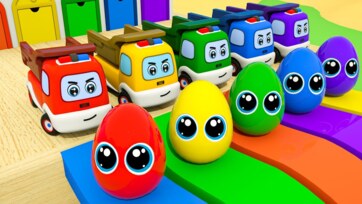
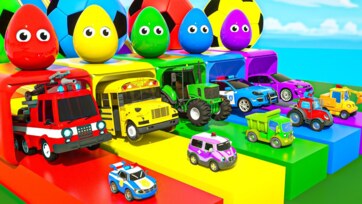
  • Sequential Order and Sets: Arranging expressive, large-eyed eggs and corresponding toy trucks in a rainbow spectrum—red, yellow, green, blue, and purple—introduces the mathematical concept of linear progression and the formation of logical sets.
  • Spatial Reasoning: Content featuring colored garage doors that correspond to the colors of specific vehicles helps children practice spatial reasoning and memory alongside their attribute-based sorting skills.
  1. Visualizing Mechanical Principles and Problem-Solving

High-fidelity digital rendering and real-world play scenarios allow children to witness physical laws and mechanical principles in action.

  • Mechanical Advantage: A blue tow truck using a cable and hook to rescue a yellow school bus stuck in thick, viscous mud serves as a foundational lesson in mechanical advantage and community problem-solving.
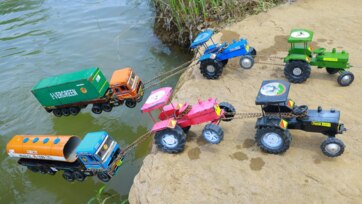
  • Combined Force and Resistance: The depiction of multiple toy tractors using chains to pull heavy trucks up a muddy riverbank reinforces concepts of combined force, resistance, and the necessity of collective effort to overcome physical obstacles.
  • Functional Roles in Society: Imagery of an anthropomorphic monkey driving a green tractor to transport livestock while another monkey collects pails of milk demonstrates that every community member has a functional role that contributes to the common good.
  1. Social-Emotional Learning (SEL): Mirroring the Internal Landscape

A critical component of modern children's media is Social-Emotional Learning, which provides children with the visual vocabulary needed to identify, validate, and communicate their own complex feelings.

  1. Naming and Validating Feelings

Exaggerated facial expressions are used as psychological mirrors for a child's internal state, helping them understand and externalize emotions.

  • Shock and Externalizing Anxiety: A child pointing in shock at a dark, smiling "ghost" figure in a bathroom or a large, Spider-Man-themed dinosaur at a bedroom window helps normalize and externalize common childhood anxieties.
  • Visual Shorthand for Sadness: The inclusion of clear, blue teardrops on a character's face—such as the toddler 'Anna'—provides a distinct visual indicator of sadness, teaching children to recognize and name this emotion in themselves and others.
  • Wonder and Curiosity: Wide-eyed, open-mouthed expressions on characters discovering something new—like a child observing a group of chickens—mirror a child’s natural sense of wonder and encourage further exploration of their environment.
  1. Modeling Empathy, Stewardship, and Caretaking

Narratives often utilize inter-species interactions to model gentle behavior, social harmony, and emotional regulation.

  • Gentle Stewardship: A young boy gently interacting with a fluffy yellow chick and its mother hen models the concept of "gentle hands" and an early respect for all living beings.
  • Identifying the Needs of Others: A panda keeper offering a bucket of fresh vegetables to a worried or hungry lion—while an elephant and giraffe observe—demonstrates caretaking roles and the developmental ability to identify and meet the needs of others.
  • The Joy of Inclusion: A smiling monkey driving a yellow tractor followed by a horse, goat, rooster, and wolf creates a visual representation of communal harmony and the joy found in shared activities.
  • Value of Companionship: Visuals of a diverse group of animals, including a pig, zebra, cow, and elephant, riding together on a brightly colored train foster themes of social inclusion and the intrinsic value of companionship.
  1. Normalizing Routines, Hygiene, and Community Responsibility

As a child's world expands beyond the immediate family, media serves as a guide for navigating the transitions, expectations, and personal hygiene routines required for healthy living.

  1. Hygiene Education through Playful Engagement

Turning repetitive daily tasks into playful, high-contrast activities reduces a child's resistance to necessary personal care routines.

  • Interactive Motivation: Smiling, anthropomorphic characters like a "toothbrush" and a "tooth" accompanied by bold text saying "Brush me" transform a hygiene requirement into a friendly, interactive invitation.
  • Visualizing Health Maintenance: The use of a small, grumpy green monster as a symbol for germs or decay helps children visualize the "why" behind brushing, making it a necessary part of health maintenance rather than an arbitrary rule.
  1. Community Systems and Service Roles

Children learn to appreciate the "helpers" and various systems in their environment by seeing characters work together.

  • Service Sector Cooperation: The congregation of an ambulance, a fire truck, and a cement mixer around a rescue scene involving a school bus reinforces the idea that professionals from different sectors work together to keep the community safe.
  • Educational Journeys: A brightly colored train driven by a young boy, carrying a diverse cargo of animals and balloons, serves as a metaphor for the excitement and collective progress found in educational journeys.
  • Imaginative Vocational Play: A young boy dressed as a pilot standing in front of a large cardboard airplane demonstrates the importance of imaginative play in exploring future roles and the broader world of travel and service.
  1. Nature as a Sensory and Educational Classroom

Vibrant depictions of outdoor habitats and animal interactions encourage a healthy transition from digital consumption to real-world sensory exploration and agricultural literacy.

  1. Biodiversity and Biological Identification

By presenting diverse species in clear, bright settings, media helps children build a biological vocabulary and essential observation skills.

  • Observation Skills in Action: Seeing a child kneeling to interact with a group of brown and white chickens encourages children to look closer at the wildlife in their own immediate environment.
  • Identifying Physical Traits: Detailed visuals of roosters with red combs, black and white spotted cows, and goats with horns help children learn the defining physical characteristics used to distinguish different animal species.
  • Agricultural Foundations: Visuals of cows being transported in a wooden trailer behind a tractor introduce children to the concepts of farm life, animal care, and the origins of the resources they use daily.
  1. Validating Tactile and Physical Discovery

Content that celebrates sensory experiences in nature encourages active, physical play and innate curiosity.

  • Nurturing Compassion: A young boy crouching in the grass to feed a chick frames nature as a safe, welcoming, and compassionate space for discovery and cross-species bonding.
  • Physical Interaction with the Environment: Depicting characters or toy vehicles interacting with mud and water validates tactile exploration as a positive, educational way to learn about the environment's varying physical properties.

Conclusion: The Integrated Blueprint for Early Development

The digital and visual landscape of early learning is a carefully constructed tapestry designed to address the development of the whole child. By using saturated colors to teach logic, expressive faces to teach empathy, and relatable life scenarios to teach responsibility, these visual narratives provide a roadmap for navigating the complexities of the real world with confidence and curiosity.

Whether a child is watching a monkey drive a tractor, learning to match a blue gorilla to a blue ball, or observing a panda feed a hungry lion, they are building the mental and emotional frameworks necessary to step out of their homes—or their cardboard airplanes—with a balanced sense of wonder and compassion. These stories turn mundane routines into moments of profound discovery, ensuring that children view their world as a place filled with helpers, friends, and endless opportunities for learning.

Advertisement
Visual Scaffolding and Holistic Development in Early Learning Media
Modern early childhood media has evolved into a sophisticated "edutainment" ecosystem, meticulously designed to support a child's cognitive, social, and emotional growth through visual scaffolding. By utilizing high-contrast visuals, expressive character archetypes, and relatable life scenarios, these narratives provide a structured framework for children to interpret the world around them. This multidimensional approach addresses everything from basic logical categorization to complex empathy-building and the normalization of daily routines. The Architecture of Cognitive Logic and Categorization Visual stimuli are the primary engines of early learning, allowing children to decode complex concepts like order, attributes, and cause-and-effect before they possess advanced verbal skills. Chromatic Matching and Attribute Isolation The use of saturated, bold color palettes is a deliberate pedagogical tool used to facilitate categorization. Attribute Alignment: Matching brightly colored animals—such as a red tiger, a green lion, a yellow bear, a blue gorilla, and a pink panther—to balls of identical hues teaches children to isolate color as a specific attribute. Sequential Order: Arranging expressive, large-eyed eggs and corresponding toy trucks in a rainbow spectrum (red, yellow, green, blue, purple) introduces the concept of linear progression and mathematical sets. Spatial Reason: Content featuring colored garage doors that correspond to the colors of specific vehicles helps children practice spatial reasoning alongside attribute-based sorting. Visualizing Mechanical Principles High-fidelity digital and physical rendering allow children to "witness" textures and physical laws in action. Mechanical Problem-Solving: A blue tow truck using a cable to rescue a yellow school bus stuck in thick mud serves as a foundational lesson in mechanical advantage and community cooperation. Teamwork and Force: The depiction of multiple tractors using chains to pull heavy trucks up a riverbank reinforces concepts of combined force and collective effort. Emotional Literacy and the Mirroring of Internal States A critical component of modern children's media is Social-Emotional Learning (SEL), which provides children with the visual vocabulary to identify and communicate their own feelings. Naming and Validating Feelings Exaggerated facial expressions are used as mirrors for a child's internal psychological state. Shock and Anxiety: A child pointing in fear at a "ghost" figure in a bathroom or a large, Spider-Man-themed dinosaur at a window helps normalize and externalize common childhood anxieties. Visual Shorthand for Distress: Blue teardrops on a character's face (such as the toddler 'Anna') provide a clear visual indicator of sadness, helping children recognize this emotion in themselves and others. Surprise and Joy: Wide-eyed, open-mouthed expressions on characters discovering something new or rushing for a bus mirror a child’s natural sense of wonder. Modeling Empathy and Care Narratives often utilize inter-species interactions to model gentle behavior and emotional regulation. Gentle Stewardship: A boy gently observing a hen and her fluffy chick models "gentle hands" and respect for living beings. Empathy in Social Settings: A panda keeper offering a bucket of vegetables to a worried-looking lion, while an elephant and giraffe observe, demonstrates caretaking roles and the identification of needs in others. The Joy of Inclusion: A smiling monkey driving a tractor followed by a horse, goat, rooster, and wolf creates a visual representation of communal harmony and shared fun. Normalizing Routines and Community Responsibility As a child's world expands, media serves as a guide for navigating the transitions and expectations of the broader community. Time Management and Transitions The transition from the private home to the public educational sphere is framed as a significant, structured event. Temporal Awareness: The prominent inclusion of a large analog clock set to 7:40 AM in a school bus scene helps children visualize punctuality and the flow of a morning routine. Autonomy: A child carrying their own backpack toward a vehicle driven by a trusted community helper (the giraffe driver) represents growing independence. Hygiene Education through Play Turning repetitive daily tasks into playful, high-contrast activities reduces resistance to hygiene routines. Interactive Motivation: Smiling characters like a "toothbrush" and "tooth" accompanied by bold text saying "Brush me" transform a requirement into a friendly invitation. Visualizing Health: Using a grumpy green monster as a symbol for germs or dirt helps children understand why brushing is a necessary part of personal care. Agricultural and Service Ecosystems Farm and rescue themes introduce children to the concepts of labor, food production, and community "safety nets". Functional Roles: Monkeys driving tractors to transport livestock or pails of milk demonstrate that every community member has a role that contributes to the whole. Service Cooperation: The congregation of an ambulance, fire truck, and cement mixer around a rescue scene reinforces the idea that professionals work together to keep the community safe. Nature as a Sensory Classroom Vibrant depictions of outdoor habitats encourage a healthy transition from digital consumption to real-world sensory exploration. Biodiversity and Biological Identification By presenting diverse species in clear, bright settings, media helps children build a biological vocabulary. Observation Skills: Seeing three green parrots with red beaks sitting on a branch encourages children to look closer at the wildlife in their own environment. Identifying Traits: Detailed visuals of roosters with red combs, spotted cows, and goats with horns help children learn the defining physical characteristics of different animals. Validating Tactile Discovery Content that celebrates sensory experiences in nature encourages active, physical play. The Joy of "Messy" Play: Framing a child sitting happily in a mud puddle with a rooster—surrounded by smiling sheep, cows, and goats—validates mucky, tactile discovery as a positive experience. Nurturing Bonds: A toddler kneeling to feed goats in a flower-filled meadow frames nature as a safe and welcoming space for nurturing interactions. Conclusion: The Integrated Blueprint for Early Development The digital landscape of early learning is a carefully constructed tapestry designed to address the development of the whole child. By using saturated colors to teach logic, expressive faces to teach empathy, and relatable life scenarios to teach responsibility, these visual narratives provide a roadmap for navigating the complexities of the real world. Whether a child is watching a monkey drive a tractor, learning to match a blue gorilla to a blue ball, or observing a panda feed a lion, they are building the cognitive and emotional frameworks necessary to step out of their homes with confidence. These stories turn mundane routines into moments of profound discovery, ensuring that children view their world with curiosity and compassion.
Advertisement
Splish, Splash, Monkey in the Bath!
Welcome to the most hilarious bathroom in the world! Today, we are looking at a picture that will make you giggle and maybe even want to jump into the shower yourself. It features a very surprised little monkey who is learning all about bubbles, water, and getting squeaky clean. This story is all about the fun of bath time, the importance of hygiene, and why monkeys (and kids!) need to wash behind their ears! Meet the Funniest Bather: The Surprise Monkey In the center of our bright blue picture is a small, furry monkey. Usually, monkeys are swinging from trees in the jungle or snacking on bananas, but this one has decided to try something new—a refreshing shower! The Face of Pure Shock Look at the monkey's face! His eyes are wide like dinner plates, and his mouth is open in a giant "O." The Water: He is holding the showerhead all by himself, and the cool water is splashing right onto his head. The Feeling: Maybe the water is a little chilly, or maybe he’s just excited by how the spray feels on his fur. It’s the face of a monkey who has just discovered a brand-new hobby! Bubbles on the Brain If you look at the top of his head, you’ll see white, fluffy bubbles. It looks like he’s using a lot of shampoo! These bubbles aren't just for fun; they are hard at work cleaning off all the jungle dust and sticky fruit juice from his fur. A Blue Mosaic Wonderland The bathroom in this picture isn't just a regular room; it’s covered in beautiful blue tiles. The Pattern of Squares The walls are made of hundreds of tiny square tiles in different shades of blue. Some are dark like the deep ocean, and some are light like a summer sky. Counting Game: Can you try to count ten blue squares? It’s like a giant puzzle on the wall! Waterproof Fun: Tiles are perfect for bathrooms because they don't mind getting wet. The monkey can splash as much as he wants, and the walls will stay sparkly and clean. The Modern Fixtures On the left, we see a shiny silver faucet. This is where the water comes from before it goes through the white hose to the showerhead. It looks very clean and modern, making it the perfect "Jungle Spa" for our little friend. Why Bath Time is So Important The monkey is having a lot of fun, but he’s also doing something very healthy. Just like monkeys, children need to wash every day to stay strong and happy. Saying Goodbye to Germs Germs are tiny little things we can't see, but they love to hide in dirt. When the monkey washes his fur with soap and water, he is washing those germs down the drain. This keeps him from getting itchy or sick. Taking Care of Your "Fur" Whether you have soft fur like a monkey or hair like a human, shampoo helps keep it shiny and healthy. Rubbing the bubbles into your head also feels like a little massage—no wonder the monkey looks so energized! Waking Up Your Senses A shower or bath is a great way to start the day. The sound of the splashing water and the smell of the soap can help us feel awake and ready for adventure, just like our surprised little friend. Learning to Be Independent One of the coolest things about this picture is that the monkey is holding the showerhead himself. He is being a "big monkey" and learning to do things on his own! Step-by-Step Showering To take a great shower like the monkey, there are a few steps: The Temperature: Make sure the water isn't too hot and isn't too cold. The Soap: Use enough soap to make a mountain of bubbles on your head. The Rinse: Use the showerhead to wash all the bubbles away until your fur—or skin—is squeaky clean. The Towel: On the right side of the picture, you can see a white towel waiting. Drying off is the best part because it’s so cozy! The Colors of Cleanliness Why is the picture so blue? Colors can change how we feel! Blue: This color makes us think of water, ice, and cleanliness. It feels fresh and cool. Brown: The monkey's fur is brown, which stands out perfectly against the blue background. It shows that he is a part of nature, even when he’s in a modern bathroom. White: The bubbles and the showerhead are bright white. White is the color of purity and soap. What Kind of Monkey is He? This little guy looks like a Macaque. Macaques are very smart animals that live in many parts of Asia. Some macaques, called "Snow Monkeys," are famous for bathing in hot springs during the winter. Our friend in the picture seems to prefer the indoor life with his blue tiles and fancy showerhead! Monkey Manners In the wild, monkeys clean each other by picking through their fur. This is called "grooming." It’s how they show they love their family. By taking a shower, this monkey is grooming himself in a very modern way! Making Bath Time Fun at Home If you sometimes don't want to take a bath, just think of the Surprise Monkey! Here are some ways to make your bath time just as exciting: Bubble Beards: Use your shampoo to make a beard or a funny hat, just like the monkey has bubbles on his head. Toy Adventure: Bring your favorite plastic animals into the tub. Maybe a duckling can go for a swim! The "Monkey" Face: Look in the mirror while you are washing and try to make the same surprised face as the monkey in the picture. Conclusion: Stay Silly and Stay Clean! The world of the Surprise Monkey is a place of joy and discovery. Whether he’s finding out how a showerhead works or just enjoying the tickle of the bubbles, he reminds us that even daily chores like washing can be a grand adventure. Next time you hear the water running in the bathroom, remember our little furry friend. Grab your towel, find your bubbles, and get ready for some splish-splash fun. Who knows? You might end up looking just as surprised and happy as he is!
Healthy Fruit Juices Every Child Should Drink Daily
Children need energy, immunity, and nutrients to grow strong, active, and healthy. While whole fruits are ideal, fruit juices — when prepared naturally and without added sugar — can be an excellent way to provide concentrated vitamins, minerals, and hydration. Daily consumption of healthy fruit juices can support growth, brain development, immunity, and digestive health, especially for children who are picky eaters or reluctant to eat whole fruits. In Pakistan, during school days and hot summers, children often rely on packaged juices, which are loaded with sugar, preservatives, and artificial colors. These can cause energy spikes and crashes, tooth decay, and poor nutrient absorption. Homemade fruit juices are the perfect solution, providing natural sweetness, concentrated nutrients, and a tasty way to keep kids hydrated and energized. Here is a detailed guide to the best fruit juices for children, their health benefits, and practical tips for preparation and consumption. Orange Juice — Immunity and Vitamin C Booster: Orange juice is packed with vitamin C, which strengthens the immune system, improves skin health, and helps the body absorb iron from other foods. Regular consumption helps children fight infections, stay active, and recover quickly from illnesses. Serving Tips: Use freshly squeezed oranges, avoiding packaged juices with sugar. Serve chilled for a refreshing drink during summers. Mix with a small amount of carrot juice to increase beta-carotene intake. Health Benefit:Vitamin C also acts as an antioxidant, protecting cells from damage and supporting healthy growth. Mango Juice — Energy and Growth Support: Mango juice is naturally sweet and rich in vitamin A, vitamin C, potassium, and antioxidants, which are crucial for bone growth, vision, skin health, and immunity. It is a favorite among children due to its delicious taste. Serving Tips: Blend ripe mango with a little water or milk for a smoothie-style juice. Avoid adding sugar; ripe mangoes are naturally sweet. Mix with a few pieces of papaya or banana to increase fiber content. Health Benefit:Potassium in mango juice helps maintain fluid balance and muscle function, supporting active children. Carrot and Apple Juice — Brain and Eye Development: Carrot juice is high in beta-carotene, which converts into vitamin A, supporting vision and tissue development. Combined with apple juice, it provides natural sweetness, vitamin C, and fiber. This combination is perfect for brain development and eye health in growing children. Serving Tips: Juice 2–3 carrots with 1 apple for a balanced flavor. Serve fresh, without adding sugar. Add a few drops of lemon juice to preserve vitamin C and enhance taste. Health Benefit:This juice supports better vision, faster tissue repair, and improved immunity. Watermelon Juice — Hydration and Electrolyte Balance: Watermelon is over 90% water and contains vitamin C, potassium, and antioxidants, making it perfect for hydration and electrolyte balance during hot months. Its natural sweetness and light flavor make it a favorite for children. Serving Tips: Blend watermelon cubes with a few ice cubes for a refreshing drink. Add a small pinch of mint for flavor and digestive benefits. Avoid straining too much pulp; it contains fiber that aids digestion. Health Benefit:Watermelon juice prevents dehydration, supports kidney function, and keeps children energized. Pomegranate Juice — Immunity and Heart Support: Pomegranate juice is rich in antioxidants, vitamin C, and potassium, supporting immunity, heart health, and overall growth. The bright red color is visually appealing, and children often enjoy the naturally sweet and tangy taste. Serving Tips: Serve fresh, made by squeezing arils at home. Mix with a little apple juice to reduce acidity for sensitive stomachs. Avoid packaged pomegranate juices, which may contain added sugar. Health Benefit:Pomegranate juice enhances blood circulation, cell repair, and overall vitality in children. Papaya Juice — Digestion and Nutrient Absorption: Papaya juice contains papain, a digestive enzyme that helps break down proteins and improves nutrient absorption. It is also rich in vitamin C, potassium, and folate, which are essential for growth, immunity, and muscle function. Serving Tips: Blend ripe papaya with a small amount of water or milk. Add a few drops of lemon juice to enhance taste and preserve nutrients. Serve chilled as a breakfast or mid-morning drink. Health Benefit:Papaya juice supports smooth digestion, better nutrient utilization, and immune health. Banana Smoothie — Energy and Bone Support: Bananas are rich in potassium, magnesium, and natural sugars, providing sustained energy for children. When blended with milk, banana smoothies also provide calcium and protein, supporting bone growth and muscle development. Serving Tips: Blend one banana with a glass of milk and a few ice cubes. Add a small amount of honey only if the child is over one year old. Mix with strawberries or blueberries for additional vitamins and antioxidants. Health Benefit:Banana smoothies help maintain energy levels during active play and support muscle and bone growth. Mixed Berry Juice — Brain and Antioxidant Boost: Blueberries, strawberries, and raspberries are rich in antioxidants, vitamin C, and fiber, which improve brain function, immunity, and digestion. A juice or smoothie made from mixed berries supports learning, memory, and attention in children. Serving Tips: Blend berries with water or milk for a nutrient-packed drink. Add a little banana for natural sweetness. Serve chilled for a refreshing summer snack. Health Benefit:Berry juices protect brain cells from oxidative damage and support cognitive development. Kiwi Juice — Vitamin C and Immune Support: Kiwi is a small fruit with high vitamin C, vitamin K, and antioxidants, making it perfect for immunity and growth. Its tangy flavor adds variety to children’s diets and encourages them to try different fruits. Serving Tips: Blend peeled kiwi with a little apple juice to reduce tartness. Mix with other tropical fruits like mango or papaya. Serve fresh, without added sugar. Health Benefit:Kiwi juice strengthens immunity, supports tissue repair, and promotes overall growth. Orange-Carrot-Papaya Juice — The Ultimate Growth Booster: Combining orange, carrot, and papaya into a single juice provides vitamin A, vitamin C, potassium, fiber, and antioxidants in one drink. This juice supports immunity, vision, brain development, and energy — making it perfect for daily consumption during school days and summer. Serving Tips: Juice 1 orange, 1 carrot, and a few cubes of papaya. Serve fresh and chilled. Adjust the ratios according to the child’s taste preferences. Health Benefit:This combination juice acts as a complete nutrient booster, supporting physical growth, immunity, and cognitive performance. Tips for Making Fruit Juices Healthy for Kids: Avoid Added Sugar: Natural sweetness from fruits is sufficient; added sugar can lead to energy spikes, tooth decay, and unhealthy weight gain. Use Fresh, Seasonal Fruits: Fresh fruits provide maximum nutrients and flavor. Seasonal fruits are also more affordable and better absorbed. Include Pulp: Leaving some pulp in the juice adds fiber, supporting digestion and satiety. Mix Fruits for Nutrient Diversity: Combining fruits ensures children get a variety of vitamins, minerals, and antioxidants in one serving. Serve in Fun Ways: Use colorful glasses, small ice cubes, or fruit garnishes to make the juice visually appealing for children. Conclusion: Healthy fruit juices can be an excellent addition to a child’s diet when prepared naturally and served in moderation. Juices like orange, mango, carrot-apple, watermelon, papaya, banana smoothie, mixed berries, kiwi, pomegranate, and combination juices provide essential vitamins, minerals, fiber, and antioxidants that support growth, immunity, brain development, and hydration. Parents should focus on fresh, seasonal fruits, avoiding added sugar, and serving juices creatively to make them appealing to children. These juices are not just beverages; they are daily nutrient boosters that help children grow stronger, stay active, and maintain healthy immunity throughout the year. By including these fruit juices in a daily routine, children can enjoy a tasty, refreshing, and nutritious way to meet their growth needs while building healthy eating habits for life.  
Scary Electric Monster Girls - Purple Vampire Transformation Challenge
You’re circling around an idea that is actually quite powerful: children don’t learn the world first through words. They learn it through sight, motion, exaggeration, and story. Language comes later, like subtitles added after the movie has already begun. Let’s tighten and deepen this into a clearer interpretation of what’s really happening inside that so-called “visual-first” approach. In contemporary early childhood development, visual media has become one of the most influential learning environments a child encounters. Bright colors, animated motion, expressive characters, and simplified narratives are not random stylistic choices. They are carefully aligned with how the young brain is wired to absorb information during its earliest years. Before children can read instructions or follow abstract explanations, they rely on sensory-rich experiences to build their understanding of reality. This visually driven ecosystem acts as what psychologists describe as cognitive scaffolding. In plain terms, it provides temporary mental structures that help children organize new information until they can reason independently. Through repeated exposure to visual patterns and symbolic storytelling, children begin constructing internal models of logic, emotion, social behavior, and physical cause-and-effect. Cognitive Logic: Learning Order Before Language Visual stimuli function as the first teaching language. Long before children grasp numbers or grammar, they can detect patterns, categorize objects, and predict outcomes based on what they observe. The use of bold, saturated colors is especially important because young brains are highly responsive to contrast. When children see objects consistently grouped by color or shape, they are unknowingly practicing classification — the same mental process later required for mathematics, reading comprehension, and scientific reasoning. Matching activities, such as associating a particular color with a recognizable symbol or character, train what researchers call attribute isolation. This means identifying one defining feature among many possibilities. It is the mental skill behind recognizing letters, distinguishing sounds, and solving puzzles. Sequential imagery — for example, objects arranged in a clear order or progression — introduces the concept of structure. Order is not taught verbally; it is felt visually. The brain begins to expect that things can follow patterns, and that expectation becomes the root of logical thinking. Even stylized anatomical visuals, such as colorful representations of body structures, help children understand that complex systems can be broken into recognizable forms. It turns biology into something approachable rather than abstract. Mechanical Understanding: A Child’s First Physics Lesson When children watch scenarios involving movement, tools, or coordinated effort, they are observing simplified models of physical laws. A vehicle pulling another object, multiple elements working together, or parts interacting within a system all demonstrate foundational mechanical principles. These scenes introduce early notions of: Force and resistance Cooperation between components Problem-solving through action The relationship between effort and outcome A child doesn’t need to understand the word leverage to sense that teamwork moves something heavy. The lesson is embedded in motion itself. This is experiential physics — learning by watching systems behave. Social-Emotional Learning: Visualizing Feelings That Have No Words Yet Young children experience emotions intensely but lack the vocabulary to explain them. Visual storytelling fills this gap by externalizing feelings. Exaggerated expressions, symbolic tears, or dramatic reactions provide a readable emotional language. Children begin to map internal sensations to observable cues. They learn what sadness looks like. What surprise looks like. What fear looks like. Surreal transformations or unexpected events in stories may appear fantastical, but psychologically they mirror how children perceive change — confusing, sudden, and sometimes overwhelming. These exaggerated scenarios help them rehearse emotional adaptation in a safe context. In essence, the child practices feeling before facing real-life equivalents. Empathy and Caregiving Through Modeled Interaction When characters respond to illness, distress, or vulnerability, children witness caregiving behaviors in action. Offering help, showing concern, or participating in shared solutions models empathy as something visible and practical. Because children are natural imitators, these visual demonstrations often translate directly into behavior. They begin to associate kindness with action rather than instruction. Empathy, at this stage, is not taught as a moral rule. It is absorbed as a recognizable pattern of response. Life Skills: Turning Responsibility Into Play Tasks like hygiene, cooperation, or maintaining order can feel restrictive if introduced as commands. Visual narratives reframe them as meaningful actions within an engaging story world. By transforming invisible threats or abstract responsibilities into tangible challenges, children understand purpose rather than just obligation. The message shifts from “do this because you must” to “do this because it helps.” This subtle reframing is remarkably effective at reducing resistance and increasing participation in daily routines. Early Economic and Social Awareness Symbolic representations of work, reward, and different living conditions introduce simplified versions of social structure. These portrayals are not lessons in economics but early exposures to the idea that effort, roles, and environments vary. Children begin forming questions about fairness, contribution, and aspiration — foundational ideas that later shape their understanding of society. Environmental Literacy and Connection to the Living World Nature-centered imagery introduces children to relationships between humans, animals, and resources. Seeing food grow, animals interact, or environments function creates early ecological awareness. This exposure fosters familiarity rather than fear of the natural world. Children develop curiosity about where things come from and how living systems coexist. Such impressions can strongly influence long-term attitudes toward health, sustainability, and care for surroundings. The Real Function of Visual Learning: Building Mental Blueprints What appears to be simple entertainment is actually rehearsal for reality. Each repeated visual narrative strengthens neural pathways related to reasoning, emotional regulation, and adaptive behavior. The child is not memorizing information. The child is constructing frameworks — mental blueprints used later to interpret real experiences. By the time formal education begins, much of the foundational architecture for understanding has already been assembled through observation-driven learning. The visual-first approach works because it aligns with developmental biology rather than fighting against it. It respects the order in which human cognition naturally unfolds: sensation first, meaning second, language third. Children see.Then they feel.Then they understand.Only much later do they explain. That sequence, ancient and stubborn, is why visual storytelling remains one of the most potent educational forces in early childhood — not because it replaces teaching, but because it prepares the brain to be teachable in the first place. If you want to take this further, the next layer worth examining is how different kinds of visual pacing — fast-cut versus slow narrative — shape attention span and memory formation in very different ways. That’s where neuroscience starts getting deliciously weird.
How 3D Animation Shapes Children’s Imagination
  The world of children’s entertainment has been revolutionized by 3D animation. Unlike traditional cartoons, 3D animation allows limitless creativity—gravity can bend, colors can explode, and impossible adventures come to life. From high-flying circus acts to chaotic kitchen mishaps, these animated worlds blend humor, adventure, and life lessons, capturing the attention of young audiences while subtly teaching valuable skills. In this exploration, we dive into iconic 3D animated scenarios that define modern storytelling, where babies ride lions, monsters run kitchens, and farm animals take center stage. Circus Escapades and the Great Animal Parade: One of the most joyful and energetic staples of children’s 3D animation is the “Animal Parade,” often set in a circus environment. Imagine a fearless baby sitting atop a galloping lion, leading a whimsical procession of animals across a flower-filled meadow. Diverse Animal Companions: A cheerful purple hippo, a smiling zebra, a long-necked giraffe, and a tiny yellow duckling follow along, each adding a unique personality to the scene. The Circus Touch: A blue elephant peeks from a red circus wagon, while a comically shocked clown in bright overalls watches the parade unfold. Visual and Emotional Impact: Set against a bright blue sky dotted with fluffy clouds, the scene celebrates freedom, leadership, and the playful bond between children and animals. It subtly teaches courage, empathy, and teamwork through spectacle and humor. Kitchen Chaos and the Giant Cereal Disaster: From the wide-open circus to the confined kitchen, 3D animation thrives on exaggerated, comedic moments. Enter Monster Chef Meledton—a gigantic, fluffy orange creature with tiny horns and an insatiable appetite. Slapstick Fun: Wearing a tall chef’s hat, Meledton attempts to pour milk into a bowl of rainbow-colored cereal, only for a tidal wave of milk to erupt, sending loops flying across the kitchen. Miniature Helpers: Tiny mouse assistants dressed in chef outfits scramble to avoid the flying cereal, adding layers of humor and suspense. Detailed Environment: Overflowing pancakes, floating milk cartons, and bowls of fruit create a “chaotic yet delightful” atmosphere that keeps children visually engaged and encourages them to laugh at controlled disorder. This scene combines fun with subtle lessons in responsibility, cause and effect, and problem-solving—teaching children that mistakes can be part of learning. Farmyard Tales: Sports and Secret Missions: Farm settings in 3D animation often mix lighthearted play with thrilling adventures, providing a versatile backdrop for storytelling. Farm Animal Football: A sunny farm hosts a playful football match between an orange kitten with green eyes and a proud white rooster. Playful Interaction: The kitten crouches in playful anticipation, while the rooster readies itself to kick a colorful patchwork ball. Idyllic Setting: Classic red barns, wooden fences, and lush greenery promote themes of friendship, teamwork, and healthy competition. Ninja Night Mission: When night falls, the same farm transforms into a scene of suspense and comedy. A muscular ninja in midnight black engages in a tug-of-war with two cows near a wooden barn. Tension Meets Humor: The brown and white cows strain against the rope while the ninja’s exaggerated movements add comic relief. This scenario introduces stealth, strategy, and problem-solving in a way older children can enjoy. Rainy Day Kindness and Unlikely Guides: 3D animation excels at turning everyday situations, like a rainy afternoon, into memorable adventures. Booba’s Rain Adventure: Booba, a furry white character, holds a giant yellow umbrella, looking surprised by the sudden downpour. Unexpected Friends: A cheerful green frog holds a tiny umbrella and guides Booba through the rain, showing children the value of kindness, cooperation, and finding help in unexpected places. These scenes teach emotional intelligence and empathy through exaggerated expressions and playful storytelling. Educational Benefits of 3D Animation: Beyond entertainment, 3D animation offers real developmental advantages for children: Empathy and Cooperation: Scenes like mice assisting a monster chef or animals parading together emphasize teamwork and social skills. Emotional Awareness: Characters’ expressive faces—whether shocked, happy, or confused—help children recognize and understand different emotions. Creative Problem Solving: Unusual scenarios, like a ninja wrestling cows or a monster managing a kitchen disaster, encourage children to think critically and imaginatively. Visual Learning: Bright colors, dynamic motion, and exaggerated gestures make abstract concepts more concrete, supporting memory and comprehension. Why 3D Animation is a Gateway to Imagination: From the “Giant Cereal Disaster” to circus animal parades, 3D animation is more than eye-catching spectacle. It is a gateway to curiosity, imagination, and problem-solving. Safe Exploration: Children can experience adventurous situations in a controlled, safe environment, exploring ideas without real-world risk. Interactive Imagination: Every scene invites the question, “What happens next?”—turning passive viewing into active mental engagement. Life Lessons in Disguise: Through humor, chaos, and adventure, children learn courage, empathy, creativity, and the joy of discovery. Conclusion: Creativity, Learning, and Fun All in One Modern 3D animation transforms ordinary stories into extraordinary experiences. Whether a child is cheering for a kitten scoring a goal, laughing at a flying cereal disaster, or following Booba through the rain, they are also learning essential life skills. The beauty of 3D animation lies in its ability to blend entertainment with education seamlessly. By combining vibrant visuals, imaginative storytelling, and emotional depth, it creates an immersive environment where children not only play with ideas—they grow with them. In today’s digital age, 3D animation isn’t just a form of entertainment. It is a playground for the mind, a lab for emotional development, and a classroom for curiosity. When children watch these adventures, they’re not just entertained—they’re being trained to think, empathize, and explore a world where imagination knows no bounds.  
Digital Screen Time for Kids: How Much Is Just Right?
In today’s world, screens are everywhere, and it’s almost impossible to keep kids away from them completely. From educational videos to interactive games, digital content has become an essential part of many children’s lives. While these tools can be highly beneficial, finding the right balance is crucial to ensure healthy development. How Much Screen Time Is Ideal? Experts recommend different limits based on age: • 0-2 years old: Avoid screen time except for video calls with family members. At this stage, face-to-face interactions and hands-on learning are far more important. • 2-5 years old: Up to 1 hour of screen time per day, ideally focused on educational or interactive content. • 6 years and older: Limit screen time to about 2 hours a day, ensuring children also engage in physical activities, reading, and social interactions. Making Screen Time Meaningful Here are some tips to ensure kids benefit from their screen time: 1. Choose high-quality content: Look for educational videos, meaningful stories, or interactive programs that develop skills and knowledge. 2. Watch together: Co-viewing allows parents to discuss the content, ask questions, and reinforce learning. 3. Set time limits: Establish a daily or weekly screen time schedule and stick to it. Why Balance Is Important While digital content offers numerous advantages, it should never replace real-world experiences. Outdoor play, creative projects, and spending time with family and friends are vital for a child’s overall growth and development. Screen time should complement these activities, not dominate them.  Children learn by observing their parents. When adults demonstrate healthy screen habits, like putting phones away during meals or prioritizing outdoor activities, kids are more likely to follow suit. Encouraging a Holistic Approach Encourage children to use their screen time to explore new ideas, but also provide plenty of opportunities to apply what they’ve learned in the real world. For example, after watching a video about animals, visit a zoo or read a book about wildlife. Technology as a Tool for Growth The digital age is full of opportunities, and when used responsibly, screen time can be an incredible tool for learning, creativity, and connection. With thoughtful guidance from parents, children can thrive in a balanced digital and real-world environment. 
How Screen-Based Learning Is Rewiring Early Childhood Education
Early childhood education has quietly undergone a transformation. Where learning once depended almost entirely on physical toys, books, and human interaction, today’s children are growing up in an environment where visual media actively participates in their development. Carefully designed educational content now blends animation, storytelling, and behavioral modeling to create structured learning experiences that support thinking skills, emotional awareness, and everyday problem-solving. This shift is not about replacing traditional learning. It is about expanding it. When used intentionally, visual media functions as an early training ground where children experiment with logic, relationships, and real-world understanding in ways that feel natural and engaging. Visual Storytelling as a Foundation for Early Brain Organization Young children process the world visually long before they can explain it verbally. Their brains are wired to detect contrast, recognize patterns, and respond to motion. Educational animations take advantage of this biological reality by presenting information through bold imagery, repeated structures, and simplified scenarios. Instead of memorizing facts, children begin by recognizing order. When they repeatedly see objects grouped by similarity—whether through color, shape, or role—they build mental frameworks that later support reading, mathematics, and reasoning. These frameworks act like invisible scaffolding, allowing more complex knowledge to attach itself over time. Pattern Recognition: The Hidden Beginning of Analytical Thinking One of the earliest intellectual breakthroughs in childhood is the ability to notice patterns. Educational visuals make this process highly accessible by arranging objects in predictable ways that encourage observation and comparison. A sequence of related items encourages children to ask internal questions: Why does this come next?What makes these belong together?What changes when one is different? These micro-observations strengthen classification skills, which are essential for logical reasoning later in school. Without realizing it, the child is practicing the same mental process used in scientific categorization. Learning Cause and Effect Without Formal Instruction Children grasp physical principles not through lectures, but through observation of action and consequence. Educational scenarios often show characters solving problems using effort, tools, or teamwork. When multiple elements must work together to achieve a result, children begin to understand relationships between force, environment, and outcome. They observe that: Some problems require cooperation. Tools can change what is possible. Persistence leads to resolution. This early exposure builds confidence in experimentation and reduces fear of failure. A child learns that challenges are meant to be solved, not avoided. Emotional Recognition Begins With What Children Can See Before children can describe emotions, they must first learn to recognize them. Visual media simplifies emotional expression so it becomes readable and relatable. Clear gestures, posture, and facial cues allow children to connect feelings with situations. This repeated exposure strengthens emotional intelligence by helping children: Identify what someone else may be feeling. Understand that emotions change over time. Develop appropriate responses to social situations. This process is especially important in the early years, when frustration or fear can otherwise feel overwhelming and confusing. Modeling Social Behavior Through Relatable Scenarios Children learn how to interact not only from direct experience but also from observation. Educational narratives simulate common childhood situations such as waiting for a turn, helping others, or navigating disagreements. By watching these interactions unfold, children begin to internalize behavioral expectations. They see cooperation demonstrated rather than explained. Over time, these modeled behaviors shape how they approach friendships, sharing, and teamwork in real life. This is social rehearsal disguised as storytelling. Transforming Responsibility Into Exploration Instead of Obligation Daily routines can feel repetitive or restrictive to young children. Educational content reframes these routines as part of an engaging world where actions have meaning. Tasks connected to self-care or participation are presented not as commands, but as contributions. The child begins to associate responsibility with independence rather than restriction. This subtle reframing encourages motivation from within rather than reliance on external pressure. Imagination as a Bridge to Real-World Confidence Pretend-play narratives play a powerful developmental role. When children imagine themselves operating vehicles, solving challenges, or exploring environments, they are practicing decision-making and creativity. These experiences nurture: Initiative Problem-solving confidence Adaptability Curiosity-driven learning A cardboard structure can become an aircraft in the mind of a child, but cognitively it becomes something even more valuable—a rehearsal space for innovation. Introducing Systems Thinking at an Early Age Many educational scenarios show interconnected roles working toward shared outcomes. These depictions introduce children to the idea that environments function as systems rather than isolated events. Children begin to understand that: Different roles support one another. Resources move through processes. Communities rely on cooperation. This early awareness lays the groundwork for understanding responsibility, sustainability, and collaboration later in life. Encouraging Healthy Interaction With the Natural World Exposure to animals, outdoor environments, and agricultural themes fosters curiosity about nature and living systems. These portrayals build familiarity rather than distance, encouraging children to see themselves as participants in the environment rather than observers. Positive associations with nature formed early often influence lifelong attitudes toward care, respect, and exploration. Why Repetition in Educational Media Is Actually Beneficial Adults sometimes view repetition in children’s content as unnecessary, but repetition is essential for neurological development. Repeated exposure strengthens neural connections, allowing skills to become automatic. Each familiar storyline or visual structure reinforces understanding and builds confidence through predictability. Children feel secure when they can anticipate outcomes, and this sense of mastery encourages further engagement. Learning, at this stage, thrives on familiarity. The Connection Between Digital Experiences and Real-Life Behavior When children encounter real-world equivalents of what they have seen visually, recognition occurs. That recognition accelerates understanding because the brain treats the experience as something already partially known. A previously observed situation becomes easier to interpret, reducing hesitation and encouraging participation. Visual learning, therefore, does not remain confined to the screen—it transfers into lived experience. Rethinking the Conversation Around Children and Screens The discussion should not focus solely on limiting exposure but on improving the quality and purpose of what children engage with. Intentional educational media can complement hands-on learning by preparing children mentally for experiences they will later encounter physically. When thoughtfully integrated, visual storytelling can: Strengthen readiness for structured education. Support emotional growth alongside cognitive development. Encourage exploration instead of passive consumption. Reinforce positive habits through engaging narratives. The emphasis must remain on balance and intentionality. A Developmental Tool Hidden Inside Entertainment What looks like simple entertainment often carries complex educational design. Color organization teaches classification. Narrative challenges introduce resilience. Character interaction models empathy. Repetition strengthens understanding. These elements work together to form an early developmental architecture that supports how children think, relate, and adapt as they grow. Visual media, when guided by educational purpose, becomes less about distraction and more about preparation—preparation for school, relationships, responsibilities, and lifelong curiosity. Final Thought: The New Learning Environment Is Hybrid Today’s childhood exists at the intersection of physical experience and visual storytelling. Rather than competing, these two environments can reinforce one another when used thoughtfully. Educational media cannot replace real-world exploration, but it can prepare children to engage with that world more confidently and meaningfully. When designed with developmental insight, it becomes a quiet partner in raising capable, curious, and emotionally aware learners. And that partnership, when used wisely, can shape not just what children know—but how they learn to understand everything that comes next.  
Advertisement
Are Nursery Rhymes Still Relevant in the Digital Age?
Nursery rhymes have been a cornerstone of early childhood education for centuries. These simple, rhythmic songs have helped generations of children develop language skills, memory, and creativity. However, in today's fast-paced digital world—filled with interactive apps, YouTube videos, and AI-powered learning tools—do traditional nursery rhymes still hold value? Let's explore their significance and how they fit into the modern era. The Timeless Benefits of Nursery Rhymes Even in a digital world, nursery rhymes offer numerous developmental benefits for young children. 🎶 1. Language and Literacy Development Nursery rhymes introduce children to the rhythm, sounds, and patterns of language. The repetitive structure helps improve vocabulary, pronunciation, and sentence formation. Studies show that children who learn nursery rhymes at an early age tend to develop stronger reading skills later on. 🧠 2. Memory and Cognitive Skills Because nursery rhymes are short and repetitive, they help improve memory retention. Children who sing or recite rhymes regularly develop better recall abilities, which are essential for learning. 👥 3. Social and Emotional Growth Singing nursery rhymes together fosters social bonding between children, parents, and teachers. Many rhymes also teach valuable life lessons, emotions, and moral values in a way that is easy for young minds to grasp. 🚶‍♂️ 4. Motor Skills and Coordination Action rhymes like "Head, Shoulders, Knees, and Toes" or "Itsy Bitsy Spider" encourage physical movement, helping children develop fine and gross motor skills. The Digital Shift: How Nursery Rhymes Have Evolved While nursery rhymes remain relevant, the way children engage with them has changed significantly due to technology. 📱 1. Digital Platforms and YouTube Influence Traditional nursery rhymes are now widely available on YouTube, streaming services, and educational apps. Animated versions with engaging visuals and interactive elements make learning even more immersive. Channels like Cocomelon and Super Simple Songs have transformed classic rhymes into digital experiences. 🎧 2. Audiobooks and Smart Devices Smart speakers like Alexa and Google Home allow children to listen to nursery rhymes on demand. Audiobooks and podcasts offer narrated versions of classic rhymes, making them accessible anywhere. 🧩 3. Interactive Learning Apps Apps like ABCmouse, Khan Academy Kids, and Lingokids integrate nursery rhymes into their educational programs, combining music with interactive activities to enhance learning. Are Digital Nursery Rhymes as Effective as Traditional Ones? While digital versions of nursery rhymes provide engaging visuals and sounds, they sometimes reduce active participation. Watching a YouTube video is a passive activity, whereas singing a rhyme with a parent or teacher involves direct engagement. Experts suggest combining both approaches:✔ Use digital tools in moderation – Screen time should be limited and balanced with real-world interaction.✔ Sing along with children – Instead of just watching videos, encourage kids to sing and move along.✔ Use physical books – Reading nursery rhymes from a book strengthens early literacy skills. Conclusion: The Best of Both Worlds Nursery rhymes are just as relevant today as they were centuries ago—but they have evolved with technology. While digital platforms offer new and exciting ways to experience rhymes, the core benefits remain the same: language development, memory improvement, and social bonding. By blending traditional storytelling with modern technology, parents and educators can ensure that nursery rhymes continue to be a valuable part of early childhood learning.