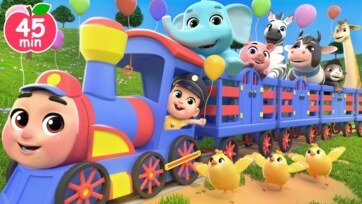
Walk into any home with a preschooler today and you will notice something striking. Before the child can read, before they can even tie their shoes, they can already identify colors, machines, animals, and emotions—often learned through visual media. This is not random exposure. It reflects a global shift toward what educators now call visual-first learning, a method where images, motion, and storytelling introduce foundational concepts long before formal academics begin.
In countries like Pakistan, where early childhood education is delivered through a mix of home teaching, private preschools, and informal play-based environments, visual learning tools have quietly become one of the most influential developmental forces. The key question is no longer whether children watch such content, but whether that content actually strengthens thinking, empathy, and real-world understanding.
When designed intentionally, visual media becomes less about entertainment and more about neurological training.
Why Young Brains Prefer Images Over Words
A child’s brain develops in layers. Language comes later. Pattern recognition comes first.
Neuroscience shows that children under age six process visual information nearly 60,000 times faster than text. That means a well-constructed animated scenario can teach categorization, prediction, and sequencing more efficiently than verbal explanation alone.
Consider a simple example from daily life. A child watches repeated visuals of objects grouped by color. Later, at home, they begin sorting toys the same way—without being told. The brain has already absorbed the logic structure.
This is called implicit learning, and it is incredibly powerful because it feels like play rather than instruction.
Color-Based Structuring Builds the Foundations of Mathematics
Bright, high-contrast visuals are not just aesthetic choices. They are cognitive tools.
When children repeatedly see items organized by shared attributes—same color, same shape, same function—the brain builds neural pathways for classification. Classification later becomes the basis for:
- Mathematical grouping
- Logical reasoning
- Reading comprehension patterns
- Scientific observation
In many Pakistani households, parents unknowingly reinforce this learning. Sorting vegetables before cooking, arranging bangles by color, or separating grains are everyday activities that mirror the same structure children see visually.
The digital and physical worlds begin reinforcing each other.
Mechanical Storylines Introduce Early Scientific Thinking
Children are natural engineers. Give them wheels, movement, and obstacles, and their curiosity activates instantly.
Visual narratives involving vehicles, tools, and environmental challenges teach core physics concepts without using scientific terminology. When a child watches a scenario where multiple machines must work together to move a heavy object, they begin understanding force, resistance, and cooperation.
This becomes especially relevant in semi-urban and rural regions, where children already observe tractors, repair work, and transportation systems in real life. Visual storytelling connects those observations into meaningful explanations.
Science is no longer abstract. It becomes something they recognize from their surroundings.
Emotional Recognition: The Most Overlooked Educational Outcome
Academic skills often receive the spotlight, but emotional intelligence is equally critical during early development.
Children cannot yet explain fear, jealousy, or nervousness. However, exaggerated visual expressions—wide eyes, tears, hesitation, relief—act as emotional translators. These cues help children map feelings they experience internally but cannot yet name.
This type of modeling is essential in cultures where emotional communication is guided more by observation than direct discussion. When children see characters experiencing relatable situations, such as visiting a doctor or sharing space with others, they develop emotional predictability.
They learn that feelings are manageable, temporary, and shared by others.
Turning Daily Responsibilities Into Playful Narratives
One of the biggest parenting challenges is encouraging young children to accept routine tasks. Visual storytelling cleverly reframes these tasks as adventures rather than obligations.
Cleaning becomes preparation. Helping becomes teamwork. Organizing becomes problem-solving.
Role-based scenarios—children pretending to operate vehicles, manage activities, or solve challenges—build what psychologists call agency, the belief that one’s actions matter.
This belief strongly correlates with confidence in school years later.
In Pakistan’s family-centered culture, where children often imitate adult responsibilities early, visual learning strengthens behaviors already encouraged at home.
Hygiene Education Through Symbolic Storytelling
Teaching health habits to young children can be difficult because germs are invisible and abstract. Visual narratives solve this by turning unseen threats into understandable symbols.
When children see exaggerated representations of illness or cleanliness battles framed as victories, they grasp cause and consequence more easily. Washing hands is no longer a command; it becomes a meaningful action tied to protection and well-being.
Given that public health awareness remains an ongoing challenge in many communities, these early visual lessons can shape lifelong habits.
Nature-Based Visuals Reconnect Children With Food and Environment
Modern urban lifestyles often separate children from the origins of what they consume. Visual storytelling bridges this gap by depicting agriculture, animals, and transportation in relatable ways.
When children observe how resources move from one place to another, they begin forming mental connections about effort, sustainability, and interdependence.
This is particularly significant in Pakistan, where agriculture contributes nearly one-fifth of the national GDP, yet many urban children grow up without direct exposure to farming life.
Visual familiarity restores that missing connection.
Repetition Is Not Boredom—It Is Brain Construction
Parents sometimes worry when children insist on watching the same scenario repeatedly. From a developmental standpoint, repetition is exactly what the brain needs.
Each repeat strengthens neural circuits responsible for memory, anticipation, and comprehension. Predictable story structures create psychological safety, allowing children to focus on learning patterns rather than processing novelty.
Adults seek variety. Children seek mastery.
Why Simplified Characters Teach Better Than Realistic Ones
Interestingly, children learn more effectively from stylized, expressive characters than from realistic representations. Simplification removes distractions and highlights essential cues like emotion, action, and relationships.
This allows the brain to focus on meaning rather than detail.
Anthropomorphic figures—objects or animals behaving like humans—serve as universal teaching tools because they avoid cultural specificity while still modeling behavior.
They are symbols, not simulations.
The Essential Role of Parents in Guiding Visual Learning
Visual education cannot function in isolation. Its real power emerges when adults connect screen experiences with real-world practice.
If a child watches content about cooperation, encourage group play.
If they see stories involving animals, introduce them to real-life observation.
If they learn sorting visually, provide hands-on materials.
This integration transforms passive watching into active learning.
Educational media should act as a spark, not a substitute.
Choosing Quality Content in a Saturated Digital Environment
Not all children’s media supports development. High-quality material shares several defining characteristics:
It follows logical sequences instead of chaotic stimulation.
It models problem-solving rather than instant solutions.
It reflects everyday experiences children recognize.
It encourages curiosity rather than passive consumption.
Fast-paced visuals without narrative structure may entertain, but they rarely educate.
Intentional design matters more than duration of exposure.
Preparing Children for a Future That Demands Adaptability
Today’s children will grow into a world defined by technological acceleration, complex social systems, and constant change. Early learning must prepare them not just to memorize information, but to interpret, adapt, and collaborate.
Visual-first education contributes to this preparation by:
Building flexible thinking before rigid instruction
Encouraging empathy alongside independence
Connecting imagination with functionality
Teaching systems rather than isolated facts
These capabilities are far more valuable than early memorization.
A Shift That Parents and Educators Must Understand
Visual learning is not a passing trend. It represents a structural change in how young minds engage with knowledge. Attempting to eliminate it entirely is unrealistic. Ignoring its influence is risky.
Guided correctly, it can become one of the most effective developmental tools available.
Children are not just watching stories. They are constructing mental frameworks about how the world works—how problems are solved, how people interact, how responsibilities are shared.
And that construction happens quietly, frame by frame, long before formal schooling begins.
Understanding this transformation allows families and educators to shape it intentionally rather than leaving it to chance.