Parents today are raising children in a world filled with screens, animations, and colourful digital characters. Many worry that cartoons are only entertainment. The reality is very different. When designed correctly, cartoons can become one of the most effective early learning tools a child can experience.
If your website shares cartoons alongside articles, you are already standing in a powerful educational space. The key is understanding how these visuals shape a child’s brain, behaviour, and emotional growth — and then using that knowledge intentionally.
This is not about passive watching. This is about guided visual learning.
Children Learn With Their Eyes Before They Learn With Words
A toddler does not start learning through textbooks. A child first understands the world visually — through colours, shapes, movement, and facial expressions.
Bright animated scenes help children recognise patterns long before they can read or count.
For example, when a cartoon repeatedly shows:
- A red object doing one action
- A blue object is doing another
- A yellow object appearing in a sequence
The child begins to understand categorisation. This is the foundation of mathematics and logic, even though no numbers are being taught directly.
In Pakistan and similar regions, many children enter school without preschool exposure. Visual learning through cartoons can bridge that early gap by training the brain to notice differences, similarities, and order.
That is not entertainment. That is cognitive preparation.
Simple Cartoon Stories Teach Cause and Effect
Young children struggle to understand consequences because they cannot yet think abstractly. Cartoons make cause and effect visible.
When a character spills water and slips, children see:
Action → Result.
When a character helps a friend and receives kindness back, children see:
Behaviour → Social Response.
These small story loops train the brain to predict outcomes. This ability later supports problem-solving, discipline, and even moral reasoning.
Without such exposure, children often learn consequences only through punishment. Visual storytelling allows them to understand outcomes safely.
Emotional Intelligence Begins With Recognising Faces
Many adults assume emotions develop naturally. In truth, children must learn how to identify feelings — both their own and others'.
Cartoons exaggerate facial expressions:
Big smiles
Large tears
Wide eyes
Clear laughter
These are not random artistic choices. They are emotional teaching tools.
A child watching such expressions learns:
“This face means happy.”
“That face means scared.”
“This situation causes sadness.”
In communities where emotional discussion is not always encouraged at home, these visual cues become essential early lessons in empathy.
Children who can identify emotions early are more cooperative, less aggressive, and better communicators later in school.
Cartoons Make Difficult Experiences Less Frightening
Many children fear doctors, school, strangers, or new environments. When cartoons show characters facing the same fears and overcoming them, children mentally rehearse those situations.
A child watching a character visit a doctor calmly is more prepared for their own visit.
A child watching characters solve small problems becomes less anxious when facing challenges.
Psychologists call this “modelling behaviour,” but in simple terms, children copy what feels familiar.
Cartoons make unfamiliar life events feel safe.
Visual Stories Introduce Social Rules Without Lectures
Young children do not respond well to long verbal instructions. Saying “share your toys” rarely works.
Showing characters taking turns, helping each other, or apologising works far better.
Through repeated exposure, children begin to internalise:
Sharing is normal
Helping is good
Hurting others has consequences
This learning happens quietly, without resistance.
For parents and teachers, this reduces the need for constant correction.
Everyday Life Skills Become Adventures Instead of Chores
One of the strongest advantages of cartoon-based learning is its ability to turn routine habits into exciting actions.
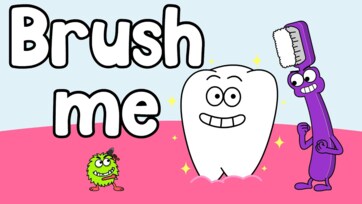
Brushing teeth becomes fighting “germ monsters.”
Cleaning up toys becomes teamwork.
Eating vegetables becomes gaining strength like a hero.
Children resist commands. They embrace stories.
This transformation is especially helpful in cultures where academic success is prioritized but habit training is often stressful.
When life skills are introduced visually, children adopt them willingly.
Cartoons Encourage Imagination — And Imagination Builds Intelligence
Some adults mistakenly think imagination distracts from learning. Research shows the opposite.
Imaginative play strengthens:
Problem-solving
Language development
Creativity
Future planning abilities
When children pretend to be pilots, farmers, or builders after watching cartoons, they are practising real-world thinking patterns.
A child imagining how to “fix” something today becomes an adult capable of designing solutions tomorrow.
Innovation begins with pretend play.
Early Exposure to Community Roles Builds Responsibility
Cartoons often show characters working in different roles — drivers, helpers, caregivers, builders.
This gives children an early understanding that society functions through cooperation.
In many developing regions, children see limited career examples in daily life. Visual storytelling expands their understanding of what people can do.
It quietly answers the question:
“What will I become someday?”
Visual Learning Supports Children With Different Learning Styles
Not all children learn through listening. Some struggle with verbal instruction but respond instantly to images and movement.
These are visual learners.
Cartoons provide them with access to understanding that traditional teaching may not offer.
For such children, animated learning is not optional — it is necessary.
The Risk: Passive Watching Without Guidance
Now comes the important truth.
Cartoons are powerful, but only when used intentionally.
Endless, random viewing weakens attention span and reduces learning impact. The goal is not to give children more screen time. The goal is to give them meaningful visual experiences.
That means:
Choosing content with clear lessons
Keeping viewing time limited
Discussing what the child watched
Connecting it to real-life actions
Without this guidance, even educational visuals lose value.
How Parents Can Turn Cartoon Time Into Learning Time
Instead of asking children, “What did you watch?” try guiding them:
Ask what the character did.
Ask how the character felt.
Ask what they would do in that situation.
This turns passive watching into active thinking.
Even two minutes of discussion can double the educational benefit.
Why This Approach Matters More Today Than Ever
Children today are growing up in the most visually saturated environment in human history. Ignoring that reality does not protect them.
Guiding it does.
If used wisely, cartoons can:
Prepare children for school
Strengthen emotional stability
Encourage curiosity
Build early reasoning skills
Make learning enjoyable instead of stressful
This is not replacing traditional education. It is preparing children to succeed in it.
A Clear Message for Parents and Educators
Cartoons are not the enemy of learning. Poorly chosen content is.
When selected carefully and paired with conversation, animated media becomes one of the strongest developmental tools available — especially for young children still building language, confidence, and understanding of the world.
Your website, by combining cartoons with thoughtful articles, can play a meaningful role in shaping how children grow, think, and relate to others.
Used wisely, these colourful stories are not distractions.
They are training wheels for life itself.