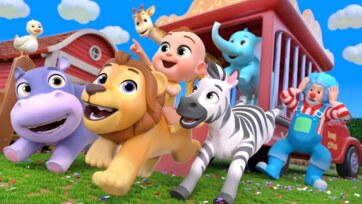
Modern educational media for children has grown into a complex, visually immersive ecosystem. Prioritizing high-contrast imagery, relatable anthropomorphic characters, and purposeful social modeling, it supports rapid cognitive and emotional development. By transforming abstract concepts—like physics, economic inequality, and internal emotional states—into tangible, playful forms, this media acts as a “cognitive scaffold,” helping children interpret both physical mechanics and social dynamics with confidence.
This analysis examines the key pedagogical themes in contemporary visual media across four critical developmental domains.
- Cognitive Logic: Categorization, Sequencing, and Physical Mechanics
Visual media acts as a primary engine for early logical reasoning. Before children can articulate ideas verbally, they can process cause-and-effect relationships, understand sequential order, and explore mechanical function through observation and interaction.
- Chromatic Reasoning and Sequential Awareness
Color serves as a cognitive cue, helping children organize information and identify patterns.
- Sequential Sorting: For example, a child drives a pink tractor pulling a train of multicolored trailers, each holding an ice cream cone in red, yellow, green, or blue. This sequence teaches linear order, grouping, and pattern recognition.
- Anatomical Awareness: Stylized skeletons in glowing primary colors introduce the basics of human anatomy without fear, helping children differentiate structural forms and develop attention to specific attributes.
- Identity Mapping: Characters holding objects shaped like themselves—such as a white creature clutching an orange popsicle in its silhouette—reinforce the concept of identity, representation, and the association between form and meaning.
By combining color, form, and spatial relationships, children build mental frameworks that lay the foundation for mathematical, scientific, and observational reasoning.
- Mechanical Principles and Collaborative Problem-Solving
Interactive machinery and toy-based play introduce foundational physics concepts in a playful, memorable format.
- Complex Recovery Operations: Scenes featuring a crane, tractors, and excavators collaboratively rescuing overturned trucks from a mud pit illustrate leverage, tension, and teamwork. Children understand that some problems require combined effort.
- Interdependent Systems: A baby suspended amid interlocking gears provides a visual metaphor for how components of a system rely on each other to function.
- Forces and Resistance: Tug-of-war sequences with ropes attached to giant scissors, or a ninja trying to restrain two cows with a rope, give children an intuitive grasp of weight, tension, and opposing forces.
- Social Structure: Imagery of “police babies” managing a mermaid on a beach or police dogs enforcing fairness illustrates social order and communal responsibility in an engaging, age-appropriate way.
Through these visuals, children learn both the mechanics of the physical world and the value of collaboration.
- Social-Emotional Learning (SEL): Recognition, Validation, and Empathy
A central strength of visual media is its ability to give children a language for emotions they cannot yet verbalize. Through exaggerated expressions and imaginative scenarios, children explore complex feelings safely.
- Mirroring Intense Emotions
Visual storytelling acts as a psychological mirror, helping children navigate fear, surprise, and social complexity.
- Shock and Surprise: Characters reacting to a giant T-Rex in a living room or a strawberry with a missing bite signal universal alarm and teach children that such reactions are normal.
- Perspective-Taking: Contrasts between startled characters and calm observers—like a small figure facing a large, indifferent bee—demonstrate that people respond differently to the same event.
- Social Horror and Transformation: Imagery of a peer’s head transforming into a giant, toothy cup allows safe exploration of exclusion and uncertainty within peer dynamics.
- Identity and Otherness: Characters with glowing eyes or fangs represent the feeling of being different or masking true emotions, providing a framework for discussing diversity and self-expression.
This approach promotes emotional literacy, self-awareness, and resilience in navigating social and personal challenges.
- Modeling Empathy and Nurturing Behavior
By depicting intentional acts of care, visual media teaches children the value of proactive empathy.
- Caring for Others: A child bringing lemon water and a thermometer to a sick peer demonstrates the importance of supportive action.
- Environmental Responsibility: A child protecting a small lamb from the rain teaches stewardship and consideration for vulnerable beings.
- Cross-Species Harmony: Scenes where an orange cat and a white chicken share a colorful soccer ball highlight collaboration, fairness, and respect across differences.
Through such examples, children internalize empathy and learn actionable strategies for responding to the needs of others.
- Life Skills: Responsibility, Hygiene, and Social Awareness
Transforming routine tasks and societal expectations into imaginative adventures helps children embrace health practices, communal responsibilities, and structured play.
- Hygiene as Play and Protection
Invisible threats, like germs, are rendered into playful “villains,” turning health practices into engaging narratives.
- Automated Cleaning: Police dogs navigating car washes with oversized brushes and soap reinforce hygiene routines and the concept of systematic maintenance.
- Joyful Hygiene: Bathing scenes with pink bubbles and cheerful creatures associate personal care with enjoyment, creativity, and sensory play.
- Financial Literacy and Social Order
Early exposure to wealth, labor, and authority through visuals helps children navigate social hierarchies.
- Economic Awareness: Contrasting a child with stacks of cash and a “money house” against a peer with a broom and cardboard home introduces basic economic concepts and labor disparities.
- Community Rules: “Police babies” or law-enforcing animals distributing resources—like heart-shaped pizzas—model fairness, rule-following, and cooperative behavior.
This blend of play and education instills early social understanding and a sense of ethical responsibility.
- Environmental Literacy and Resource Awareness
Connecting children with nature and resource origins fosters curiosity, environmental respect, and practical understanding.
- Agricultural Logistics: A monkey transporting a banana harvest introduces farm-to-table concepts and teaches children about labor and resource distribution.
- Communal Rewards: Sharing heart-shaped pizzas reinforces the value of generosity and collaborative joy.
- Biodiversity and Wonder: Engaging with giraffes, calves, or prehistoric creatures frames nature as a source of learning, empathy, and awe.
By blending human, animal, and ecological interactions, children develop early environmental stewardship alongside social and cognitive skills.
- Conclusion: Bridging Digital Media and Real-World Learning
Modern visual media for children functions as an intricate tapestry, supporting holistic growth. Saturated colors guide logical reasoning, expressive characters validate emotional experience, and cooperative scenarios teach teamwork and social responsibility.
Each scene bridges digital experiences with tangible reality. Whether navigating colorful trailers, rescuing stuck vehicles, or caring for peers and animals, children cultivate a well-rounded foundation of cognitive, emotional, and social skills—one immersive frame at a time.