Educational Value of Tom and Jerry for Kids

“Tom and Jerry” isn’t just a funny cartoon. Beyond the laughs and entertaining chases, it provides children with subtle educational benefits that support cognitive, social, and emotional development. Through clever problem-solving, strategic thinking, creativity, and emotional cues, this classic show can become a learning tool for young minds, especially when parents engage with their children during viewing.

  1. Enhances Problem-Solving Skills

Each episode of Tom and Jerry revolves around obstacles and solutions. Jerry, the mouse, is constantly outsmarting Tom, which helps children observe cause-and-effect relationships. By watching how Jerry plans his escapes and adapts to unexpected situations, children learn that:

  • Thinking ahead is crucial.
  • Creative solutions are more effective than brute force.
  • Failure is part of the learning process.

Example Episode:

  • The Two Mouseketeers: Jerry carefully plans each move, showing children how patience and strategy pay off.

Parent Tip:
Ask children to predict Jerry’s next move. This develops critical thinking and reasoning skills while keeping the viewing interactive.

  1. Boosts Cognitive Development Through Visual Learning

Tom and Jerry is a visual storytelling masterpiece. Since there is minimal dialogue, children rely on observing actions, expressions, and sequence of events. This improves:

  • Memory retention: Following plots strengthens short-term and long-term memory.
  • Attention to detail: Kids notice objects and interactions that influence outcomes.
  • Sequencing ability: Understanding “what happened first and what happened next” aids logical thinking.

Activity Idea:

  • After watching an episode, have children retell the story in their own words. This strengthens language skills, comprehension, and sequencing abilities.
  1. Encourages Creativity and Innovation

The clever ways Jerry uses household items to escape from Tom stimulate imagination in children. They learn that ordinary objects can have extraordinary uses, fostering innovative thinking that can be applied to problem-solving in school or play.

Practical Parent Tip:

  • Encourage children to invent safe “traps” or creative solutions for simple challenges, inspired by Jerry.
  • Ask children to draw alternative endings to episodes, expanding narrative thinking and creativity.

Example:

  • In Mouse Trouble, Jerry uses everyday kitchen tools creatively, teaching children that resourcefulness matters.
  1. Teaches Persistence and Resilience

Tom often fails to catch Jerry despite repeated efforts. Children learn that:

  • Persistence matters.
  • Failing is normal and part of learning.
  • Adjusting strategies increases the chance of success.

Practical Tip:

  • Discuss with children why Tom keeps trying and how Jerry’s cleverness forces adaptation.
  • Relate lessons to real-life situations, like schoolwork or sports, showing that resilience leads to better results.
  1. Develops Emotional Intelligence

The exaggerated expressions of Tom and Jerry are perfect for teaching children to recognize emotions. From surprise and joy to frustration and fear, children learn to identify, name, and respond to emotions—a crucial step in developing emotional intelligence.

Activity Idea:

  • Pause an episode and ask: “How is Tom feeling? How is Jerry feeling?”
  • Encourage children to express their own emotions based on what they see.

Parent Benefit:
This practice improves empathy, emotional regulation, and social awareness, essential skills for early childhood development.

  1. Supports Moral and Social Understanding

Though humorous, Tom and Jerry subtly introduce concepts of morality and social consequences. Children learn:

  • Mischief may have consequences.
  • Fair play and cleverness are valued over aggression.
  • Teamwork and temporary alliances sometimes help achieve goals.

Example:

  • In The Zoot Cat, Tom’s schemes backfire, teaching that overconfidence or trickery can fail.

Parent Tip:

  • Discuss outcomes with children: “Why did Tom fail? Was Jerry’s solution fair?”
  • Encourage role-play where children practice both problem-solving and fair play, reinforcing moral reasoning.
  1. Promotes Language and Communication Skills

Even though dialogue is minimal, Tom and Jerry can help children improve language and storytelling skills. Children describe actions, predict outcomes, and summarize plots, which enhances vocabulary, sentence structure, and narrative skills.

Activity Idea:

  • After watching, children can create a short story based on their favorite chase.
  • Ask them to invent dialogue for the characters to build creative communication skills.
  1. Improves Observation and Critical Thinking

Episodes often include subtle details and hidden cues. Observant children notice objects, timing, and character behavior that influence outcomes. This improves attention, logical reasoning, and analytical thinking.

Example:

  • In The Million Dollar Cat, small environmental changes affect Tom and Jerry’s strategies, teaching children to consider context in problem-solving.

Practical Parent Tip:

  • Play “Spot the Object” or “Predict What Happens Next” during episodes to make viewing interactive and intellectually stimulating.
  1. Combines Entertainment with Physical Activity

Many children mimic chase sequences, encouraging physical movement and exercise. Parents can create safe, indoor or outdoor role-playing activities inspired by Tom and Jerry:

  • Chase games or obstacle courses inspired by episodes.
  • Acting out scenes with soft toys.
  • Creative movement exercises that incorporate jumping, running, or crawling.

This way, screen time becomes a bridge to physical play, not just passive watching.

  1. Practical Tips for Parents to Maximize Learning
  1. Interactive Viewing: Pause and discuss emotions, strategies, and solutions.
  2. Creative Expression: Encourage drawing, role-play, or storytelling after episodes.
  3. Problem-Solving Practice: Ask children what they would do in Tom or Jerry’s situation.
  4. Time Management: 20–30 minutes of episodes per day to balance screen time.
  5. Combine with Reading: Children can read short Tom and Jerry books to reinforce narrative and comprehension skills.

Fun Facts for Kids

  • Tom and Jerry have won 7 Academy Awards for animated short films.
  • Episodes were originally mostly silent, relying on music, sound effects, and action.
  • The series is enjoyed worldwide, including in Pakistan, India, the USA, Europe, and Japan, showing universal appeal.
  • It inspired toys, video games, movies, and comics, making it a multi-platform franchise.

Conclusion

Tom and Jerry may seem like a simple cartoon, but it provides rich educational opportunities for children. From problem-solving and creativity to emotional intelligence and social understanding, the show subtly teaches valuable life skills while keeping children entertained.

Parents can enhance these lessons by:

  • Discussing strategies and outcomes.
  • Encouraging creative activities inspired by episodes.
  • Role-playing safe chase scenarios to promote physical and cognitive development.

With thoughtful engagement, watching Tom and Jerry becomes more than fun—it becomes a tool for learning, growth, and skill-building, helping children develop critical thinking, creativity, empathy, and resilience.


Advertisement
How Toy Cars Spark Imagination and Early Learning
A Line of Tiny Cars Ready to Zoom: In a sunny playroom, a row of colorful toy cars stands neatly on the floor, lined up like professional racers on a track. Red, blue, green, yellow—each car waits silently, engines imaginary but excitement very real. For children, this is more than play; it’s an early lesson in focus, anticipation, and creativity. When a child lines up toys for a “race,” they’re engaging in planning, comparison, and strategic thinking. Which car is fastest? Which one should go first? Should they push gently or give it a big start? These simple decisions are the building blocks of problem-solving skills that will last a lifetime. The Science Behind Toy Car Play: Developing Motor Skills and Coordination: Pushing a toy car across the floor isn’t just fun—it trains fine motor skills. Children learn to control hand movements, adjust force, and coordinate actions with intention. This seemingly simple activity helps strengthen the brain-muscle connection crucial for writing, drawing, and later athletic activities. According to a 2023 study from the National Institute of Child Development in Islamabad, children who engage in repetitive play with small objects demonstrate up to 15% faster improvement in hand-eye coordination compared to peers who play only with large toys. Lining cars for a race is a perfect example of this developmental benefit. Creativity in Motion: Turning Lines Into Stories: While adults might see a line of cars as just toys, children see a story waiting to unfold. Each car gets a personality: the red one is daring, the blue one is clever, and the yellow one dreams of winning the big race. By creating narratives, children exercise imagination, empathy, and even early literacy skills as they describe races, obstacles, and victories. Parents can encourage this storytelling by asking questions: “What’s happening in the race?” or “Which car will take the lead?” Such interactions expand vocabulary, develop sequencing skills, and help children express emotions through play. The Lesson of Fair Play: Learning to Compete and Cooperate: When multiple children play with a line of cars, lessons in fairness and cooperation naturally arise. Waiting for a turn, cheering for others, or negotiating rules teaches patience and social skills. Competition, when guided positively, can build resilience, teach goal-setting, and help children handle both wins and losses gracefully. Pakistani early childhood educators highlight that structured play—like toy car races—instills teamwork and respect for others while still allowing children to explore their individual strengths. Problem-Solving at the Track: Obstacles Become Opportunities: Sometimes, the cars tip over, crash, or get stuck under furniture. To a child, these obstacles are puzzles to solve. Should they rebuild the track? Push harder? Change the starting line? Every little problem solved in play boosts cognitive flexibility and critical thinking. Even a simple track setup can teach cause and effect. A steep ramp leads to faster cars. A flat surface allows controlled movement. Children learn to experiment, observe results, and adjust actions—a foundation for scientific thinking. Colors, Shapes, and Learning: How Toy Cars Teach Visual Skills: A lineup of toy cars also engages visual perception. Children notice differences in color, shape, and size, which enhances categorization skills. Asking questions like “Which car is the biggest?” or “Which color is fastest?” encourages attention to detail and early math concepts like comparison, sequencing, and counting. Additionally, the bright colors often found in toy cars make play visually stimulating, which can maintain focus for longer periods, an essential skill for future academic tasks. Encouraging Independent Play: Building Confidence Through Choice: Toy car races can be enjoyed alone or in groups. Independent play allows children to make choices freely: which car goes first, how fast to push, or how to design a track. Making these small decisions empowers children, building confidence and a sense of autonomy. It’s a subtle lesson in responsibility as well. Cleaning up cars after play teaches organization, care for belongings, and respect for shared space. Combining Learning With Fun: Physical, Emotional, and Cognitive Growth: Toy car races are deceptively simple. They combine physical activity (pushing cars), emotional engagement (imagining a story or racing against friends), and cognitive development (planning, sequencing, problem-solving). This type of holistic play is essential for balanced growth, especially in early childhood, when children learn best through hands-on exploration. Parents and caregivers can support this by observing, asking guiding questions, or even joining in briefly without taking control—allowing the child to lead the play. Making Everyday Races Meaningful: Tips for Parents: Rotate cars and tracks to introduce novelty and avoid boredom. Encourage storytelling: every car has a backstory. Celebrate creativity, not just who “wins” the race. Use small challenges: ramps, bridges, and gentle obstacles develop problem-solving. Link colors, sizes, and numbers into play to introduce early math concepts naturally. These small interventions turn a simple row of toy cars into a rich learning environment. Conclusion: Tiny Cars, Big Lessons: How Play Shapes a Child’s Future: What seems like a casual race among toy cars is actually a mini-laboratory of learning. Children develop coordination, creativity, problem-solving, social skills, and resilience—all while having fun. The lines on the floor become racetracks, but also lines of imagination, lines of growth, and lines of early learning. A simple set of toy cars teaches children that curiosity, play, and persistence go hand in hand. By celebrating small wins, encouraging storytelling, and allowing experimentation, parents can turn every tiny race into a lifelong lesson. In the end, those little cars are more than toys—they’re vehicles for imagination, growth, and the joy of discovery.
Advertisement
Why Cartoons Are More Than Entertainment for Kids
Parents often think cartoons are just a way to keep children busy, but modern child development research tells a different story. Today’s educational cartoons are carefully designed learning environments. They use bright visuals, expressive characters, and simple storytelling to teach children how the world works—emotionally, socially, and logically. This “visual-first” learning style is especially powerful for young minds because children understand pictures long before they understand complex language. Through repeated visual experiences, they begin building mental connections that help them solve problems, understand feelings, and develop everyday life skills. On a kids-focused website like yours, where cartoons are paired with stories, this combination becomes even more meaningful. Children are not just watching; they are absorbing patterns, behaviors, and values that shape how they interact with real life. How Visual Learning Builds Early Thinking Skills Young children learn by seeing, not by memorizing. Cartoons simplify the world into recognizable shapes, colors, and actions that help kids organize information. Learning Through Colors, Patterns, and Matching Bright colors are not used randomly in children’s cartoons. They help kids categorize objects and notice differences. For example, when a cartoon shows different colored items connected to specific characters, children start identifying patterns. They learn that things can belong to groups, that objects can match, and that order matters. A scene showing vehicles arranged in a sequence or trailers carrying different colored items quietly teaches sorting and structure. These are the same mental skills later used in mathematics and logical reasoning. Children do not think, “I am learning classification.”They simply enjoy the story—while their brain practices it anyway. Understanding Cause and Effect Through Action Cartoons often show simple problems followed by solutions. A stuck vehicle gets pulled out. A character fixes a machine. Someone makes a mistake and then corrects it. These moments teach cause-and-effect relationships:If something happens → there is a reason → and there is a solution. This builds early problem-solving ability and encourages children to think, rather than react emotionally. How Cartoons Introduce Real-World Roles and Responsibilities Many cartoons include characters performing everyday jobs—driving tractors, helping others, building things, or protecting their community. These scenes introduce children to the idea that everyone has a role. When kids see characters using tools for specific purposes, they begin understanding that: Different tasks require different skills Work can help others Cooperation makes things easier This creates early respect for responsibility without sounding like a lecture. It’s storytelling doing quiet education. Supporting Emotional Development Through Visual Stories One of the biggest challenges for young children is understanding their emotions. They feel strongly but cannot always explain what they feel. Cartoons help by showing emotions clearly on characters’ faces and actions. Helping Children Recognize Fear, Sadness, and Surprise Exaggerated expressions—wide eyes, tears, laughter—act like emotional signboards. Children see these reactions and begin connecting them to feelings they experience themselves. When a character feels scared, nervous, or unsure, kids learn:“It’s okay to feel this way. Others feel it too.” This builds emotional confidence and reduces anxiety in unfamiliar situations like visiting a doctor, starting school, or meeting new people. Teaching Empathy and Kindness Cartoons frequently show characters helping someone in need—sharing food, comforting a friend, or solving a problem together. These scenes encourage children to notice others’ feelings and respond with care. Empathy is not taught through instructions.It grows through examples children repeatedly observe. Learning Social Behavior Through Playful Conflict Children must also learn how to deal with disagreements. Cartoons present small, relatable conflicts—two characters wanting the same thing, someone making a mistake, or misunderstanding another character. These scenarios teach: Taking turns Respecting space Apologizing and forgiving Working together instead of fighting Because the message is wrapped in fun storytelling, children absorb these lessons naturally rather than resisting them. Making Hygiene and Healthy Habits Easy to Understand Explaining hygiene to a child using abstract words rarely works. Cartoons solve this by turning invisible dangers into visible characters. Germs may appear as silly “villains,” while brushing teeth or washing hands becomes a heroic action. This transforms routine tasks into something children feel excited about instead of forced to do. When kids later wash their hands, they remember the story—not the instruction. That memory is what changes behavior. Encouraging Creativity and Imagination Cartoons also inspire children to create, pretend, and explore. When they see characters building something from simple materials or imagining grand adventures, they learn that creativity doesn’t require expensive tools. A cardboard airplane can become a jet.A backyard can become a jungle. Imaginative play strengthens problem-solving, confidence, and independence—skills essential far beyond childhood. Teaching Respect for Nature and Animals Many children’s cartoons include farms, animals, and outdoor environments. These scenes introduce kids to where food comes from, how animals live, and why nature matters. When children watch characters caring for animals or working in natural settings, they begin forming early environmental awareness. They see living things not as objects, but as beings that deserve kindness. This helps build responsibility toward the world around them. Why Repetition in Cartoons Is Actually Important Parents sometimes worry because cartoons repeat scenes or themes. But repetition is exactly how young brains learn. Seeing similar actions again and again strengthens understanding. Each repetition helps children: Remember patterns Predict outcomes Feel secure with familiar structures For adults, repetition feels unnecessary. For children, it builds mastery. The Connection Between Cartoons and Real-Life Confidence When children repeatedly see characters solving problems, expressing feelings, and helping others, they begin copying those behaviors in real situations. A child who watches cooperative play is more likely to share.A child who sees characters stay calm during challenges may try the same. Cartoons become rehearsal spaces for life. Using Cartoons the Right Way on a Kids Website Since your platform combines cartoons with written articles, it creates an even stronger learning experience. The video captures attention, while the article gives parents context and reinforces meaning. This pairing turns passive watching into active development. Instead of being “just screen time,” it becomes guided exposure to ideas that support growth. Final Thoughts: Cartoons as Tools for Whole-Child Development Modern children’s cartoons are not accidental entertainment. They are thoughtfully designed experiences that help children understand logic, emotions, relationships, responsibility, and creativity. When used correctly, they become bridges between imagination and reality—helping children practice life before they fully live it. For a kids-centered website, this makes cartoons more than content.They become learning companions. And when storytelling, visuals, and simple explanations work together, they quietly build the strongest foundation a child can have: curiosity, confidence, and the ability to understand the world around them.  
Booba's Sweet Adventure - Giant Orange Popsicle in Candy Land
In contemporary early childhood education, the "visual-first" approach has emerged as a dominant force in supporting both cognitive and social-emotional development. By leveraging high-contrast digital art, relatable anthropomorphic characters, and strategic social modelling, modern educational media creates a multi-layered learning environment designed to nurture the “whole child.” This visually rich ecosystem functions as a form of cognitive scaffolding, offering children mental blueprints to interpret physical mechanics, navigate social interactions, and regulate intense internal emotions. Unlike traditional text-heavy methods, visual-first pedagogy aligns with how young children naturally perceive the world, making abstract concepts tangible and engaging. Cognitive Logic: Categorisation, Attributes, and Physics Visual stimuli serve as the primary engines of early learning. Children decode logical structures such as order, attribute matching, and cause-and-effect long before they achieve verbal or numerical literacy. Chromatic Logic and Attribute IsolationSaturated, bold colour palettes are deliberately used to support categorisation and “set theory.” Superhero-themed activities, where children match colored liquids to icons like Hulk (green), Spider-Man (blue), and Iron Man (red), help them isolate defining attributes and create logical sets. Sequential sorting exercises—like a child driving a pink tractor pulling trailers of ice cream cones in red, yellow, green, and blue—teach order, hierarchy, and sequencing in a playful, memorable way. Anatomical Visualisation introduces children to human anatomy safely and playfully. Stylised skeletons in primary colours differentiate body structures, giving children an early, non-threatening understanding of the body’s framework, which can later make medical concepts less intimidating. Mechanical Principles and Collaborative Problem-SolvingToy-based scenarios involving machinery or obstacles provide foundational physics lessons. For example, a scene where two trucks are stuck in mud and require coordinated effort from cranes, tractors, and cars teaches children about leverage, tension, and teamwork. Interconnected gear sequences illustrate systems thinking: moving parts depend on each other, reinforcing cause-and-effect understanding. Social consequences, like a police dog chasing a candy thief or “police babies” helping a mermaid, convey rules, responsibility, and cooperative problem-solving. Social-Emotional Learning: Mirroring, Resilience, and Empathy Visual media provides children with a vocabulary for internal states, enabling them to identify, validate, and eventually communicate complex feelings. Validating Fear and AnxietyExaggerated facial expressions and surreal scenarios act as mirrors for psychological processing. Characters with wide eyes, gasping mouths, or clear teardrops illustrate sadness or shock, helping children externalise internal emotions safely. Scenes with giant bees in forests, living-room T-Rexes, or peers undergoing fantastical transformations provide metaphors for unexpected or overwhelming experiences. Purple-skinned characters with fangs and glowing eyes can also teach children about emotional masking or feeling “different,” prompting discussions about inclusion and acceptance. Managing Health and EmpathySimulated caregiving scenarios model cooperative care. A character bringing water and a thermometer to a sick friend teaches children supportive behaviours and introduces recovery tools. Bathing a blue, purple-haired creature in a tub full of pink bubbles associates hygiene with joy and creativity while modelling empathy. Surreal situations, such as a rainbow-scaled cat friend, encourage children to discuss responses to dramatic changes in peers’ appearance or behaviour. Life Skills: Hygiene, Responsibility, and Community Visual-first media reduces children’s resistance to societal expectations and self-care by turning routine tasks into engaging adventures. Hygiene Education and “Health Heroes”Invisible threats like germs become tangible villains. A large, green, spiky “virus” monster illustrates why handwashing matters, while children using toy blasters against it frame hygiene as an empowering defence. Automated care scenarios, such as a police dog driving through a colourful car wash, reinforce that cleaning—whether personal, communal, or mechanical—is a normal and essential part of daily life. Financial Literacy and Social RolesEarly exposure to wealth, labour, and social contribution helps children navigate social structures. Visual contrasts—children with stacks of cash and gold chains versus children with brooms or cardboard houses—introduce ideas of economic disparity, reward, and aspiration. Surreal imagery, like stylised faces in shoes or imaginative uniforms, supports creativity and self-expression. Community ParticipationRole-playing as farmers, police officers, or train conductors encourages understanding of communal responsibilities. Children learn that contributing to shared goals is both necessary and rewarding, which fosters teamwork, empathy, and a sense of belonging. Biodiversity and Environmental Literacy Nature-based visuals connect children to the origins of food, the living world, and ecological systems. Agricultural Logistics and Healthy Eating: A monkey transporting a banana harvest introduces resource movement and farm-to-table concepts. Smiling, anthropomorphic tomatoes promote healthy eating by creating positive emotional associations. Direct Engagement with Nature: Scenes of children feeding giraffes or marvelling at prehistoric creatures cultivate curiosity, empathy, and respect for biodiversity. Physical engagement with animals and plants also encourages observational skills and a connection to the environment. Communal Rewards and Cooperation: Shared adventures, like a police dog serving heart-shaped pizza to peers, illustrate the social joy of collaboration. Children learn that helping others and contributing to the community brings both personal satisfaction and collective benefit. Practical Applications for Parents and Educators Parents and educators can maximise the impact of visual-first media by: Contextualising Visuals in Real Life: Reinforce lessons through activities like sorting colored blocks, building simple machines, or practising caregiving with dolls or pets. Reflection and Discussion: Encourage children to describe character emotions, problem-solving strategies, and social behaviour to enhance verbal expression and comprehension. Integration into Everyday Routines: Use playful visual metaphors for hygiene, teamwork, and emotional expression to create positive, consistent habits. Conclusion: The Integrated Blueprint for Development The visual-first approach is more than entertainment—it is a developmental framework. Saturated colours teach logic, expressive faces teach empathy, and collaborative play teaches mechanics, problem-solving, and community responsibility. By bridging the digital and physical worlds, children rehearse real-life scenarios safely and imaginatively, building a robust foundation for cognitive, social, and emotional development. Whether they are sorting superhero drinks, navigating group problem-solving, or caring for a sick friend, children gain tools to navigate the complexities of the real world with confidence, one frame at a time. This method equips young learners with a visual and emotional toolkit that grows with them, making early childhood learning a dynamic, engaging, and deeply impactful experience.  
Grumpy Toddler Girl and Happy Baby Playing on Playground Swing
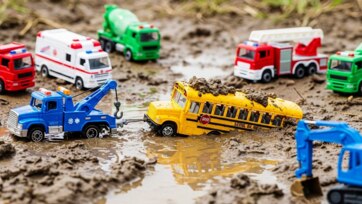
Modern early childhood development is increasingly influenced by a sophisticated "edutainment" ecosystem that leverages high-contrast digital art, relatable anthropomorphic characters, and strategic social modeling. This visual landscape is meticulously designed to provide a structured framework for children to interpret complex concepts ranging from physical mechanics to emotional regulation. By analyzing themes across these varied scenarios, we can observe how visual narratives function as a "digital blueprint" for foundational life skills. Cognitive Foundations: Logic, Sorting, and Categorization Visual stimuli are the primary drivers of early learning, allowing children to decode logical structures such as order, attributes, and sets long before they possess advanced verbal or literacy skills. Chromatic Logic and Attribute Isolation The strategic use of saturated color palettes is a deliberate pedagogical tool used to facilitate categorization. Rainbow Sequencing: Content featuring anthropomorphic trucks and expressive eggs arranged in a rainbow spectrum (red, yellow, green, blue, purple) reinforces the mathematical concept of linear progression and predictable order. Attribute Matching: Visuals that place specific vehicles next to matching colored garage doors allow children to practice spatial reasoning and attribute sorting, teaching them to isolate color as a primary identifiable trait. Mechanical Cause-and-Effect Toy-based scenarios involving service vehicles provide foundational lessons in physics and problem-solving. Mechanical Advantage: A blue tow truck using a cable and hook to rescue a yellow school bus stuck in thick, viscous mud serves as a primary lesson in how tools extend human and mechanical capabilities to overcome environmental resistance. Combined Force: Seeing multiple tractors (blue, pink, green, and black) using heavy chains to pull a tanker and cargo truck up a riverbank demonstrates the necessity of collaborative effort for tasks requiring extreme force. Environmental Physics: Realistic depictions of mud sticking to tires or vehicles partially submerged in water introduce children to the physical properties of friction, weight, and fluid dynamics in a safe, observational environment. Social-Emotional Learning (SEL): The Internal Landscape A critical component of modern children's media is SEL, which provides children with the visual vocabulary needed to identify and communicate their own complex feelings. Mirroring and Naming Emotions Exaggerated facial expressions act as psychological mirrors, helping children validate and name their internal states. Visual Shorthand for Distress: The inclusion of clear, blue teardrops on a character's face—such as the toddler 'Anna'—provides a distinct visual indicator of sadness or fear. Externalizing Anxiety: A child pointing in shock at a "Spider-Man" themed T-Rex looking through a bedroom window helps children process and externalize common nighttime anxieties in a controlled narrative setting. Identifying Needs: Visuals of a panda keeper offering a bucket of fresh vegetables to a worried or hungry lion—while an elephant and giraffe look on—demonstrate the developmental ability to recognize and meet the needs of others. Conflict Resolution and Social Play Simulated social interactions between toddlers or animals model the complexities of cooperative play. Managing Frustration: A scene where one toddler pushes another on a swing, with both characters displaying intense facial expressions, provides a platform for discussing boundaries, turn-taking, and the emotional friction that can occur during shared play. Inclusion and Companionship: A brightly colored train driven by a young boy and carrying a diverse cargo of animals (elephants, zebras, pigs, giraffes) serves as a metaphor for the intrinsic value of companionship and social inclusion. Normalizing Routines and Personal Responsibility By turning repetitive daily tasks into playful adventures, media reduces a child's resistance to necessary personal care and community expectations. Hygiene Education through Personification Giving inanimate objects a personality transforms personal care from a chore into a social interaction. Interactive Motivation: Smiling characters like a "toothbrush" and a "tooth" accompanied by bold text saying "Brush me" transform a hygiene requirement into a friendly invitation. Visualizing Health Threats: The use of a small, grumpy green monster as a symbol for germs helps children understand the "why" behind brushing, making the abstract concept of dental health visible and understandable. Imaginative Vocational Play Role-playing adult responsibilities builds confidence and encourages children to explore future possibilities. DIY Creativity: A young boy in a pilot's uniform standing next to a large cardboard airplane demonstrates how simple household materials can be the catalyst for global adventure and creative problem-solving. Agency and Leadership: Whether a child is shown "driving" a train or "piloting" a plane, these narratives reinforce a sense of agency and leadership over their own developmental journey. Resource Management and Agricultural Literacy Agricultural themes introduce children to the origins of resources and the logistical systems that support modern life. Farm-to-Table Concepts: A monkey driving a red tractor to transport a harvest of red bananas introduces the idea of resource transportation and logistical chains. Functional Community Roles: Imagery of monkeys driving tractors and managing livestock (cows, horses, goats) demonstrates that every member of a community has a role that contributes to the collective well-being. Stewardship of Nature: Positive emotional associations are formed when children see characters happily managing farm environments, fostering an early respect for animal care and environmental maintenance. Community Systems and Safety Networks Children learn to appreciate the "helpers" in their environment by seeing various service sectors work together toward a common goal. Service Cooperation: The congregation of a tow truck, ambulance, fire truck, and cement mixer around a rescue scene reinforces the idea that professionals from different sectors collaborate to keep the community safe. Zoos and Conservation: Portraying zookeepers and various species interacting peacefully helps children understand the role of human stewardship in protecting biodiversity. Reflections on Visual Scaffolding The integrated visual landscape of early learning is more than just entertainment; it is a meticulously designed roadmap for the developing brain. By using saturated colors to teach logic, expressive faces to teach empathy, and mechanical failures to teach resilience, these narratives prepare children for the complexities of the physical world. Each scenario functions as a bridge between the digital screen and the child's physical environment. When a child sees a real school bus, they may recall the importance of a "tow truck" rescue; when they pick up a toothbrush, they see a "friend" rather than a tool. This synergy between visual storytelling and practical life skills ensures that the modern child builds a robust cognitive and emotional foundation, one frame at a time.  
How Visual Cartoons Help Children Learn Faster
Today’s children do not start learning from books. They start learning from what they see. Before a child can read an alphabet or count numbers, their brain is already busy understanding colors, faces, movement, and patterns. This is why modern early childhood education strongly supports what experts call a visual-first learning approach—a method where children understand the world through images, actions, and storytelling before they fully develop language skills. For parents who regularly show cartoons or visual stories to their kids, this is important to understand: the right kind of visual content is not just entertainment. It can actually shape thinking, behavior, confidence, and emotional strength. Let’s explore how this works and why visually rich storytelling can support a child’s development when used correctly. Visual Learning Matches How a Child’s Brain Naturally Develops A young child’s brain develops in stages. The visual processing system becomes active much earlier than the reading and reasoning centers. That means children understand pictures long before they understand explanations. When a child watches colorful animated scenes or expressive characters, their brain is forming connections that later support: Logical thinking Emotional understanding Problem-solving ability Social behavior Curiosity about the real world In simple terms, visuals become the first “language” a child learns. Building Thinking Skills Through Colors, Shapes, and Patterns One of the earliest learning milestones is categorization—the ability to group things based on similarities. This may sound simple, but it is actually the foundation of mathematics, science, and reasoning. When children see objects sorted by color, shape, or size in visual storytelling, they begin to recognize patterns. They learn that: Similar things belong together Differences can be identified Order can exist in a system For example, when a child repeatedly sees red objects grouped together and blue ones placed separately, they are practicing classification without even realizing it. This is the early stage of logical thinking. These small observations quietly prepare the brain for later academic learning. No pressure, no memorization—just natural discovery. Understanding Cause and Effect Through Visual Action Children also learn how the physical world works by watching movement and interaction. When they see objects being pushed, lifted, stacked, or rescued in storytelling scenarios, they begin understanding cause and effect. They notice that: Actions create results Some tasks require effort Problems can be solved step by step Cooperation leads to success This kind of visual problem-solving introduces early engineering thinking. A child watching characters fix situations or move heavy objects is learning how challenges can be approached logically. These lessons stay with them when they begin handling real-life situations, whether it’s building something, solving puzzles, or helping others. Emotional Intelligence Begins With Recognizing Expressions Learning is not only about numbers and facts. A major part of childhood development is understanding emotions. Young children cannot always explain what they feel, but they can easily recognize expressions like happiness, sadness, fear, or surprise when they are shown clearly. Visual storytelling gives children a safe way to observe emotions from the outside. They start to understand: What sadness looks like How kindness is shown Why someone might feel afraid How problems between friends can be solved This builds emotional intelligence—the ability to understand both their own feelings and those of others. Children who develop emotional awareness early tend to adjust better in school, form healthier friendships, and handle stress more confidently. Helping Children Face Fear and New Experiences Safely Many everyday experiences can feel overwhelming for children. Visiting a doctor, trying something new, or meeting unfamiliar people may cause anxiety. Visual stories allow children to witness similar situations in a safe environment. They see characters experience worry, confusion, or surprise—and then overcome it. This helps children mentally rehearse how to respond in real life. Psychologists describe this as learning through symbolic experience. The brain treats the observed situation as practice. When children later face a similar situation themselves, it feels less unfamiliar. Teaching Responsibility Without Pressure Children often resist direct instructions, but they naturally imitate what they see. When storytelling presents everyday responsibilities—cleaning up, helping others, staying healthy—as part of an adventure, children become more willing to follow those behaviors. Instead of feeling like rules, these actions feel meaningful. This approach transforms routine lessons into something positive: Hygiene becomes self-care Helping becomes teamwork Following rules becomes part of belonging The child begins to act responsibly not because they are forced to, but because they understand its value. Encouraging Imagination and Creative Confidence Visual storytelling also strengthens imagination, which plays a crucial role in problem-solving and innovation later in life. When children see ordinary objects used creatively or characters exploring different roles, they realize that ideas can be flexible. A cardboard box can become anything. A simple setting can turn into an adventure. This nurtures: Independent thinking Curiosity Confidence in trying new ideas The ability to imagine solutions Imagination is not separate from intelligence. It is one of its most powerful forms. Introducing Social Understanding and Cooperation Children must also learn how to exist within a community. They need to understand sharing, helping, fairness, and teamwork. Visual narratives demonstrate these ideas through actions rather than lectures. Children see cooperation in motion. They observe characters supporting each other, solving problems together, and contributing to a group. This helps them understand that everyone has a role to play. Such lessons prepare children for school environments where collaboration is essential. Creating Awareness About Nature and Everyday Life Another powerful benefit of visual learning is introducing children to the natural world and daily life systems. Through storytelling, children can observe how food is grown, how animals live, and how environments function. These ideas help them develop early respect for nature and curiosity about where things come from. This connection encourages healthier attitudes toward food, surroundings, and responsibility for the environment. Why Visual Learning Works So Effectively The reason this approach is successful is simple: it aligns with biology. Young children learn best when: Information is shown rather than explained Learning feels like play Repetition happens naturally Emotions are involved in the experience Visual storytelling combines all these elements at once. It teaches without appearing to teach. The Role of Parents: Guidance Makes the Difference While visual content can support development, it works best when parents stay involved. Watching together, discussing what happened, and connecting stories to real-life experiences strengthens understanding. Even small conversations help children process what they see and apply it meaningfully. The goal is not passive watching, but guided exposure. A Tool for Growth, Not Just Entertainment When chosen thoughtfully, visual content becomes more than a way to keep children busy. It becomes a developmental tool that supports thinking, emotional balance, creativity, and confidence. Children are not just watching stories. They are building mental models of how the world works. Frame by frame, scene by scene, they are learning how to think, how to feel, and how to interact with life itself. And that is why the visual-first approach has become such a powerful part of early childhood learning—it speaks the language children understand before all others: the language of seeing.  
The Candy Sink Surprise
A Magical Kitchen Adventure! Hello, little explorers! Are you ready for the most colorful and sugary surprise ever? Today, we are looking at a picture that might make your eyes pop out of your head! Imagine walking into your kitchen, turning on the water faucet to wash your hands, and instead of water, a rainbow of chocolate candies comes pouring out! This is a story about magic, surprises, and the most delicious sink in the whole world. The Boy with the Giant Surprise In the middle of this magical kitchen is a little boy with bright blonde hair and a very, very big expression on his face! He is wearing a bright orange t-shirt, and his mouth is open in a giant "O" because he can’t believe what he is seeing. A Look of Pure Wonder Have you ever seen something so cool that you forgot to close your mouth? That is exactly what is happening here! His Eyes: They are wide open, looking right at us as if to say, "Are you seeing this too?" His Hands: He has his hands right inside the sink, catching the candy as it falls. He isn't just watching the magic; he is part of it! Catching the Rainbow The boy isn't afraid of the candy waterfall. He is holding a handful of red, green, and blue treats. Imagine how cool it would feel to have smooth, round candies sliding through your fingers instead of wet water! The Magic Candy Faucet The star of this picture is definitely the shiny silver faucet. Usually, faucets are for water to help us get clean, but this one has a much tastier job today. The Candy Waterfall Coming straight out of the faucet is a long stream of tiny, colorful chocolate candies. It looks like a never-ending waterfall of snacks! Red Candies: Bright like a fire engine! Blue Candies: Deep like the ocean! Yellow Candies: Sunny and happy! Green Candies: Like little emeralds! Brown and Orange: Adding even more color to the mix! A Sink Full of Treats The white kitchen sink is completely filled to the top with these candies. It’s like a ball pit, but instead of plastic balls, it’s filled with chocolate! There are so many candies that some have even jumped out of the sink and are scattered across the white counter. A Dream Kitchen for Kids This kitchen looks very clean and modern, with white counters and a shiny silver handle for the faucet. But with all that candy, it isn't a place for cooking dinner—it’s a place for a party! The Blue Sponge Even in a magical candy kitchen, you have to keep things clean! On the right side of the sink, there is a small blue sponge sitting on the counter. Maybe after the boy finishes his snack, he uses the sponge to make sure the counter is sparkly again. Why a White Sink? The sink and the counters are bright white. This is a great choice because it makes all the colors of the candy—the reds, yellows, and blues—look even brighter! It’s like the candy is sitting on a white cloud. The Science of Imagination Now, we know that in real life, water comes out of the faucet. But using our imagination is like a superpower! When we look at a picture like this, our brains get to play a "What If?" game. What If This Was Your House? Morning Surprise: Imagine waking up and finding your cereal bowl filled because the faucet gave you milk and the sink gave you candy! Brush Your Teeth: Would you still want to brush your teeth if the sink was full of chocolate? (Hint: You definitely should, or the tooth fairy might get worried!) The Sound: Think about what sound this would make. Water goes shhhhh, but candy would go clink-clink-clatter! Exploring with Your Senses If you were standing next to the boy in the orange shirt, what would you smell? You would probably smell the sweet, yummy scent of milk chocolate filling the whole kitchen! Learning Colors and Sorting This sink isn't just fun to look at; it’s a great way to learn! If you were the boy in the picture, you could play lots of games. The Sorting Game: Can you find all the blue candies and put them in a little pile on the counter? The Counting Game: How many red candies can you catch in your hand before they spill over? The Rainbow Pattern: Could you line them up to make a colorful snake? Red, orange, yellow, green, blue! Having a sink full of treats makes learning colors as easy as... well, eating candy! Why We Love Surprises The boy’s face is the most important part of the story. Surprises make our hearts beat a little faster and make us feel full of joy. Whether it’s a candy sink, a new toy, or a surprise visit from a friend, these moments are what make childhood so special. Sharing the Magic The boy is looking right at the camera, which means he is looking at YOU! He wants to share his magic discovery with all his friends. When we find something amazing, the first thing we want to do is tell someone else so they can be happy too. Conclusion: Keep Your Eyes Open for Wonder! The Candy Sink Surprise reminds us that even ordinary things, like a kitchen sink, can become magical if we look at them in a different way. While your faucet probably only has water today, that doesn't mean you can't find wonder in your own home. Maybe there is a rainbow in a bubble when you wash your hands, or maybe the clouds outside look like giant scoops of ice cream. The world is full of surprises, just like this sink full of chocolate. So, stay curious, keep your imagination big, and always be ready for a colorful adventure!
How Visual Media Actively Shapes a Child’s Early Learning Journey
In today’s early childhood environment, screens are no longer just sources of entertainment. They function as learning companions that help children build thinking patterns, emotional awareness, and everyday life skills. When designed intentionally, visual media can support what psychologists call cognitive scaffolding—a structured way of helping young minds understand the world step by step. Bright colors, expressive characters, and familiar life situations are not random artistic choices. They are deliberate tools used to guide children toward recognizing patterns, solving problems, and interpreting emotions long before they can explain those ideas in words. What may look like simple cartoons is often a carefully constructed educational ecosystem. Developing Thinking Skills Through Colors, Patterns, and Movement Young children learn primarily through seeing and doing rather than through verbal instruction. Visual storytelling gives them a way to grasp logic before language fully develops. Color-Based Organization Strong, saturated colors help children group objects and identify relationships. For example, when animated eggs or toy vehicles appear in clear rainbow sequences—red, yellow, green, blue, purple—children begin to internalize ordering, classification, and pattern recognition. This lays the groundwork for later mathematical thinking without introducing numbers directly. Similarly, scenes where colored cars match corresponding garage doors encourage spatial reasoning and memory recall. The child is not just watching; they are mentally sorting, predicting, and confirming outcomes. Understanding Cause and Effect Vehicle-based rescue scenarios often introduce mechanical logic. A tow truck pulling a bus out of mud illustrates how tools extend capability. Multiple tractors working together to move heavy objects demonstrate cooperation and combined force. These visual narratives quietly introduce physics concepts such as leverage, resistance, and shared effort. Without a single technical explanation, children absorb the principle that problems can be solved through action, tools, and teamwork. Teaching Children to Recognize Feelings and Build Empathy Modern children’s media plays a major role in helping children recognize and manage emotions. Before they can articulate fear, frustration, or empathy, they learn to identify those feelings visually. Making Emotions Easy to Understand Exaggerated facial expressions—wide eyes, tears, smiles—act as emotional signposts. When a character shows clear signs of sadness or anxiety, children learn to label those states internally. This visual mirroring helps normalize emotions rather than suppress them. Scenes involving common childhood fears allow children to process anxiety in a safe and controlled context. Showing How People Interact and Care for Each Other Interactions between characters often simulate real playground dynamics. Moments involving sharing, waiting for turns, or resolving conflict introduce social boundaries. When one character helps another who is distressed, children begin to understand empathy not as an abstract value but as an observable behavior. These scenarios prepare children for cooperative play and emotional regulation in real-world settings. Turning Daily Habits Into Fun and Meaningful Activities One of the most effective strategies in children’s media is transforming routine tasks into imaginative narratives. When daily responsibilities are personified, resistance decreases and engagement rises. Making Hygiene Feel Like a Friendly Activity Characters like talking toothbrushes or animated teeth shift personal care from a command into a friendly exchange. Instead of being told to brush their teeth, children feel invited into an activity. Representing germs as playful “villains” gives children a tangible reason behind hygiene habits. Encouraging Confidence Through Role-Play Children dressed as pilots, engineers, or drivers—even when using simple household materials—are encouraged to explore identity and possibility. Pretend play strengthens creativity while reinforcing confidence and independence. These experiences help children see themselves as capable participants in the world rather than passive observers. Helping Children Understand Community, Work, and Nature Nature- and farm-themed storytelling connects children to the origins of resources and the idea of shared responsibility. Scenes of animals transporting harvests or working alongside machines introduce the concept that food and materials come from coordinated effort. Children begin to understand that everyday resources involve teamwork and planning. Depictions of different characters contributing to shared tasks emphasize responsibility and cooperation. Positive outdoor environments also create emotional connections with nature and productivity. Why Educational Visual Media Matters in Today’s Childhood Visual learning environments are not accidental creations; they are structured developmental tools. Colors teach categorization. Movement teaches causality. Expressions teach empathy. Small challenges teach resilience. Each animated scenario acts as a bridge between digital exposure and lived experience. When children later encounter real-world situations, they draw on familiar visual narratives to interpret what is happening. This transfer from screen-based observation to physical understanding is what makes well-designed educational media powerful. It does not replace real experience; it prepares children for it. Final Reflection The modern child grows up surrounded by visual storytelling. The real question is not whether children will engage with media, but whether that media is built with developmental purpose. When designed thoughtfully, edutainment becomes more than distraction. It becomes an early training ground for logic, empathy, responsibility, and imagination—supporting the formation of a confident, capable learner one scene at a time.
Advertisement
The Digital Playground
A Comprehensive Analysis of Early Childhood "Edutainment" In the modern landscape of child development, the intersection of digital media, visual storytelling, and fundamental educational concepts has created a new standard for early childhood engagement. This "edutainment" ecosystem relies on high-contrast visuals, expressive character archetypes, and relatable social scenarios to build cognitive and emotional foundations. By analyzing themes ranging from the frantic energy of a morning routine to the serene curiosity of animal interactions, we can see how these narratives provide a holistic framework for a child's understanding of the world. The Visual Language of Learning Visual stimuli are the primary drivers of learning in early childhood. Before a child can decode written language, they are proficient in decoding color, shape, and pattern. Color as a Navigational Tool The strategic use of a bold, saturated color palette is designed to capture attention and facilitate cognitive categorization. Vibrant Primaries: Bright red, sunny yellow, and deep blue serve as visual anchors. Red often denotes high energy or central characters, while yellow, as seen in the clothing of many young protagonists, signals optimism, approachable warmth, and safety. Stabilizing Contrasts: Blue sky backdrops or community vehicles like school buses provide a sense of environmental stability and reliability. Logical Sorting: Scenarios involving matching colored trucks to oversized, expressive eggs introduce children to the concept of sets and pattern recognition. This visual logic is the precursor to both mathematical and scientific thinking. Sensory Imaginarium High-quality digital rendering allows children to "feel" textures through their eyes, bridging the gap between screen time and real-world sensory play. Tactile Visualization: The representation of "slime" or liquid candy flowing from faucets engages a child's imagination regarding states of matter and fluid dynamics. Natural Textures: Contrasting the smooth feathers of a duckling or rooster with the squishy, cool texture of a mud puddle encourages an appreciation for the diverse physical properties of nature. Emotional Intelligence and Social Archetypes Modern media for children places a heavy emphasis on Social-Emotional Learning (SEL), using character expressions to teach empathy and conflict resolution. Identifying Internal States Exaggerated facial features help children name and validate their own feelings. Wonder and Surprise: Wide-eyed, open-mouthed expressions in characters—whether discovering a sink full of candy or missing a bus—provide a mirror for a child’s own reactions to the unexpected. Fear and the Unknown: Depicting a child's surprise at a "ghost" or shadow in a household setting like a bathroom helps normalize common fears and provides a safe space to discuss them. Mediation and Conflict: When characters representing emergency responders (like a police-dog archetype) intervene in a dispute between peers, it demonstrates the social value of mediation and the presence of community helpers. The Power of Companionship Narratives rarely focus on a solitary individual, instead emphasizing the group dynamic. Whether it is a trio of birds on a branch or friends on a road trip, these stories reinforce the idea that life’s journeys—and its learning—are most rewarding when shared. Community Systems and Life Skills As a child’s world expands beyond the home, media introduces the systems and responsibilities that govern society. The Morning Commute and Punctuality The scenario of a child rushing to a large yellow school bus is a masterclass in life skills. Time Management: The presence of a prominent analog clock helps children visualize the passage of time and the importance of punctuality. Independence: Carrying a backpack and navigating the sidewalk toward a vehicle driven by a trusted community member (represented here as a friendly giraffe-themed driver) symbolizes the child's growing independence. The Agricultural Ecosystem Farm-themed content introduces the concepts of labor, food production, and cross-species cooperation. Roles and Jobs: Seeing monkeys driving tractors or collecting milk shows that every member of a community has a specific task that contributes to the whole. Animal Stewardship: Interactions like feeding goats or sitting among chickens teach children to be gentle and respectful of other living beings. Nature as a Classroom The transition from digital screens to the great outdoors is encouraged through vibrant depictions of natural habitats. Biodiversity and Habitat By showing characters in diverse settings—from bamboo forests to wildflower meadows—children learn to identify different ecosystems. Observation Skills: Seeing birds in their natural environment or sheep grazing in a field encourages children to look closer at their own backyards. Environmental Empathy: The close-up interaction between a squirrel and a duckling in a natural setting fosters an early sense of wonder and a desire to protect the small creatures of the world. Active Play and Movement Content that features characters playing in the mud or running through grass validates active, outdoor play as a healthy and joyful pursuit. It frames the "messiness" of nature as an opportunity for discovery rather than something to be avoided. Conclusion: Synthesizing the Experience The digital frontier of early learning is a carefully architected tapestry designed to nurture the whole child. It uses the magnetic pull of bright colors and charming characters to deliver essential lessons in logic, empathy, and community responsibility. By turning a mundane bath into a comedy or a drive into an adventure, these narratives help children navigate the transitions of their own lives with confidence and curiosity. As they watch a rooster sit in a puddle or a monkey drive a tractor, they aren't just being entertained; they are building the mental map that will guide them as they step out of their homes and into the wide, wonderful world.