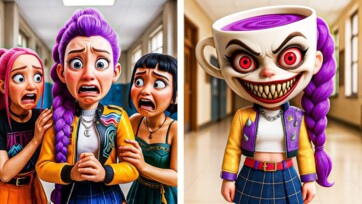
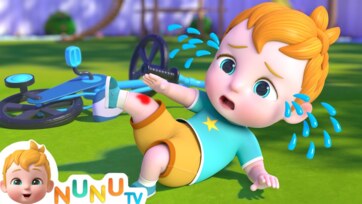
In modern early childhood development, visual media has become far more than a source of entertainment. It now acts as a structured learning environment that supports cognitive scaffolding and social-emotional growth. Through high-contrast digital visuals, expressive characters, and relatable real-life scenarios, educational content helps young children interpret the world before they fully develop language or literacy skills.
What may appear to adults as simple animated storytelling is, in reality, a carefully designed system that nurtures logic, empathy, responsibility, and curiosity. These visual narratives function as a developmental bridge between observation and understanding, allowing children to internalize foundational concepts naturally.
How Visual Learning Shapes Early Brain Development
Children in their early years learn primarily through sensory engagement rather than verbal explanation. Their brains respond strongly to color, movement, repetition, and facial expression. Educational media uses these elements intentionally to create recognizable patterns that support memory formation and reasoning skills.
By repeatedly seeing structured visual sequences, children begin to predict outcomes, recognize similarities, and organize information. This process builds neural pathways associated with analysis and comprehension long before formal education begins.
Teaching Logic and Categorization Through Color and Pattern Recognition
One of the earliest cognitive skills children develop is the ability to sort and classify objects. Educational visuals use bold color schemes and organized arrangements to encourage this process.
When objects appear in consistent sequences—such as a progression of colors across vehicles or characters—children begin to understand order and grouping. This exposure introduces pre-mathematical thinking, helping them grasp concepts like sets, comparison, and structure without needing numerical instruction.
Matching activities, where objects align with corresponding spaces or attributes, strengthen spatial awareness and working memory. These scenarios teach children to observe differences, make associations, and solve simple visual problems independently.
Introducing Cause-and-Effect Through Mechanical Storytelling
Many early learning scenarios feature tools, vehicles, or collaborative problem-solving situations. These narratives provide a safe introduction to physical principles such as effort, resistance, and cooperation.
When children watch characters using tools to overcome obstacles or working together to achieve a goal, they begin to understand that actions lead to outcomes. These experiences quietly introduce foundational scientific thinking by demonstrating:
- Tools extend human capability
- Challenges can be solved through strategy
- Collaboration increases effectiveness
This early exposure builds confidence in problem-solving and encourages curiosity about how things work.
Supporting Emotional Intelligence Through Visual Expression
A key component of modern children’s media is social-emotional learning (SEL). Young children often struggle to identify their own feelings, and visual storytelling provides them with the vocabulary to do so.
Clear emotional expressions—joy, sadness, surprise, or concern—serve as visual cues that help children connect internal sensations with recognizable behaviors. By observing these signals repeatedly, children learn to label emotions and respond appropriately.
Narratives that explore fear, uncertainty, or change allow children to process complex feelings within a controlled environment. These stories reassure them that emotional experiences are normal and manageable.
Teaching Empathy and Social Interaction Through Character Relationships
Simulated interactions between characters mirror real-life social situations such as sharing, waiting, helping, or resolving disagreements. Children observing these exchanges begin to understand boundaries, fairness, and cooperation.
Seeing one character assist another reinforces the idea that recognizing and responding to others’ needs is an important social skill. These early lessons form the groundwork for empathy and effective communication later in life.
Transforming Daily Routines into Positive Behavioral Habits
Educational media often reframes routine activities—such as hygiene or organization—as engaging experiences rather than obligations. By turning everyday objects into friendly characters or playful participants, children perceive these tasks as part of an enjoyable routine.
This approach reduces resistance to necessary habits while reinforcing consistency. Repetition through storytelling helps children internalize behaviors like self-care and responsibility without feeling pressured.
Encouraging Creativity and Confidence Through Imaginative Role-Play
Imaginative scenarios, where children take on roles such as builders, drivers, or explorers, promote both creativity and self-efficacy. These narratives demonstrate that problem-solving and exploration are achievable using simple tools or materials.
Role-playing builds a sense of agency. Children begin to see themselves as capable individuals who can create, experiment, and lead their own activities. This confidence supports independence and motivates active participation in learning.
Introducing Community Awareness and Environmental Understanding
Nature-based and community-oriented themes expose children to the idea that resources and systems require effort, cooperation, and care. Visual depictions of farming, transportation, or shared responsibilities help children understand that everyday life depends on interconnected roles.
These experiences foster early respect for teamwork, environmental stewardship, and contribution to collective well-being.
Bridging Digital Experiences with Real-World Understanding
One of the most significant strengths of visual educational media is its ability to connect screen-based experiences to real-life situations. When children later encounter similar objects, environments, or routines, they recall familiar narratives that help them interpret what they see.
This transfer strengthens comprehension because learning has already been rehearsed visually. The child is not encountering something entirely new—they are recognizing a concept they have already explored.
Why Purposeful Edutainment Matters More Than Ever
In today’s technology-driven world, the presence of screens is unavoidable. The real distinction lies in whether content is passive or purposeful. Thoughtfully designed educational media can support development by:
- Enhancing early reasoning skills
- Strengthening emotional awareness
- Encouraging curiosity and creativity
- Reinforcing positive behaviors
- Preparing children for structured learning environments
When aligned with developmental principles, visual storytelling becomes an extension of education rather than a distraction from it.
Conclusion: A Visual Blueprint for Lifelong Learning
The modern landscape of early childhood media represents a carefully constructed roadmap for the developing mind. Through intentional use of color, narrative, and interaction, these experiences teach logic, empathy, resilience, and responsibility in ways that feel natural to young learners.
Each visual scenario serves as a bridge between imagination and reality, helping children translate what they see into how they think and behave. When used wisely, educational media does not replace real-world learning—it strengthens it, offering children a foundation upon which future knowledge and skills can grow.
In essence, edutainment is no longer just about keeping children occupied. It is about shaping how they understand the world, one visual story at a time.