Parents often think cartoons are just a way to keep children busy, but modern child development research tells a different story. Today’s educational cartoons are carefully designed learning environments. They use bright visuals, expressive characters, and simple storytelling to teach children how the world works—emotionally, socially, and logically.
This “visual-first” learning style is especially powerful for young minds because children understand pictures long before they understand complex language. Through repeated visual experiences, they begin building mental connections that help them solve problems, understand feelings, and develop everyday life skills.
On a kids-focused website like yours, where cartoons are paired with stories, this combination becomes even more meaningful. Children are not just watching; they are absorbing patterns, behaviors, and values that shape how they interact with real life.
How Visual Learning Builds Early Thinking Skills
Young children learn by seeing, not by memorizing. Cartoons simplify the world into recognizable shapes, colors, and actions that help kids organize information.
Learning Through Colors, Patterns, and Matching
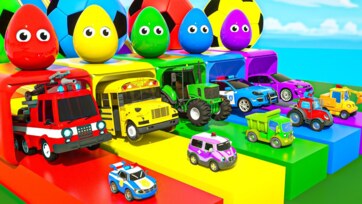
Bright colors are not used randomly in children’s cartoons. They help kids categorize objects and notice differences. For example, when a cartoon shows different colored items connected to specific characters, children start identifying patterns. They learn that things can belong to groups, that objects can match, and that order matters.
A scene showing vehicles arranged in a sequence or trailers carrying different colored items quietly teaches sorting and structure. These are the same mental skills later used in mathematics and logical reasoning.
Children do not think, “I am learning classification.”
They simply enjoy the story—while their brain practices it anyway.
Understanding Cause and Effect Through Action
Cartoons often show simple problems followed by solutions. A stuck vehicle gets pulled out. A character fixes a machine. Someone makes a mistake and then corrects it.
These moments teach cause-and-effect relationships:
If something happens → there is a reason → and there is a solution.
This builds early problem-solving ability and encourages children to think, rather than react emotionally.
How Cartoons Introduce Real-World Roles and Responsibilities
Many cartoons include characters performing everyday jobs—driving tractors, helping others, building things, or protecting their community. These scenes introduce children to the idea that everyone has a role.
When kids see characters using tools for specific purposes, they begin understanding that:
- Different tasks require different skills
- Work can help others
- Cooperation makes things easier
This creates early respect for responsibility without sounding like a lecture. It’s storytelling doing quiet education.
Supporting Emotional Development Through Visual Stories
One of the biggest challenges for young children is understanding their emotions. They feel strongly but cannot always explain what they feel. Cartoons help by showing emotions clearly on characters’ faces and actions.
Helping Children Recognize Fear, Sadness, and Surprise
Exaggerated expressions—wide eyes, tears, laughter—act like emotional signboards. Children see these reactions and begin connecting them to feelings they experience themselves.
When a character feels scared, nervous, or unsure, kids learn:
“It’s okay to feel this way. Others feel it too.”
This builds emotional confidence and reduces anxiety in unfamiliar situations like visiting a doctor, starting school, or meeting new people.
Teaching Empathy and Kindness
Cartoons frequently show characters helping someone in need—sharing food, comforting a friend, or solving a problem together. These scenes encourage children to notice others’ feelings and respond with care.
Empathy is not taught through instructions.
It grows through examples children repeatedly observe.
Learning Social Behavior Through Playful Conflict
Children must also learn how to deal with disagreements. Cartoons present small, relatable conflicts—two characters wanting the same thing, someone making a mistake, or misunderstanding another character.
These scenarios teach:
- Taking turns
- Respecting space
- Apologizing and forgiving
- Working together instead of fighting
Because the message is wrapped in fun storytelling, children absorb these lessons naturally rather than resisting them.
Making Hygiene and Healthy Habits Easy to Understand
Explaining hygiene to a child using abstract words rarely works. Cartoons solve this by turning invisible dangers into visible characters.
Germs may appear as silly “villains,” while brushing teeth or washing hands becomes a heroic action. This transforms routine tasks into something children feel excited about instead of forced to do.
When kids later wash their hands, they remember the story—not the instruction.
That memory is what changes behavior.
Encouraging Creativity and Imagination
Cartoons also inspire children to create, pretend, and explore. When they see characters building something from simple materials or imagining grand adventures, they learn that creativity doesn’t require expensive tools.
A cardboard airplane can become a jet.
A backyard can become a jungle.
Imaginative play strengthens problem-solving, confidence, and independence—skills essential far beyond childhood.
Teaching Respect for Nature and Animals
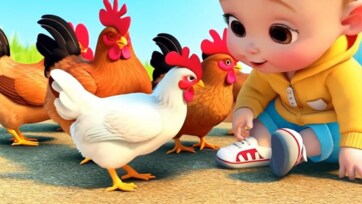
Many children’s cartoons include farms, animals, and outdoor environments. These scenes introduce kids to where food comes from, how animals live, and why nature matters.
When children watch characters caring for animals or working in natural settings, they begin forming early environmental awareness. They see living things not as objects, but as beings that deserve kindness.
This helps build responsibility toward the world around them.
Why Repetition in Cartoons Is Actually Important
Parents sometimes worry because cartoons repeat scenes or themes. But repetition is exactly how young brains learn.
Seeing similar actions again and again strengthens understanding. Each repetition helps children:
- Remember patterns
- Predict outcomes
- Feel secure with familiar structures
For adults, repetition feels unnecessary. For children, it builds mastery.
The Connection Between Cartoons and Real-Life Confidence
When children repeatedly see characters solving problems, expressing feelings, and helping others, they begin copying those behaviors in real situations.
A child who watches cooperative play is more likely to share.
A child who sees characters stay calm during challenges may try the same.
Cartoons become rehearsal spaces for life.
Using Cartoons the Right Way on a Kids Website
Since your platform combines cartoons with written articles, it creates an even stronger learning experience. The video captures attention, while the article gives parents context and reinforces meaning.
This pairing turns passive watching into active development.
Instead of being “just screen time,” it becomes guided exposure to ideas that support growth.
Final Thoughts: Cartoons as Tools for Whole-Child Development
Modern children’s cartoons are not accidental entertainment. They are thoughtfully designed experiences that help children understand logic, emotions, relationships, responsibility, and creativity.
When used correctly, they become bridges between imagination and reality—helping children practice life before they fully live it.
For a kids-centered website, this makes cartoons more than content.
They become learning companions.
And when storytelling, visuals, and simple explanations work together, they quietly build the strongest foundation a child can have: curiosity, confidence, and the ability to understand the world around them.