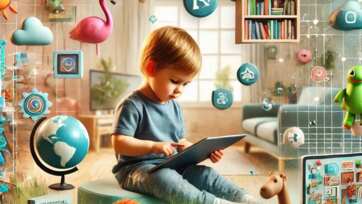
How to Choose Age-Appropriate Content for Kids

In today’s world, the time children spend in front of screens is increasing, and since digital exposure often starts at a very young age, it’s essential for parents to carefully choose the content their children consume. It is crucial to select content that not only entertains but also educates, helping to support the child’s development. Below, we will discuss how to choose age-appropriate content based on your child’s age.

Infant and Toddler (0-5 years old)
For the youngest children, their first exposure to the digital world is often colorful, interactive, and simple. The content suitable for this age should be developmental and educational. These types of content help in the cognitive and motor development of children, supporting language skills, attention, and social abilities. Short, cheerful stories, songs, and playful apps that entertain while using simple words, images, and sounds are ideal for this age group.

Preschool and Early School Age (5-9 years old)
At this age, children are capable of following more complex stories, so a combination of educational and entertaining programs works best. Storytelling apps and programs that help develop problem-solving and logical thinking are great options. Children at this age often start showing interest in nature, science, and exploring the world, so science-related educational content is also beneficial. Interactive games that allow learning while entertaining are highly recommended as well.

School-Aged Children (9-12 years old)
For older children, it’s increasingly important to find content that provides both entertainment and deeper knowledge. Educational videos, apps that teach programming, and games that involve emotional and moral lessons can be highly valuable during this stage. Furthermore, content that supports social skills, such as teamwork and conflict resolution, is essential. At this age, kids benefit from content that challenges them to think critically and creatively.

Teenagers (12-18 years old)
For teenagers, choosing content requires more freedom and responsibility. While entertainment is still important, this age group also needs content that aligns with their personal interests in science, arts, and social issues. Documentaries, artistic works, and strategy games can help with their intellectual and creative development. However, it’s crucial to avoid violent, inappropriate, or manipulative content that can negatively affect their mental health and social behavior.

How Can Parents Help in Choosing Appropriate Content? In addition to selecting content, it’s vital for parents to actively engage in their children’s media choices. Watching programs together, discussing the content, and understanding the child’s perspective can help guide them. Many platforms also offer parental control tools that help prevent exposure to inappropriate content.

In conclusion, choosing the right content helps entertain, educate, and support children’s growth in a safe environment. A responsible approach to digital content ensures that children grow and develop in a healthy and well-rounded way.

This blog can assist parents in making informed decisions about what content to allow their children to consume based on their age and developmental stage.


Advertisement
Why Falling Is Part of Growing
Every child who learns to ride a bicycle knows this moment well. The little rider, helmet slightly crooked, hands scraped, tears rolling down, is not just having a bad day. This fall is a tiny but important lesson in courage, persistence, and resilience. Parents often rush to comfort, clean the scrape, and pick up the bike. But it’s in that pause—where the child sits on the ground, wobbles, and cries—that real growth begins. Falling is not failure. It is feedback. The Fear That Comes With Falling: Understanding a Child’s Emotional Response: Tears are more than pain—they are an emotional signal. A child may feel scared, embarrassed, or frustrated. Their confidence, which was building with each pedal, suddenly wavers. Adults can guide by naming emotions: “I see you’re scared, it’s okay to cry.” Recognizing feelings teaches children that it’s normal to experience discomfort and that emotions can be managed. According to a 2022 study by the University of Lahore, children who are allowed to process minor accidents themselves tend to develop stronger problem-solving skills and emotional resilience. Why Scrapes and Bruises Are Valuable: The Physical Lessons of Falling: Scrapes and bruises are the body’s reminders that balance, coordination, and strength take time to master. Falling trains reflexes: hands reach out instinctively, legs absorb impact, and the body recalibrates. A small fall can teach better posture, steadier hands, and more cautious pedaling. Pediatricians emphasize that these early physical challenges, when supervised, reduce the risk of bigger injuries later because the child learns how to respond safely. Encouragement Without Pressure: How Adults Can Support Without Taking Over: It’s tempting to rush in and fix everything. But sometimes the best help is giving the child space while offering gentle encouragement. Phrases like “You can try again” or “It’s okay, everyone falls when learning” foster autonomy and confidence. This approach helps the child associate the bicycle not with fear but with challenge and achievement. In Pakistan, parents often overprotect during first riding lessons, unintentionally slowing skill development. A balanced approach, however, shows children that risk is manageable and failure is temporary. Turning Tears Into Motivation: The Mindset of Resilience: Children who experience controlled setbacks early tend to grow into adults with higher resilience. Watching a small fall and learning to get back on the bike teaches persistence. Psychologists call this “grit”—the ability to continue despite difficulty. A 2021 study in Karachi schools showed that children encouraged to handle minor failures independently scored 20% higher in confidence-based assessments. Falling and crying today becomes courage and self-reliance tomorrow. The Role of Fun in Learning to Ride: Making Practice Enjoyable Rather Than Stressful: Cycling should never be associated with dread. Playful encouragement, turning small falls into funny stories, or racing with friends transforms frustration into joy. Laughter often follows tears, and joy reinforces persistence. A child laughing after a fall is learning something profound: failure is temporary, fun is constant, and trying again is part of adventure. Safety and Preparation: Minimizing Risk While Learning: Protective gear—helmets, knee and elbow pads—does more than prevent injury. They provide psychological reassurance, making children more willing to take calculated risks. Choosing safe practice areas, like quiet parks or empty roads, reduces danger while keeping the thrill intact. Education experts stress that combining safety with freedom builds competence. When children feel protected but not controlled, they explore boundaries and develop problem-solving skills naturally. Learning Life Lessons on Two Wheels: Why a Fall Matters Beyond Cycling: Falling from a bike is a microcosm of life. Children learn to handle setbacks, manage disappointment, and celebrate small victories. They internalize the lesson that mistakes do not define them; actions and responses do. Parents who model calm responses, provide empathy, and encourage retries help children carry these lessons into school, friendships, and later challenges. Making the Next Ride Smoother: Steps to Rebuild Confidence: Pause and acknowledge feelings—don’t rush the child off the ground. Assess minor injuries calmly; provide care without drama. Encourage reflection: “What did you notice that caused the fall?” Guide gently back onto the bike; celebrate the attempt more than the success. Repeat in short, positive sessions to reinforce skill and confidence. Through this method, children learn that falling is temporary, learning is continuous, and effort is what counts. Final Thoughts for Little Cyclists and Their Families: Turning Small Falls Into Big Growth: The tears shed on that first ride are more than just sadness. They are evidence of courage, curiosity, and the willingness to try. Every scrape and wobble is a building block of resilience. For families, the lesson is simple: patience, empathy, and encouragement matter more than rushing to prevent every fall. For children, the takeaway is profound: falling is not failing; it is learning. Every time a little rider gets back on the bike, they pedal not just forward on the path, but forward in life.  
Advertisement
The Digital Frontier of Early Learning
A Tapestry of Joy and Discovery In the rapidly evolving landscape of modern childhood, the intersection of education, entertainment, and digital storytelling has created a new frontier for development. For the youngest generation, the world is often first explored through vibrant, high-contrast visuals and characters that mirror their own curiosity and emotional complexity. This digital tapestry does more than just occupy time; it serves as a foundational tool for understanding social norms, logical reasoning, and the beauty of the natural world. Through carefully crafted scenarios—from the bustling morning rush to the quiet serenity of a bamboo forest—children are invited into a safe space where they can experiment with empathy, celebrate small victories, and develop the cognitive flexibility needed for a complex future. The Psychological Impact of Color and Contrast The use of a bold, saturated color palette is not merely an aesthetic choice; it is a strategic educational tool designed to capture and hold a child's developing attention. Primary Colors and Cognitive Identification Bright red, vibrant yellow, and deep blue serve as the primary anchors of a child's visual vocabulary. Radiant Red: Often used for central characters or high-energy objects, red demands immediate focus and is frequently associated with excitement or importance. Sunny Yellow: Representing warmth and optimism, yellow is the color of choice for friendly guides, playful chicks, and icons of morning light, fostering a sense of happiness and safety. Cool Blue: Whether in the form of a clear sky or a sturdy school bus accessory, blue provides a stabilizing contrast, helping children feel calm and secure amidst the action. Logical Sorting and Pattern Recognition By grouping objects by color—such as a line of trucks following a series of colorful eggs—educational media introduces the concepts of categorization and sets. This visual "logic" is the precursor to mathematical thinking, teaching children to recognize patterns and gradients long before they begin formal arithmetic. Social-Emotional Learning Through Character Expression Perhaps the most vital role of modern children's media is the teaching of empathy and emotional intelligence (EQ) through exaggerated character expressions. Identifying Complex Emotions Children often struggle to name their feelings. When they see a character with wide eyes and an open mouth, they instantly recognize the feeling of "surprise". The Look of Wonder: A character’s expression of awe when faced with something magical—like a sink full of treats—validates the child’s own sense of curiosity. Conflict and Resolution: When two characters are in distress, and a third—perhaps an authority figure in a uniform—steps in to mediate, children learn the basics of conflict resolution and the importance of helping others. The Power of a Smile: A wide, toothy grin from a toddler or a friendly animal reinforces the concept of joy and the positive social feedback that comes with a happy interaction. The Role of Friendship and Companionship Characters are rarely alone in these stories. Whether it is a trio of birds sitting on a branch or two friends sharing a car ride, the emphasis is always on togetherness. These narratives show that adventures are better when shared and that support from a peer is a fundamental part of the journey. The Intersection of Fantasy and Reality: Sensory Play The digital world often presents "impossible" scenarios that encourage imaginative play and sensory exploration. Tactile Visualization Even though a child cannot touch the screen, the high-quality rendering of textures allows their brain to "feel" the environment. Gooey and Slimy: The representation of purple "slime" dripping down a building or chocolate treats flowing from a faucet stimulates the child's sensory imagination. Soft and Fluffy: Seeing the downy feathers of a chick or the thick fur of a goat encourages a child to seek out similar tactile experiences in the real world. Turning Routines into Adventures By depicting a mundane activity—like washing up or going to school—as something filled with magic and color, these stories help reduce "routine anxiety". A monkey taking a shower becomes a moment of comedy, and a race to the bus becomes a heroic quest, making the real-life versions of these tasks feel more approachable for the child. Nature as an Interactive Classroom The agricultural and natural settings found in early learning media serve as a bridge to environmental awareness and biological curiosity. Connection to Living Things Interaction with farm animals—cows, goats, and roosters—teaches children that the world is inhabited by many different types of creatures, each with their own needs and behaviors. Gentleness with Animals: Seeing a toddler offer food to a goat or sit calmly near a rooster promotes the idea of "gentle hands" and respect for nature. Diversity of Life: The variety of animals, from the small chick to the large cow, helps children understand the concept of size, sound, and habitat. Environmental Stewardship The use of lush green landscapes, clear blue skies, and bamboo forests instills an early appreciation for the beauty of the outdoors. It encourages children to look at the trees and animals in their own backyard with a sense of wonder and a desire to protect them. Responsibility, Punctuality, and Life Skills As children age, their media begins to introduce more complex concepts like time, responsibility, and the systems that make society function. Mastering the Clock The presence of a large analog clock in a scene about a school bus is a direct lesson in punctuality. It helps children visualize how time passes and understand that certain events, like the arrival of the bus, happen on a schedule. Roles and Responsibilities Seeing characters in specific roles—a bus driver, a police officer, or a tractor driver—helps children understand the "helpers" in their community. It introduces the concept that everyone has a job to do and that working together makes the whole "farm" or "school" run smoothly. Conclusion: A Foundation Built on Wonder The digital world of early learning is more than just bright lights and catchy songs. It is a carefully architected environment that respects a child's intelligence while nurturing their sense of wonder. By combining the logic of sorting with the empathy of friendship and the magic of sensory imagination, these stories provide the building blocks for a well-rounded and curious individual. As children transition from these digital experiences to real-world playgrounds, they carry with them the lessons of the rainbow eggs, the friendly goats, and the timely school bus. They learn that the world is a place to be explored, that emotions are things to be shared, and that every morning—whether it involves a candy sink or a muddy puddle—is the start of a new and beautiful adventure.  
Analysis of Early Childhood Learning Through Media
In the modern landscape of child development, the intersection of digital media, visual storytelling, and fundamental educational concepts has established a high-impact standard for early childhood engagement. This "edutainment" ecosystem relies on high-contrast visuals, expressive character archetypes, and relatable social scenarios to build cognitive and emotional foundations. By analysing themes ranging from the frantic energy of a morning routine to the serene curiosity of animal interactions and logic puzzles, we can see how these narratives provide a holistic framework for a child's understanding of the world. The Visual Language of Logic and Categorisation Visual stimuli are the primary drivers of learning in early childhood. Before a child can decode written language, they are proficient in decoding colour, shape, and pattern. Chromatic Education and Matching The strategic use of a bold, saturated colour palette is designed to capture attention and facilitate cognitive categorisation. Vibrant Primaries: Bright red, sunny yellow, and deep blue serve as visual anchors in many instructional scenes. Attribute Alignment: Scenarios involving matching brightly colored animals—such as a red tiger, a green lion, or a blue gorilla—to soccer balls of the identical hue teach the fundamental scientific skill of attribute matching. Sequential Logic: Arranging objects like trucks and large-eyed eggs in a rainbow spectrum (red, yellow, green, blue, purple) reinforces the idea of order and linear sequences, which is a precursor to mathematical thinking. Sensory Visualization High-fidelity digital rendering allows children to "experience" textures visually, bridging the gap between screen time and real-world sensory play. Tactile Representation: The depiction of multi-colored candies or purple "slime" flowing from a faucet engages a child's imagination regarding different states of matter and fluid dynamics. Physical Cause and Effect: Scenes depicting toy trucks stuck in thick, viscous mud provide a visual bridge to tactile outdoor experiences. The imagery of a blue tow truck pulling a yellow school bus out of a mud pit teaches children about mechanical advantage and problem-solving in a physical environment. Social-Emotional Learning (SEL) and Expression Modern media for children places a heavy emphasis on SEL, using character expressions to teach empathy, conflict resolution, and self-regulation. Identifying Internal States Exaggerated facial features help children name and validate their own feelings. Wonder and Awe: Wide-eyed, open-mouthed expressions—seen in characters discovering a sink full of candy or a monkey taking a shower—provide a mirror for a child’s own reactions to the unexpected. Normalising Fear: Depicting a child's startled reaction to a "ghost" figure in a bathroom setting helps normalise common childhood anxieties and provides a safe framework for discussion. Social Mediation: Characters representing community helpers, such as police-dog archetypes, intervene in disputes between peers to demonstrate the value of mediation and social harmony. The Biology of Kindness Narratives often focus on supportive, interspecific interactions to model empathy. Tender Connections: A squirrel showing concern for a small duckling, or a young boy gently interacting with a chick and its mother hen, models how to respond to others with tenderness. Shared Experiences: Scenes of friends on a road trip or characters sharing gelato at a colourful stand reinforce the idea that life’s milestones are most rewarding when shared with others. Community Systems, Hygiene, and Life Skills As a child’s world expands beyond the home, the media introduces the systems, responsibilities, and hygiene routines that govern society. Mastering Daily Routines Transitions from home to school or the bathroom are turned into playful adventures. Temporal Awareness: The inclusion of a large, prominent analogue clock (showing 7:40 AM) in a scene where a child rushes for the school bus helps children visualise the passage of time and the importance of punctuality. Independence and Autonomy: Carrying a backpack toward a vehicle driven by a trusted community member (a giraffe-themed driver) symbolises the child's growing independence. Hygiene Education: Playful graphics with characters like a "toothbrush" and a "tooth" accompanied by the text "Brush me" turn essential tasks into engaging activities, reducing resistance to daily hygiene. Agricultural and Work Ecosystems Farm and construction themes introduce the concepts of labour and the origins of resources. Roles and Responsibilities: Monkeys driving tractors to transport livestock or collecting milk show that every member of a community has a specific task that contributes to the whole. Cooperation in Crisis: Seeing various service vehicles—including ambulances, fire trucks, and tow trucks—work together in a mud pit teaches children about community cooperation and the "safety net" of helpers in their neighbourhoods. Nature as an Interactive Classroom Vibrant depictions of natural habitats and animal biology encourage a transition from digital screens to the actual outdoors. Biodiversity and Stewardship By showing characters in diverse settings, children learn to identify different ecosystems and species. Observation Skills: Seeing birds in their natural environment or children observing hens and chicks encourages a closer look at the wildlife in the child's own world. Gentle Stewardship: Interactions such as feeding goats in a meadow or sitting calmly among chickens teach children to be gentle and respectful of other living beings. The Value of Experiential Play Content that features characters playing in the mud or running through grass validates active, tactile learning. The Joy of "Messy" Play: Framing sitting in a mud puddle as a moment of pure happiness with animal friends helps parents and children see nature as a playground for discovery rather than a chore. Environmental Empathy: The close-up interaction between a child and a rooster or a goat fosters an early sense of wonder and a desire to protect the natural world. Conclusion: Synthesising the Digital Experience The digital frontier of early learning is a carefully architected tapestry designed to nurture the whole child. It uses the magnetic pull of bright colours and charming characters to deliver essential lessons in logic, empathy, and community responsibility. Whether through a frantic race for the school bus, a lesson in matching colourful animals to balls, or the cooperative effort of trucks in a mud pit, these narratives help children navigate the transitions of their own lives with confidence. As they watch a monkey drive a tractor or a child gently feed a goat, they are building the mental map that will guide them as they step out of their homes and into the wide, wonderful world.
The Role of Quality Children’s Videos in the Modern World – Learning and Fun Combined
In the digital age, where screens are everywhere, parents often worry about their children spending too much time watching videos. However, with the right content, these videos can be both entertaining and highly beneficial for a child’s development. A New Way of Learning Children are naturally curious and eager to learn, and quality children’s videos build on this curiosity. Interactive animations, songs, and stories teach in a playful way: • Language learning: Many videos help children learn new words and phrases, especially in other languages. Popular English nursery rhymes, like the alphabet song or counting songs, are both fun and educational. • Science and nature: Content that explores animals, natural phenomena, or even simple science experiments encourages kids to discover the world around them. • Social skills: Kids can learn how to navigate different situations, such as friendships, conflicts, or emotions. Why Is Video Learning So Effective? The combination of visual and auditory experiences is especially memorable for children. A colorful animation or catchy song is easier to retain than traditional textbook material. Characters on screen can serve as role models, demonstrating kindness, collaboration, or problem-solving. How to Choose the Right Content It’s important for parents to monitor what their children watch. Good children’s content should be:• Age-appropriate: Simple, colorful animations are ideal for younger children, while older kids can engage with more complex topics. • Value-driven: The content should convey positive messages that promote empathy, confidence, and positive thinking. • Interactive: Many modern videos encourage active participation, such as singing along or solving tasks. The Importance of Balance While quality children’s videos can offer a lot, screen time should still be limited. The best approach is to balance video watching with other activities like reading, outdoor play, or creative projects. Watching educational videos together as a family can also strengthen bonds and make learning more engaging. Future Possibilities The world of children’s videos is constantly evolving to better cater to kids’ learning needs. New technologies, such as interactive VR experiences or smart device integration, can further enhance the learning opportunities available to children. In summary, quality children’s videos are excellent tools for both education and entertainment. It’s up to parents to carefully select what their kids watch and help them explore the world in a positive and inspiring way.
The Role of Parents in a Child’s Digital World
 As technology continues to evolve, children are exposed to digital content earlier than ever. While these tools can enhance learning and entertainment, the role of parents in guiding their children through the digital landscape is more important than ever. Why Is Parental Guidance Crucial? The type and amount of digital content a child consumes can significantly influence their development. With proper guidance, parents can: • Filter content: Ensure children watch age-appropriate, educational, and inspiring videos. • Set boundaries: Limit excessive screen time, which can negatively affect sleep, physical activity, and attention spans. • Teach critical thinking: Help children question and analyze what they see on screen to differentiate between real and fictional content. How Can Parents Support Healthy Digital Habits? 1. Co-view and discuss: Watching videos together creates opportunities for bonding and teaching valuable lessons. 2. Offer offline alternatives: Encourage creative play, sports, and reading as engaging options beyond screens.3. Establish clear rules: Create family rules like screen-free meal times or no devices before bed. The Power of Parental Role Models Children emulate what they see. When parents demonstrate a healthy relationship with technology—such as taking breaks from screens, reading physical books, or prioritizing family time—they set a positive example for their kids. Preparing for the Future As technology advances, new tools like virtual reality and AI-driven learning programs will become more accessible. Parents have the responsibility to help their children navigate these changes wisely, teaching them how to use technology as a tool for growth rather than a distraction. Balancing the Real and Digital Worlds A child’s life should include both digital experiences and real-world activities. Watching a video about cooking can inspire a family baking session, while a nature documentary might encourage outdoor exploration. By blending the digital and physical worlds, parents can ensure their children develop holistically. 
Grumpy Toddler Girl and Happy Baby Playing on Playground Swing
Modern early childhood development is increasingly influenced by a sophisticated "edutainment" ecosystem that leverages high-contrast digital art, relatable anthropomorphic characters, and strategic social modeling. This visual landscape is meticulously designed to provide a structured framework for children to interpret complex concepts ranging from physical mechanics to emotional regulation. By analyzing themes across these varied scenarios, we can observe how visual narratives function as a "digital blueprint" for foundational life skills. Cognitive Foundations: Logic, Sorting, and Categorization Visual stimuli are the primary drivers of early learning, allowing children to decode logical structures such as order, attributes, and sets long before they possess advanced verbal or literacy skills. Chromatic Logic and Attribute Isolation The strategic use of saturated color palettes is a deliberate pedagogical tool used to facilitate categorization. Rainbow Sequencing: Content featuring anthropomorphic trucks and expressive eggs arranged in a rainbow spectrum (red, yellow, green, blue, purple) reinforces the mathematical concept of linear progression and predictable order. Attribute Matching: Visuals that place specific vehicles next to matching colored garage doors allow children to practice spatial reasoning and attribute sorting, teaching them to isolate color as a primary identifiable trait. Mechanical Cause-and-Effect Toy-based scenarios involving service vehicles provide foundational lessons in physics and problem-solving. Mechanical Advantage: A blue tow truck using a cable and hook to rescue a yellow school bus stuck in thick, viscous mud serves as a primary lesson in how tools extend human and mechanical capabilities to overcome environmental resistance. Combined Force: Seeing multiple tractors (blue, pink, green, and black) using heavy chains to pull a tanker and cargo truck up a riverbank demonstrates the necessity of collaborative effort for tasks requiring extreme force. Environmental Physics: Realistic depictions of mud sticking to tires or vehicles partially submerged in water introduce children to the physical properties of friction, weight, and fluid dynamics in a safe, observational environment. Social-Emotional Learning (SEL): The Internal Landscape A critical component of modern children's media is SEL, which provides children with the visual vocabulary needed to identify and communicate their own complex feelings. Mirroring and Naming Emotions Exaggerated facial expressions act as psychological mirrors, helping children validate and name their internal states. Visual Shorthand for Distress: The inclusion of clear, blue teardrops on a character's face—such as the toddler 'Anna'—provides a distinct visual indicator of sadness or fear. Externalizing Anxiety: A child pointing in shock at a "Spider-Man" themed T-Rex looking through a bedroom window helps children process and externalize common nighttime anxieties in a controlled narrative setting. Identifying Needs: Visuals of a panda keeper offering a bucket of fresh vegetables to a worried or hungry lion—while an elephant and giraffe look on—demonstrate the developmental ability to recognize and meet the needs of others. Conflict Resolution and Social Play Simulated social interactions between toddlers or animals model the complexities of cooperative play. Managing Frustration: A scene where one toddler pushes another on a swing, with both characters displaying intense facial expressions, provides a platform for discussing boundaries, turn-taking, and the emotional friction that can occur during shared play. Inclusion and Companionship: A brightly colored train driven by a young boy and carrying a diverse cargo of animals (elephants, zebras, pigs, giraffes) serves as a metaphor for the intrinsic value of companionship and social inclusion. Normalizing Routines and Personal Responsibility By turning repetitive daily tasks into playful adventures, media reduces a child's resistance to necessary personal care and community expectations. Hygiene Education through Personification Giving inanimate objects a personality transforms personal care from a chore into a social interaction. Interactive Motivation: Smiling characters like a "toothbrush" and a "tooth" accompanied by bold text saying "Brush me" transform a hygiene requirement into a friendly invitation. Visualizing Health Threats: The use of a small, grumpy green monster as a symbol for germs helps children understand the "why" behind brushing, making the abstract concept of dental health visible and understandable. Imaginative Vocational Play Role-playing adult responsibilities builds confidence and encourages children to explore future possibilities. DIY Creativity: A young boy in a pilot's uniform standing next to a large cardboard airplane demonstrates how simple household materials can be the catalyst for global adventure and creative problem-solving. Agency and Leadership: Whether a child is shown "driving" a train or "piloting" a plane, these narratives reinforce a sense of agency and leadership over their own developmental journey. Resource Management and Agricultural Literacy Agricultural themes introduce children to the origins of resources and the logistical systems that support modern life. Farm-to-Table Concepts: A monkey driving a red tractor to transport a harvest of red bananas introduces the idea of resource transportation and logistical chains. Functional Community Roles: Imagery of monkeys driving tractors and managing livestock (cows, horses, goats) demonstrates that every member of a community has a role that contributes to the collective well-being. Stewardship of Nature: Positive emotional associations are formed when children see characters happily managing farm environments, fostering an early respect for animal care and environmental maintenance. Community Systems and Safety Networks Children learn to appreciate the "helpers" in their environment by seeing various service sectors work together toward a common goal. Service Cooperation: The congregation of a tow truck, ambulance, fire truck, and cement mixer around a rescue scene reinforces the idea that professionals from different sectors collaborate to keep the community safe. Zoos and Conservation: Portraying zookeepers and various species interacting peacefully helps children understand the role of human stewardship in protecting biodiversity. Reflections on Visual Scaffolding The integrated visual landscape of early learning is more than just entertainment; it is a meticulously designed roadmap for the developing brain. By using saturated colors to teach logic, expressive faces to teach empathy, and mechanical failures to teach resilience, these narratives prepare children for the complexities of the physical world. Each scenario functions as a bridge between the digital screen and the child's physical environment. When a child sees a real school bus, they may recall the importance of a "tow truck" rescue; when they pick up a toothbrush, they see a "friend" rather than a tool. This synergy between visual storytelling and practical life skills ensures that the modern child builds a robust cognitive and emotional foundation, one frame at a time.  
Foundations of Early Childhood Learning through Visual Media
In the contemporary landscape of early childhood education, digital media and high-impact visual storytelling have emerged as powerful tools for shaping cognitive and social development. This multidimensional "edutainment" ecosystem leverages saturated color palettes, expressive character archetypes, and relatable daily scenarios to build a holistic framework for a child's understanding of the world. By examining themes ranging from basic cognitive sorting to complex emotional intelligence and community responsibility, we can observe how these visual narratives guide a child’s transition into broader social environments. The Cognitive Blueprint: Visual Logic and Categorization Long before children master verbal language, they are proficient at decoding visual information through color, shape, and pattern recognition. Chromatic Education and Set Theory Strategic color usage is a primary instructional tool used to facilitate categorization and logical grouping. Attribute Matching: By presenting brightly colored animals—such as a red tiger, a green lion, or a blue gorilla—alongside soccer balls of identical hues, media teaches children to identify shared attributes across different species. This is a foundational skill for scientific observation and data organization. Sequential Order: The arrangement of expressive "talking" eggs and service vehicles in a rainbow spectrum (red, yellow, green, blue, purple) reinforces the concept of linear sequences and predictable order. Logical Slots: Visuals featuring colored garage doors or slots that match the colors of specific vehicles help children practice spatial reasoning and attribute-based sorting. Sensory Bridging and Cause-and-Effect High-fidelity digital rendering allows children to "feel" textures and mechanical concepts through their eyes. Tactile Visualization: High-contrast images of toy trucks stuck in thick, viscous mud bridge the gap between digital content and real-world sensory play. Mechanical Problem Solving: Seeing a blue tow truck use a cable to pull a yellow school bus out of a mud pit provides a clear lesson in mechanical advantage and community cooperation. Physics in Play: Realistic depictions of multiple tractors using chains to pull heavy trucks up a muddy riverbank reinforce concepts of teamwork and the physical force required for heavy-duty tasks. Social-Emotional Intelligence and Psychological Resilience One of the most significant roles of modern early media is Social-Emotional Learning (SEL), which provides children with the vocabulary and mirrors needed to understand their internal states. Identifying and Naming Internal States Exaggerated facial features help children recognize and validate their own feelings. Fear and the Unknown: Visuals of a child reacting with shock to a "ghost" figure in a bathroom or pointing in terror at a large "Spider-Man" themed dinosaur outside a bedroom window help normalize common anxieties. Expressing Distress: The use of clear, blue teardrops on a character’s face (as seen on the toddler 'Anna') provides a visual shorthand for sadness, helping children communicate their own distress to caregivers. Anticipation and Surprise: Wide-eyed, open-mouthed expressions on characters—whether rushing for a bus or discovering something new—mirror a child’s natural sense of wonder. Empathy and Communal Bonds Narratives often focus on supportive social interactions to model healthy relationships. Inter-Species Connection: A boy gently interacting with a hen and its fluffy yellow chick models the concept of "gentle hands" and environmental stewardship. Gentle Observation: Three green parrots with red beaks sitting quietly on a branch encourage children to look closer at the natural world and appreciate wildlife. Shared Journeys: Imagery of friends taking a car ride together through a scenic landscape reinforces the idea that life’s milestones are most rewarding when shared with others. Community Systems, Hygiene, and Life Skills As a child's world expands beyond the home, media introduces the systems and routines that govern daily life in a broader community. Temporal Logic and Punctuality The scenario of a child rushing to catch a yellow school bus serves as a foundational lesson in societal expectations. Time Management: The inclusion of a large, prominent analog clock (showing approximately 7:40 AM) helps children visualize the passage of time and the importance of meeting deadlines. Independence: Carrying a backpack toward a vehicle driven by a trusted helper represents a child's growing autonomy as they step into the educational system. Hygiene as an Interactive Activity Visual media turns potentially resistant daily tasks like hygiene into playful, positive experiences. Visual Motivation: Bold text saying "Brush me" alongside a smiling tooth and a purple toothbrush character transforms a chore into a friendly invitation. Conceptualizing Germs: Including a small, grumpy green creature as a symbol of dirt or bacteria helps children visualize why brushing and washing are necessary for health. The Agricultural and Working World Farm and construction themes introduce children to the concepts of labor, food production, and cooperation. Agricultural Roles: Seeing monkeys driving tractors to transport pails of milk or smiling cows show that every member of a community has a specific task that contributes to the whole. The Safety Net of Helpers: Seeing various service vehicles—ambulances, fire trucks, and cement mixers—work together reinforces the idea that the community is supported by a network of professional helpers. Nature as a Living Classroom Depictions of natural habitats and animals encourage children to explore the physical world with curiosity and respect. Biodiversity and Stewardship By presenting characters in diverse settings, children learn to identify different ecosystems and species. Animal Characteristics: Close-ups of roosters with red combs, spotted cows, and goats with horns help children learn the defining physical traits of common animals. Gentle Hands: Imagery of a toddler kneeling to feed goats in a meadow or sitting calmly among chickens models respectful behavior toward living beings. The Value of Experiential Play Content that features characters playing in the mud or nature validates active learning through sensory experience. Normalizing "Messy" Play: Framing a child sitting happily in a mud puddle with a rooster as a moment of joy helps parents and children view the outdoors as a playground for sensory discovery. Environmental Empathy: Surrounded by smiling sheep and cattle, the child learns to feel a sense of belonging within the larger natural world. Conclusion: Synthesizing the Modern Learning Experience The landscape of early childhood education has been transformed by a carefully architected tapestry of visual media. By using magnetic colors to teach logic, expressive faces to teach empathy, and relatable scenarios to teach responsibility, these digital narratives provide a roadmap for navigating the complexities of the real world. Whether a child is matching a green lion to a green ball, observing a tow truck rescue a bus, or watching a toddler gently feed a goat, they are building the mental frameworks necessary for success in school and society. These stories turn mundane routines into moments of profound discovery, ensuring that children step out of their homes with the confidence and curiosity needed to explore the wide, wonderful world.
Advertisement
Best Vegetables for Kids’ Growth
When parents think about children’s growth, they often focus on milk, eggs, or supplements. But real biological growth — the kind that builds strong bones, sharp brains, and resilient immunity — depends heavily on vegetables. These are not just side dishes. They are biochemical toolkits packed with micronutrients that literally instruct the body how to grow. In South Asian diets, especially in Pakistan, vegetables are available year-round, yet many children still face nutrient deficiencies because variety is missing. Growth is not just about eating more food; it is about eating the right signals. Vegetables provide those signals through vitamins, minerals, antioxidants, and plant compounds that supplements cannot fully replicate. Let’s explore the vegetables that actually support healthy development in children. Green Leafy Vegetables — The Bone and Blood Builders: 4 Why Spinach, Fenugreek, and Mustard Greens Matter: Leafy greens are rich in calcium, iron, folate, and vitamin K — all essential for skeletal growth and red blood cell production. Vitamin K helps the body absorb calcium properly, ensuring it reaches bones instead of being wasted. Iron improves oxygen transport in the blood, which supports muscle development and brain activity. Children who regularly eat leafy vegetables tend to show: Better stamina Stronger immunity Improved focus and energy Practical Example: Mix chopped spinach into lentils (daal) or knead it into dough for parathas. Children accept it easily when blended into familiar foods. Orange and Red Vegetables — Brain and Immunity Boosters: 4 Carrots, Pumpkin, and Sweet Potatoes: These vegetables are loaded with beta-carotene, which the body converts into vitamin A — a key nutrient for neurological development and immune defense. Vitamin A supports: Brain cell communication Healthy skin and tissue growth Resistance against infections Children deficient in vitamin A often experience frequent illness and slower development. Real-Life Application: Add grated carrots to rice, omelets, or homemade cutlets. The mild sweetness makes them child-friendly without added sugar. Cruciferous Vegetables — Cellular Growth Regulators: 4 Broccoli, Cauliflower, and Cabbage: These vegetables contain compounds like sulforaphane, known for supporting detoxification and cellular repair. In simple terms, they help the body rebuild itself — a process essential during childhood when tissues are constantly forming and expanding. They also improve protein utilization, meaning the body uses nutrients from other foods more efficiently. Smart Serving Idea: Cook cauliflower with potatoes or add cabbage into noodles or fried rice for better acceptance. Root Vegetables — Natural Energy and Circulation Enhancers: 4 Beetroot, Turnip, and Radish: Root vegetables supply potassium, fiber, and natural nitrates that improve blood circulation. Better circulation means nutrients are delivered faster to growing tissues, supporting: Healthy weight gain Stronger muscles Improved appetite Beetroot, in particular, enhances oxygen delivery, which fuels active children and supports endurance. Practical Use: Grate beetroot into yogurt or mix into chapati dough for a subtle color and nutrition boost. Seasonal Vegetables — Nature’s Growth Timing System: Traditional diets followed seasonal eating for a reason. Vegetables grown in a particular season contain nutrients the body needs most during that time. Winter Vegetables Support: Bone density Immunity strengthening Stored energy for colder months Examples: carrots, mustard greens, turnips. Summer Vegetables Support: Hydration Digestion Electrolyte balance Examples: bottle gourd, okra, ridge gourd. Eating seasonally aligns the body with natural environmental demands, improving nutrient absorption. Why Variety Matters More Than Quantity: Many parents try to feed large portions of one vegetable. Growth does not work that way. Different vegetables contain different micronutrients, and children need a mix. A colorful plate is not decoration; it is nutritional diversity. For example: Green vegetables provide iron and calcium. Orange vegetables provide vitamin A. White vegetables provide potassium and digestive fiber. Together, they form a complete growth-support system. How Much Should Children Eat? Nutrition experts recommend that children consume at least 1 to 1.5 cups of mixed vegetables daily, depending on age. This should include: One leafy vegetable One colorful vegetable One seasonal option Consistency matters more than forcing large meals occasionally. The Psychology of Feeding Vegetables to Kids: Children often reject vegetables not because of taste, but because of presentation and repetition. Helpful strategies include: Offering vegetables in different forms such as soups, parathas, or rice mixes. Combining them with familiar foods rather than serving them alone. Allowing children to see family members eating the same meals. Children learn eating habits by imitation, not instruction. Vegetables vs. Supplements — A Critical Difference: Multivitamins can help when needed, but they cannot replace vegetables. Vegetables provide: Fiber that supports digestion Natural enzymes Antioxidants Plant compounds that regulate metabolism These components nourish gut bacteria, which play a major role in nutrient absorption and hormone regulation during growth. Supplements may fill gaps, but vegetables build the foundation. Final Thought: Children’s growth is not driven by one “superfood.” It is shaped by daily patterns — small servings of diverse vegetables that quietly guide the body toward strength, resilience, and balanced development. A child’s plate should look alive with color and variety. That is not just healthy eating. It is biological engineering carried out by nature, one meal at a time.